 Save to Pinterest
 The year after my aunt's big holiday dinner, I found myself staring at containers of leftover turkey in my fridge, wondering what to do with them. A friend had mentioned tetrazzini offhand, and I'd never made it before, but something about the idea of creamy pasta and tender meat appealed to me. That afternoon, with autumn light slanting through my kitchen window, I decided to try it. What started as improvisation became one of those dishes I now make intentionally, even buying turkey just for the purpose.
I remember feeding this to my neighbor one cold evening when she'd had a rough day at work. She took one bite and went quiet for a moment, and I realized that sometimes food isn't just sustenance—it's a small way of saying you're thinking of someone. She asked for the recipe before she left, which felt like the highest compliment.
Ingredients
- Cooked turkey, 3 cups shredded or diced: Use holiday leftovers or rotisserie chicken if turkey isn't available; the shreds should be tender enough to break apart with a fork.
- Spaghetti or linguine, 12 oz: Cook it just until al dente so it doesn't turn mushy when baked with the creamy sauce.
- Cremini or white mushrooms, 8 oz sliced: The earthiness matters here; don't skip them or use only canned mushrooms, which lose all their character.
- Yellow onion, 1 medium finely chopped: This becomes almost sweet as it cooks down, creating the foundation of the sauce.
- Garlic, 2 cloves minced: Just enough to whisper in the background without shouting.
- Frozen peas, 1 cup optional: They add a bright pop of color and slight sweetness; thaw them first if you want them softer.
- Unsalted butter, 4 tbsp: This is the base of your roux and sauce; don't use salted butter or you'll oversalt the dish.
- All-purpose flour, 1/4 cup: This thickens the sauce into something creamy rather than soupy.
- Whole milk, 2 cups: Full-fat milk creates the richness that defines this dish.
- Heavy cream, 1/2 cup: A luxurious addition that makes the sauce velvety.
- Parmesan cheese, 1 cup grated: Sharp and essential; freshly grated tastes noticeably better than pre-grated.
- Mozzarella or Gruyère cheese, 1 cup shredded: Gruyère has more depth if you can find it, but mozzarella works and melts beautifully.
- Dry Chardonnay or dry white wine, 1/2 cup: The wine adds a subtle sophistication that you can taste but not identify; use something you'd drink.
- Low-sodium chicken or turkey broth, 1 cup: This provides savory depth and prevents the sauce from becoming too heavy.
- Dried thyme, 1/2 tsp: Herbaceous and warm, it ties the whole dish together.
- Freshly grated nutmeg, 1/4 tsp: A tiny pinch elevates the cream sauce in a way that makes people ask what the secret ingredient is.
- Kosher salt, 1/2 tsp plus more to taste: Season gradually; you'll likely add a bit more after tasting.
- Black pepper, 1/4 tsp: Fresh from the grinder if you have one.
- Panko breadcrumbs, 1/2 cup: These stay crispy on top and give the casserole texture.
- Unsalted butter melted, 2 tbsp: Tossed with the breadcrumbs to create a golden crust.
- Grated Parmesan cheese, 2 tbsp for topping: A final salty, savory layer.
Tired of Takeout? 🥡
Get 10 meals you can make faster than delivery arrives. Seriously.
One email. No spam. Unsubscribe anytime.
Instructions
- Heat your oven and prepare:
- Preheat the oven to 375°F and grease a 9x13-inch baking dish. This gives you time to work on the pasta and sauce without rushing.
- Cook the pasta properly:
- Boil salty water and cook the spaghetti or linguine until just al dente, about a minute or two before the package says. The pasta will soften more in the oven, so it should still have slight resistance when you bite it.
- Sauté the vegetables until golden:
- In a large skillet over medium heat, melt the butter and add chopped onions, cooking for about 2 minutes until they soften slightly. Add the mushrooms and let them cook undisturbed for a couple of minutes so they brown, then stir and continue cooking until they're tender and golden, about 5 minutes total. Stir in the garlic and let it toast for just 1 minute so the raw edge disappears without burning.
- Make the roux:
- Sprinkle the flour over the vegetables and stir constantly for 2 minutes. You'll feel the mixture become slightly thicker and smell a toasted grain aroma; this brief cooking removes the raw flour taste.
- Deglaze with wine:
- Pour in the white wine slowly while whisking, scraping the bottom of the pan to loosen any browned bits stuck there. These bits hold enormous flavor. Let the wine simmer for 2 minutes so the alcohol cooks off.
- Create the creamy sauce:
- Whisk in the broth, milk, and cream gradually, stirring constantly to keep lumps from forming. Bring to a gentle simmer and cook for 3 to 4 minutes, whisking occasionally, until the sauce thickens enough to lightly coat a spoon.
- Season with care:
- Remove from heat and stir in the thyme, nutmeg, salt, and pepper. Taste and adjust; you might want a touch more salt or a grind of pepper.
- Combine turkey, pasta, and sauce:
- Add the cooked turkey, peas if using, and drained pasta to the sauce, tossing gently until everything is evenly coated. The pasta should be glossy and held together by the sauce, not swimming in it.
- Add the cheese:
- Stir in the Parmesan and mozzarella or Gruyère, mixing until the cheese melts into the sauce and everything feels unified.
- Transfer to the baking dish:
- Pour the mixture into the prepared dish and spread it out evenly with a spatula.
- Make the crispy topping:
- In a small bowl, combine the panko breadcrumbs with melted butter and the 2 tbsp of Parmesan, stirring until the breadcrumbs are evenly moistened. Sprinkle this mixture over the casserole in an even layer.
- Bake until golden and bubbly:
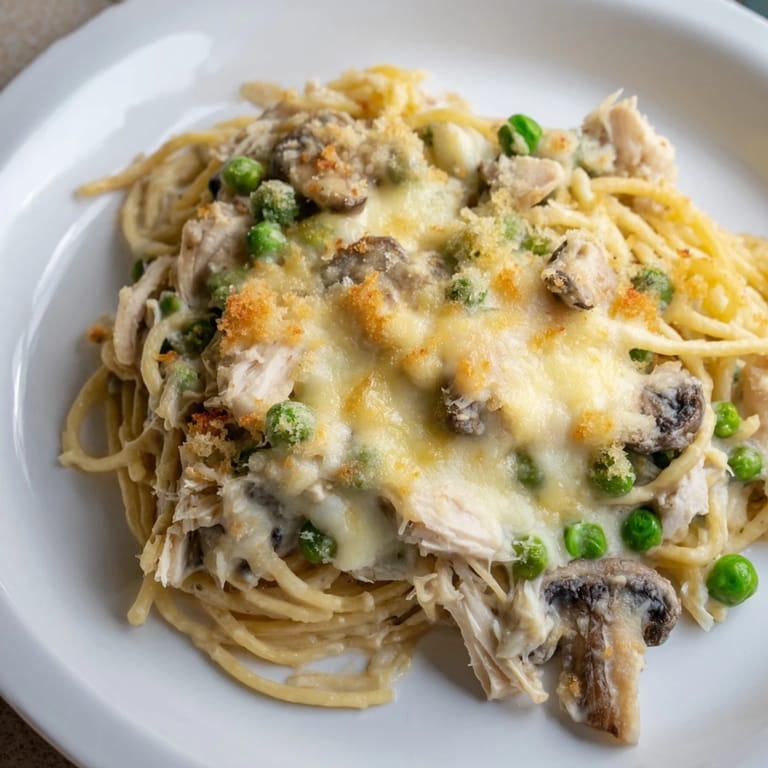
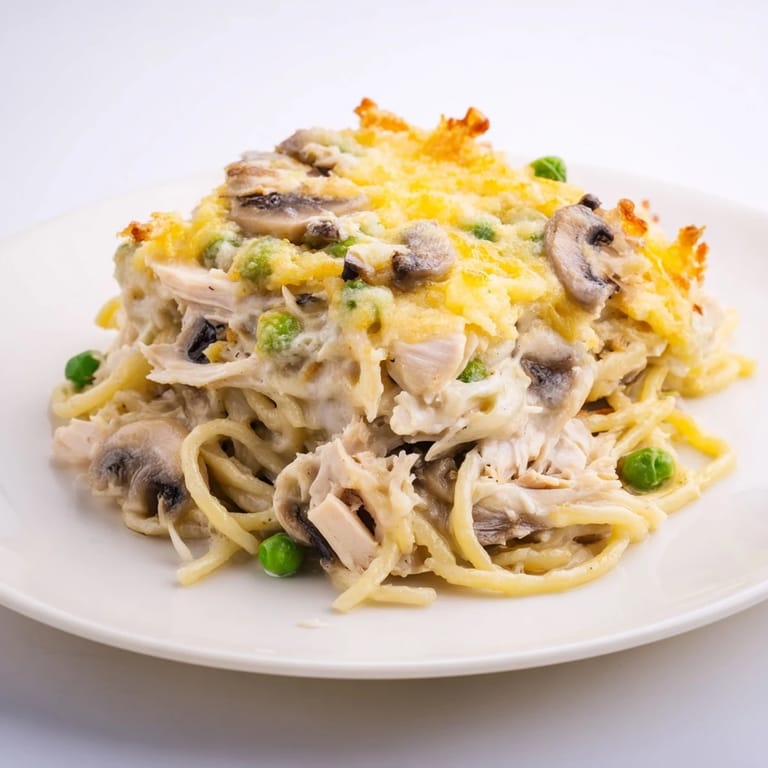
- Bake for 25 to 30 minutes, until the edges are bubbling and the top is deep golden brown. If the top browns too quickly, loosely tent it with foil halfway through.
- Rest before serving:
- Let the casserole sit for 10 minutes out of the oven. This helps it set slightly and makes serving cleaner; it also allows the flavors to settle into something even more cohesive.
 Save to Pinterest
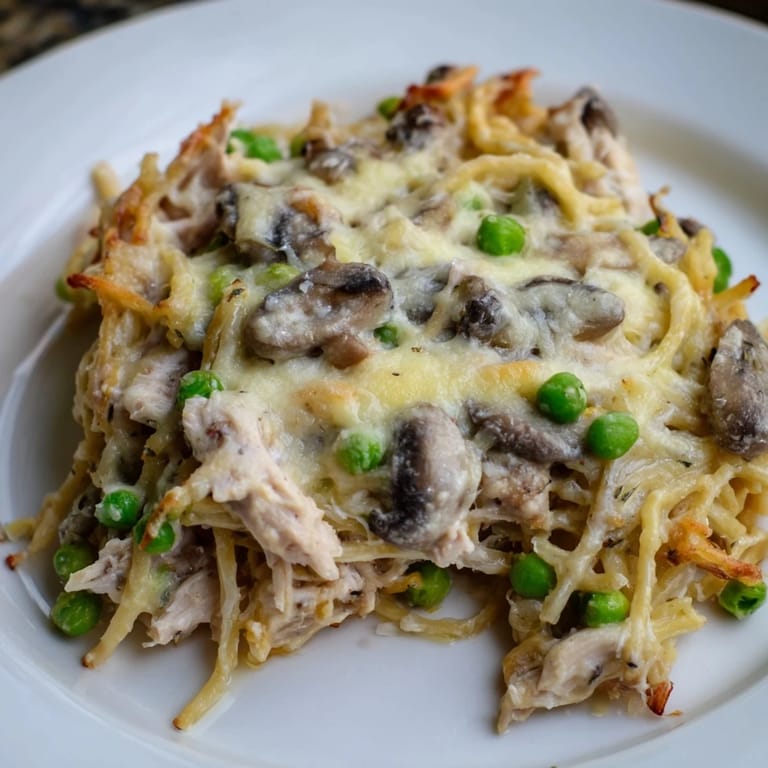
 There's a moment right as the casserole comes out of the oven when the whole kitchen fills with this aroma of cream and wine and toasted cheese, and everyone stops talking and just takes a breath. That's when I know it's going to be one of those meals that people remember, not because it's complicated, but because it tastes like someone cared.
Why This Dish Works
Tetrazzini is fundamentally about balance—the richness of cream and cheese against the brightness of wine and broth, the softness of pasta against the slight chew of turkey, the crispy panko topping against the silky interior. It's the kind of dish that seems simple on the surface but has depth built into every layer. The beauty is that it's also forgiving; if your sauce is a touch thinner than expected, it thickens up beautifully in the oven, and if it's thicker, that's fine too because the casserole becomes more structured and easier to cut.
Building Flavor Layers
What makes this recipe sing is the decision to build flavor gradually rather than dumping everything together. The mushrooms brown first, developing deep savory notes. The garlic gets just enough heat to open up its sweetness without burning. The wine reduces slightly, concentrating its flavor and cooking off the harsh alcohol taste. By the time you finish the sauce, you've layered flavors so carefully that the dish tastes more refined than the ingredient list suggests. It's a technique that applies to so many other dishes once you understand how it works here.
Variations and Occasions
This recipe works wonderfully as-is, but it also loves adaptation. You can add sautéed bell peppers or fresh spinach for earthiness and color, substitute rotisserie chicken for turkey if that's what you have, or use a mix of three cheeses instead of two. The core technique stays the same, and the results stay delicious. Some winters I make it with roasted chicken thighs, other times with leftover turkey after the holidays; it's one of those dishes that's equally at home on a Tuesday night as it is at a dinner party.
- Swap in fresh thyme for dried if you have it—use about 1 and 1/2 teaspoons and add it just before serving so it stays bright.
- If you're nervous about the wine, use a splash of dry vermouth or just extra broth instead; the casserole will be delicious either way.
- Make this ahead up to the point of baking, cover it, refrigerate overnight, then bake the next day, adding 5 to 10 extra minutes to the bake time since it starts cold.
 Save to Pinterest
 This is the kind of recipe that teaches you something about cooking if you pay attention to it—how flavors layer, how sauce should feel, when to taste and adjust. More than that, it's a dish that brings people around a table and makes them feel cared for.
Common Recipe Questions
- → Can I substitute chicken for turkey?
Yes, rotisserie chicken works well as a substitute, offering similar flavor and texture.
- → What type of pasta is best for this dish?
Spaghetti or linguine are ideal as they hold the creamy sauce nicely without clumping.
- → How can I add more vegetables?
Sautéed bell peppers or fresh spinach can be stirred in for extra color and nutrition.
- → Which cheeses complement this casserole?
Parmesan pairs beautifully with mozzarella or Gruyère for a rich, savory blend.
- → What wine pairs well with this dish?
Dry Chardonnay or a light Pinot Noir enhances the creamy sauce and turkey flavors.