 Save to Pinterest
 The first time I made tteokbokki in my own kitchen, I was chasing a memory from a Seoul street corner where the vendor's hands moved with such practiced ease that the rice cakes seemed to dance in the glossy red sauce. I'd bought a bag of frozen tteok from the Korean market near my apartment, unsure if I could replicate that magic, but something about the smell of gochujang hitting hot oil made me feel like I was already halfway there. By the time the sauce thickened and coated each chewy cake, I understood why this humble dish had followed me home.
I remember making this for friends who'd never tried tteokbokki before, and watching their faces when they bit into that perfect contrast of chewy rice cake and spicy-sweet sauce was worth every bit of knife work. Someone asked if it was hard to make, and I realized I'd been standing there with a small smile, completely absorbed in the simmering broth, the kind of cooking that feels more like meditation than effort. That's when it clicked for me—this dish had become my go-to for feeding people I care about.
Ingredients
- Korean cylindrical rice cakes (tteok), 500 g: These are the soul of the dish—chewy, tender, and able to soak up every bit of that spicy sauce; if they're frozen or hard, a quick warm water soak makes all the difference.
- Large eggs, 4: Boiled until just set with a barely jammy center, they become little flavor anchors in the sauce.
- Gochujang (Korean chili paste), 3 tablespoons: This fermented paste is where the depth comes from; it's not just heat, it's umami and a subtle sweetness living together.
- Gochugaru (Korean chili flakes), 2 tablespoons: Use this to adjust the intensity—add more if you like heat that lingers, less if you want the flavor without the burn.
- Soy sauce, 2 tablespoons: This anchors the sauce with salt and savory notes that make every other flavor sing.
- Sugar, 1 tablespoon and honey or corn syrup, 1 tablespoon: Together they balance the spice with a subtle sweetness that doesn't taste sugary—trust the combination.
- Garlic, 2 cloves minced: Adds brightness and keeps the sauce from feeling one-dimensional.
- Toasted sesame oil, 1 teaspoon: A small amount goes a long way; it's the whisper of nuttiness that makes people ask what that amazing flavor is.
- Water, 3 cups: This becomes the stage where all the flavors perform.
- Dried kelp (kombu), 1 piece (10x10 cm) and dried anchovies, 8: These build a broth that tastes like it was meant for tteokbokki; the kombu adds minerals and the anchovies add a quiet umami that strengthens everything else.
- Onion, 1 small sliced: Adds a gentle sweetness and texture that softens as it cooks.
- Green onion, 1 sliced: Saves this dish from heaviness with its fresh, sharp bite.
- Fish cake, 1 sheet sliced (optional): If you use it, choose one that's dense and flavorful; it becomes another texture to enjoy.
- Toasted sesame seeds, 1 tablespoon: The final garnish that adds crunch and makes everything look intentional.
Tired of Takeout? 🥡
Get 10 meals you can make faster than delivery arrives. Seriously.
One email. No spam. Unsubscribe anytime.
Instructions
- Soak the rice cakes:
- If your tteok feels stiff or came from the freezer, sit them in warm water for 10 minutes; they'll soften just enough to absorb sauce without falling apart. This small step is the difference between rice cakes that stay together and ones that dissolve into mush.
- Build your broth:
- Bring water, kombu, and anchovies to a gentle boil, then let them sit together for 10 minutes—the water takes on a quiet depth that bottled broth can't match. After 10 minutes, fish out the kelp and anchovies; what's left is the foundation for everything else.
- Boil and cool the eggs:
- Eight to nine minutes in boiling water gives you eggs that are set but still have the faintest yellow warmth inside. Move them straight to cold water, then peel carefully—they deserve to look perfect.
- Mix the sauce base:
- Stir gochujang, gochugaru, soy sauce, sugar, honey, garlic, and sesame oil into your warm broth until it's completely smooth; this is when the kitchen starts smelling like somewhere you want to stay. The sauce should look glossy and deep red, almost alive.
- Simmer the rice cakes:
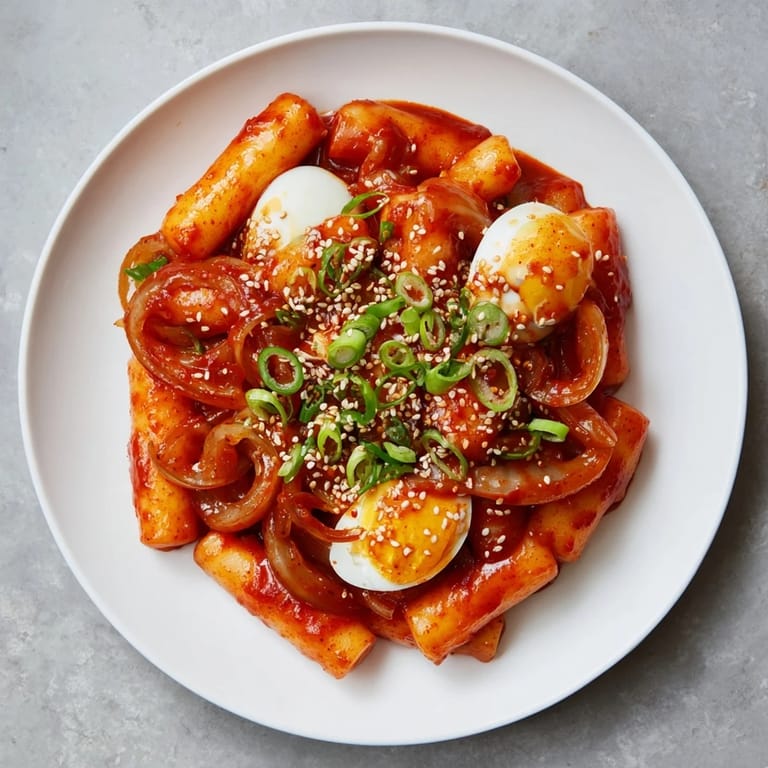
- Add drained tteok, onion, and fish cake to the sauce, then stir occasionally over medium heat for 10 to 12 minutes; you'll watch the sauce go from thin to thick enough to cling to each cake. The rice cakes should be tender and chewy, and the onion will become translucent and sweet.
- Finish with eggs:
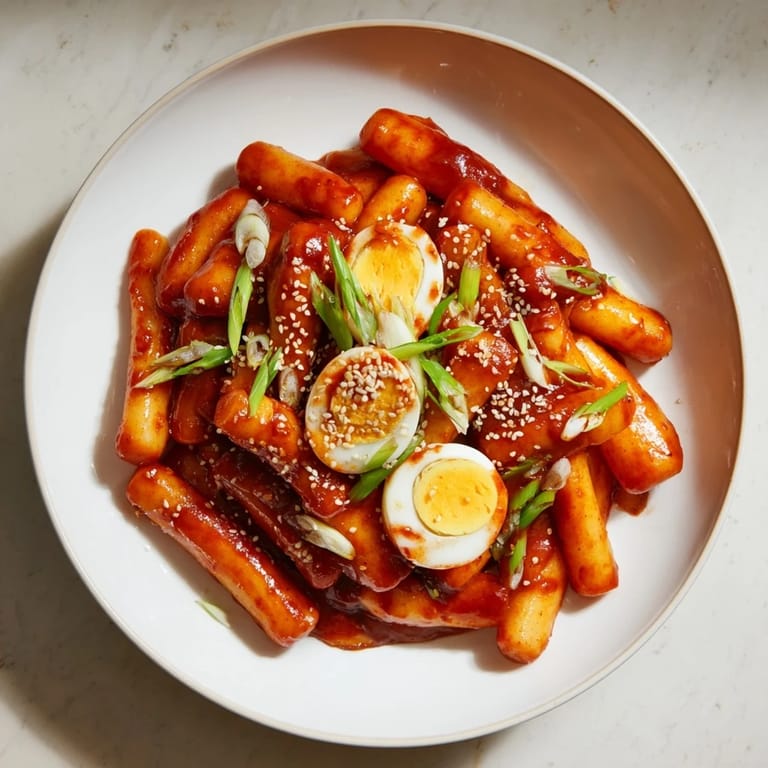
- Gently place the boiled eggs into the sauce and let everything warm together for 2 to 3 minutes. This is the moment when you stop being a cook and become someone about to share something delicious.
- Garnish and serve:
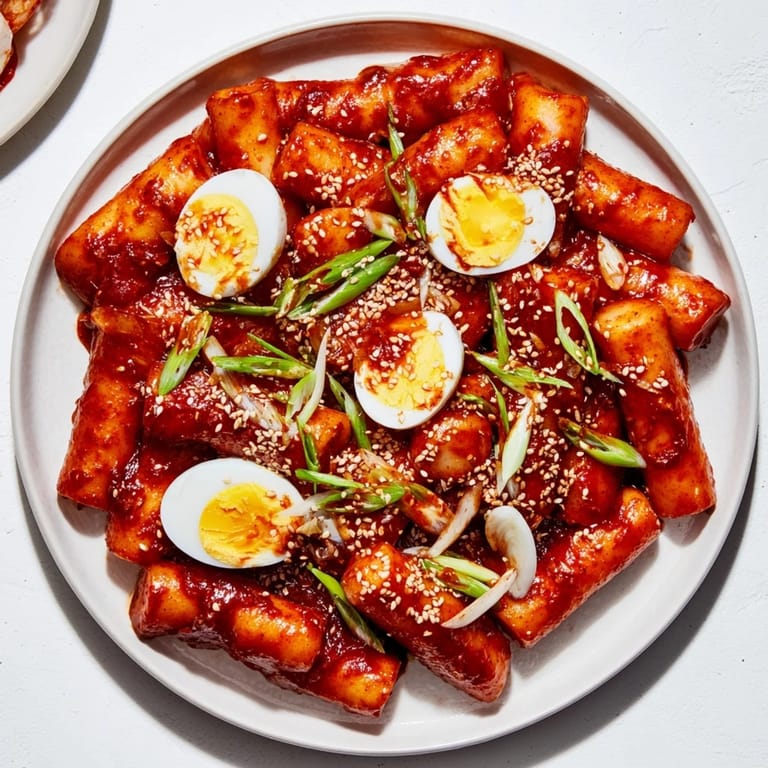
- Top with green onions and sesame seeds, and serve while it's still steaming—the heat is part of the experience. Some people pour the sauce into their mouth straight from the spoon, so make sure there's enough sauce for everyone.
 Save to Pinterest
 There was a night when my partner came home just as the tteokbokki hit its final simmer, and I'd never seen someone's whole face change from exhaustion to hunger so quickly. We ate standing at the kitchen counter, the kind of meal that doesn't need a table or ceremony, just two bowls and the understanding that some food is about comfort first. That's when tteokbokki stopped being something I made and started being something we needed.
The Heat Isn't Always About Spice
When I first made this, I expected the gochujang and gochugaru to be the stars, but it took a few tries to understand that the sugar, honey, and soy sauce are equally important—they're not there to hide the heat, but to give it context. The spice becomes less of a punch and more of a conversation where every element gets to speak. This balance is what keeps people coming back for another bite instead of reaching for water.
Why This Dish Works as Both Snack and Meal
Tteokbokki sits in this beautiful middle ground where it's light enough for a late-night snack but substantial enough to satisfy real hunger. The rice cakes are mostly carbohydrate and feel filling without being heavy, and the eggs add just enough protein to make it feel balanced. I've served this to people who thought they wanted a small bite and ended up finishing their bowl, then quietly making themselves another one.
Make It Your Own
The traditional recipe is perfect on its own, but I've learned that this dish invites experimentation in a way that respects its roots. My friends have added cabbage for crunch, someone once threw in ramen noodles for texture, and another person discovered that a handful of spinach softens into something almost elegant. The sauce is strong enough to support these additions without losing its identity.
- If vegetables are your thing, shredded cabbage or sliced carrots add sweetness and texture without overwhelming the sauce.
- Ramen noodles cooked separately and mixed in just before serving give you another layer of chewiness to enjoy.
- A squeeze of fresh lime or a sprinkle of fresh herbs at the end can brighten everything if it feels too heavy.
 Save to Pinterest
 This is the kind of dish that teaches you something every time you make it, whether it's about timing, balance, or the simple pleasure of feeding yourself something warm and alive with flavor. Once you've made it, you'll understand why it's been a street food staple for generations.
Common Recipe Questions
- → How do I make the rice cakes soft and chewy?
Soak the rice cakes in warm water for 10 minutes before cooking, especially if they are refrigerated or hard. This helps achieve the ideal chewy texture.
- → Can I make this without anchovies for a vegetarian version?
Yes, omit anchovies and fish cake, and use vegetable broth instead to maintain the dish's savory depth while keeping it vegetarian.
- → How spicy is this dish and can the heat be adjusted?
The spiciness comes from gochujang and gochugaru; you can reduce the amounts or omit gochugaru to suit your preferred spice level.
- → What are some common garnishes for this dish?
Green onions and toasted sesame seeds are traditional garnishes that add freshness and a subtle nutty flavor.
- → Is there a way to add more texture to this dish?
Yes, including vegetables like cabbage, carrots, or adding ramen noodles can introduce extra texture and make the dish heartier.