 Save to Pinterest
 The first time I watched a hawker stall cook chili crab, I couldn't believe how the sauce seemed to coat every crevice of the shell, glistening and alive with heat and sweetness. The cook moved with such easy confidence, tossing the crabs as though they were barely there, and I stood mesmerized by the cloud of steam rising from the wok. Something about that casual mastery drew me in, and I knew I had to learn it myself. Years later, I still get that same feeling of excitement when I hear the sizzle and smell that unmistakable blend of garlic, chilies, and ketchup hitting hot oil.
I remember cooking this for my partner during monsoon season when the city felt heavy and wet, and somehow the heat from the chili and the bright tang of the sauce cut right through the gloom. We sat at the kitchen counter with newspaper spread out and our fingers sticky with sauce, cracking open shells and laughing about the mess, and it felt like the most intimate meal we'd ever shared. That's when I understood why this dish matters so much in Singapore—it's not just about the flavors, it's about the act of eating together without pretense.
Ingredients
- 2 whole live mud crabs (about 1.5 kg total), cleaned and cut into pieces: These are the soul of the dish; the firm, sweet meat holds up beautifully to the sauce and won't turn mushy like softer varieties.
- 3 tbsp vegetable oil: Use neutral oil that won't compete with the sauce—this is your cooking base, not your flavor builder.
- 1 medium onion, finely chopped: Onion sweetens subtly and helps build the sauce base; don't skip it.
- 5 cloves garlic, minced: Garlic blooms quickly in hot oil, so mince it fine so it disperses evenly throughout the sauce.
- 3 red chilies and 2 birds eye chilies, deseeded and chopped: The mix gives you both body and punctuating heat; start with fewer birds eye chilies if you prefer gentler spice.
- 2 cm piece fresh ginger, peeled and minced: Fresh ginger adds a warm, peppery note that rounds out the sauce beautifully.
- 250 ml tomato ketchup: This might seem unusual, but ketchup provides the tangy sweetness that defines the dish; don't substitute with tomato paste.
- 2 tbsp chili sauce (Sriracha or sambal oelek): Choose sambal oelek if you want pure chili heat, or Sriracha if you prefer a touch more vinegar and complexity.
- 1 tbsp sugar, 1 tbsp soy sauce, 1 tsp fish sauce: These three create the umami backbone; balance them to your taste as you cook.
- 250 ml chicken or seafood stock: Stock carries flavor and creates the glossy sauce consistency that clings to the crab.
- 1 tsp cornstarch mixed with 1 tbsp water: This slurry thickens the sauce just enough to coat the crab without making it gluey.
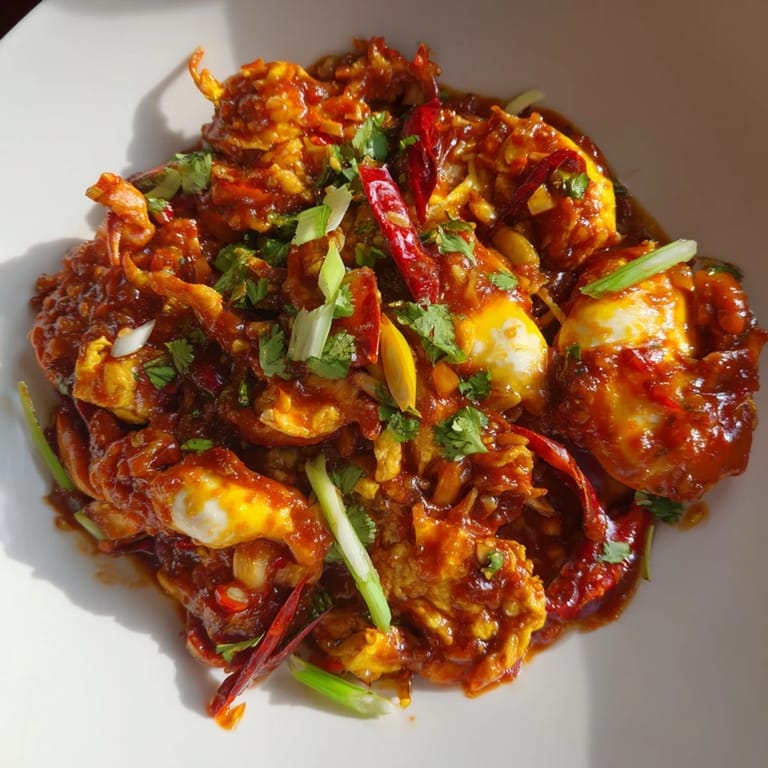
- 2 large eggs, lightly beaten: Beaten eggs create silky ribbons when drizzled into the hot sauce; this is not optional, it's essential.
- 2 spring onions, sliced, and fresh cilantro: These brighten the final dish with fresh green notes after all that heat.
Tired of Takeout? 🥡
Get 10 meals you can make faster than delivery arrives. Seriously.
One email. No spam. Unsubscribe anytime.
Instructions
- Heat your wok and build the aromatic base:
- Get your large wok or deep pan screaming hot over medium-high heat, then add the oil. When it shimmers, add the onion and let it soften for a couple of minutes until it turns translucent and sweet-smelling.
- Toast the aromatics until fragrant:
- Add the garlic, ginger, and all the chilies at once, and stir constantly for 2 to 3 minutes. You'll know you're there when the kitchen fills with that peppery, garlicky perfume and the raw edge of the garlic disappears.
- Toss the crab and let it kiss the heat:
- Add the crab pieces and keep stirring, making sure each piece gets coated with the fragrant oil. Watch for the shells to begin turning that brilliant red—this takes about 3 to 4 minutes.
- Build the sauce:
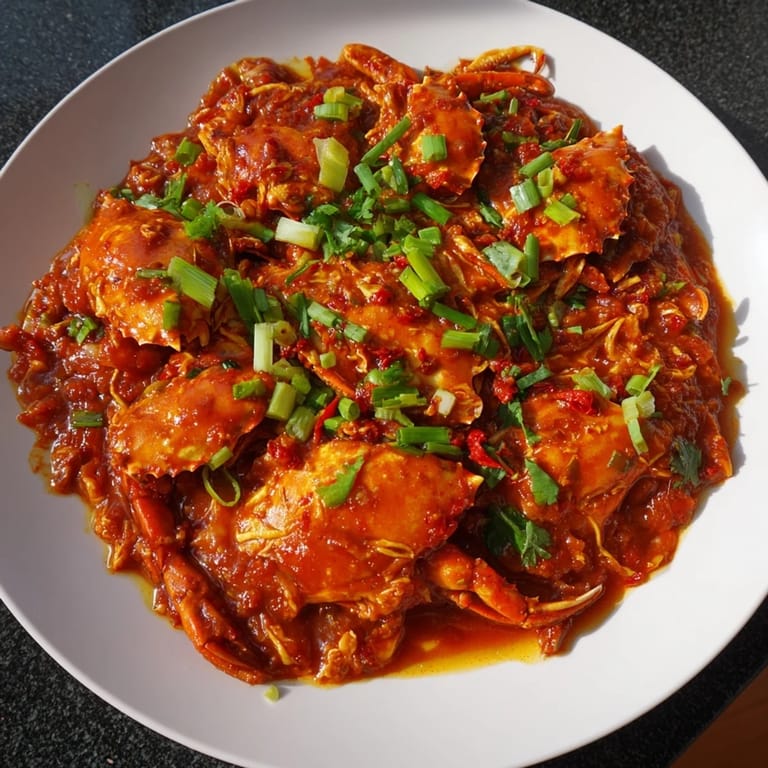
- Pour in the ketchup, chili sauce, sugar, soy sauce, fish sauce, and stock, and stir everything together until the crab is swimming in a glossy, coral-colored sauce. The kitchen will smell absolutely incredible at this moment.
- Simmer and cook the crab through:
- Bring the whole thing to a boil, then drop the heat and simmer uncovered for 10 to 12 minutes, turning the crab pieces occasionally so the sauce reaches every nook. The meat will turn opaque white and pull away slightly from the shell when it's ready.
- Thicken with the cornstarch slurry:
- Stir in the cornstarch and water mixture to give the sauce a silky coating. A minute or two is all you need; you're not looking for gravy, just enough body to make the sauce cling.
- Create the egg ribbons:
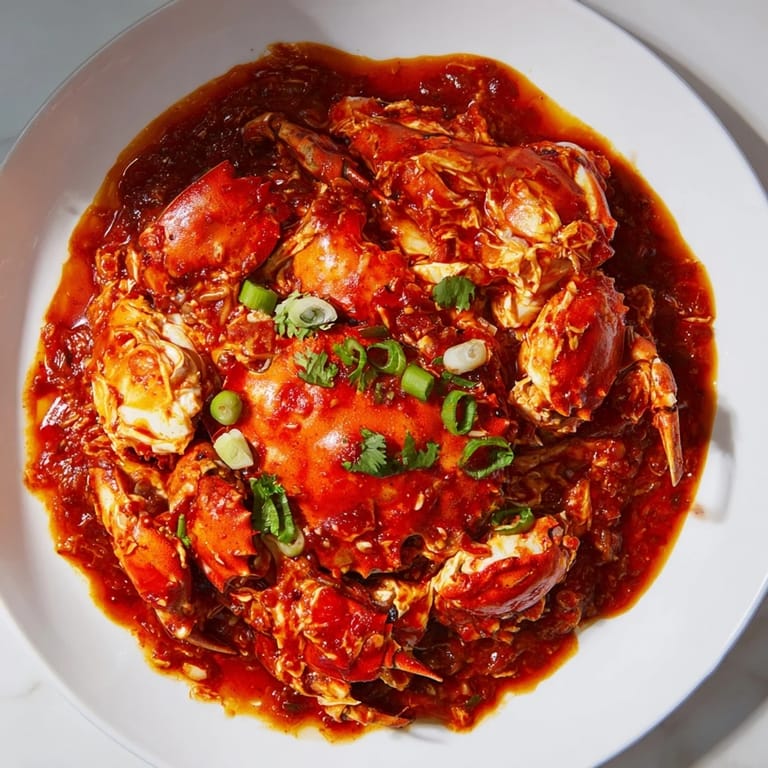
- Remove the wok from heat and slowly drizzle the beaten eggs into the bubbling sauce while stirring gently in one direction. The eggs will cook into delicate ribbons that add richness and luxury to every bite.
- Finish and serve:
- Scatter the spring onions and cilantro over the top, squeeze lime wedges around the plate, and serve immediately with steamed mantou buns or rice to soak up every drop of that glorious sauce.
 Save to Pinterest
 I'll never forget the moment my mother-in-law took one bite of my chili crab and nodded slowly, then asked for seconds without saying a word. That quiet approval meant more than any compliment, and it taught me that sometimes cooking is about honoring a tradition while making it your own.
The Sauce Is Everything
The sauce is where all the magic lives in this dish. It's not a simple tomato base—it's a careful balance of tangy ketchup, spicy chili, umami from fish sauce and soy, and a touch of sugar that rounds everything together. I learned this the hard way by trying to skip the ketchup once and substituting tomato paste; the result was flat and one-dimensional. The sweetness in the ketchup is actually what makes people come back for more, even when they think they don't like sweet sauces. It's the contrast that makes the heat feel sharper and the whole experience more interesting.
Crab Selection and Preparation
The quality of your crab truly determines the quality of your finished dish. Mud crabs are the traditional choice because their meat is sweet and stays tender even during vigorous cooking. If you can't find mud crabs, blue swimmer crabs or Dungeness crabs will work, though they have slightly different textures and sweetness levels. Always ask your fishmonger to clean and halve the crabs for you if you're uncomfortable doing it yourself; this saves you an intimidating step and they'll do it faster anyway. Make sure the crab is as fresh as possible—this isn't a dish where you can get away with questionable seafood.
Serving and Sharing
This dish demands to be eaten with your hands, with plenty of napkins within reach and ideally with people you're comfortable being messy around. Steamed mantou buns are the perfect vehicle for the sauce; they're soft enough to absorb it but sturdy enough not to fall apart. Some people prefer rice, which creates a different eating experience—more elegant, less primal. Either way, make sure you have lime wedges on the table because their brightness cuts through the richness perfectly and makes you want to eat more.
- Set the table before you cook so you're not scrambling for napkins once everyone's digging in.
- Serve this dish immediately after finishing; it's best enjoyed piping hot when the sauce is still glossy and the crabs are at their most tender.
- Don't stress about presentation—this is meant to look abundant and alive, not tidy.
 Save to Pinterest
 This recipe has become my go-to for celebrating moments that matter, whether that's a dinner with people I love or just a quiet night when I want to feel like I'm eating something special. Once you've made it, you'll understand why it's become such an iconic Singaporean dish.
Common Recipe Questions
- → What type of crab is best for this dish?
Fresh mud crab is preferred, but blue swimmer or Dungeness crab can be good substitutes depending on availability.
- → How can I adjust the spiciness level?
The heat can be controlled by adjusting the amount of birds eye chilies or red chilies used in the sauce.
- → What sides complement this dish well?
Steamed mantou buns or fluffy white rice are ideal to enjoy with the rich and flavorful sauce.
- → How is the sauce thickened to achieve the right consistency?
A cornstarch slurry is stirred into the simmering sauce to gently thicken it without overpowering the flavors.
- → Why are beaten eggs added to the sauce?
Slowly drizzling beaten eggs into the hot sauce creates delicate ribbons that enrich the texture and appearance.