 Save to Pinterest
 My first taste of mango sticky rice wasn't in Thailand—it was at a small neighborhood restaurant on a sweltering summer evening when the air conditioning had broken and we were all melting into our seats. The server brought out this humble plate, and within one spoonful, the sticky sweetness and that cool, silky mango sliced through the heat like nothing else could. Years later, I realized I could recreate that magic at home, and it's become the dessert I turn to whenever I need something that feels both comforting and a little bit special.
I made this for a dinner party last summer, and my friend who grew up in Bangkok actually teared up a little when she tasted it—said it reminded her of her grandmother's kitchen. That's when I understood this dish isn't just about the ingredients; it's about creating a moment that tastes like memory, like home, like someone cared enough to spend time getting it right.
Ingredients
- Glutinous (sweet) rice, 1 cup: This is the heart of the dish—it's stickier than regular rice and absorbs the coconut milk beautifully, creating that signature creamy texture.
- Coconut milk (full fat), 1 cup: Don't reach for the lite version; the richness is essential to drowning the rice in that luscious coconut flavor.
- Granulated sugar, 1/4 cup: Sweetens the sauce gently without overpowering the mango's natural taste.
- Salt, 1/4 tsp: A tiny pinch that makes everything taste more like itself.
- Large ripe mangoes, 2: Look for mangoes that yield slightly to pressure and smell fragrant at the stem—that's your signal they're perfectly sweet.
- Coconut cream (optional), 2 tbsp: A drizzle on top adds visual appeal and another layer of coconut richness if you're feeling generous.
- Toasted sesame seeds or mung beans (optional), 1 tbsp: A little crunch and nuttiness that plays beautifully against the soft rice and smooth mango.
Tired of Takeout? 🥡
Get 10 meals you can make faster than delivery arrives. Seriously.
One email. No spam. Unsubscribe anytime.
Instructions
- Prepare the rice:
- Rinse your glutinous rice under cold running water, swishing it gently with your fingers until the water runs nearly clear—this removes excess starch and prevents the rice from becoming a gluey mess. Soak it in fresh water for at least 4 hours, or better yet, overnight; this softens the grains so they cook evenly and absorb the coconut sauce like a dream.
- Steam until tender:
- Line your steamer basket with cheesecloth, drain the rice, and spread it in an even layer. Steam for 25–30 minutes until the grains are translucent and soft enough to bite through without resistance; you'll know it's ready when you can press a grain between your fingers and it crushes easily.
- Warm the coconut sauce:
- While the rice steams, combine your coconut milk, sugar, and salt in a small saucepan over medium heat. Stir gently until the sugar dissolves and the mixture is warm and fragrant, but never let it boil—boiling breaks the creaminess and turns the sauce grainy.
- Marry the rice and sauce:
- Transfer your hot steamed rice to a mixing bowl and pour about three-quarters of the coconut sauce over it, folding gently to coat every grain evenly. Cover the bowl and let it sit for 10–15 minutes so the rice absorbs all that coconut flavor and becomes even more luxurious.
- Slice the mangoes:
- While the rice is absorbing the sauce, peel your mangoes and slice them into thin, elegant pieces; the best way is to cut off the cheeks on either side of the pit, then score the flesh in a crosshatch pattern and scoop it out with a spoon, or simply slice with a knife however feels natural to you.
- Plate and serve:
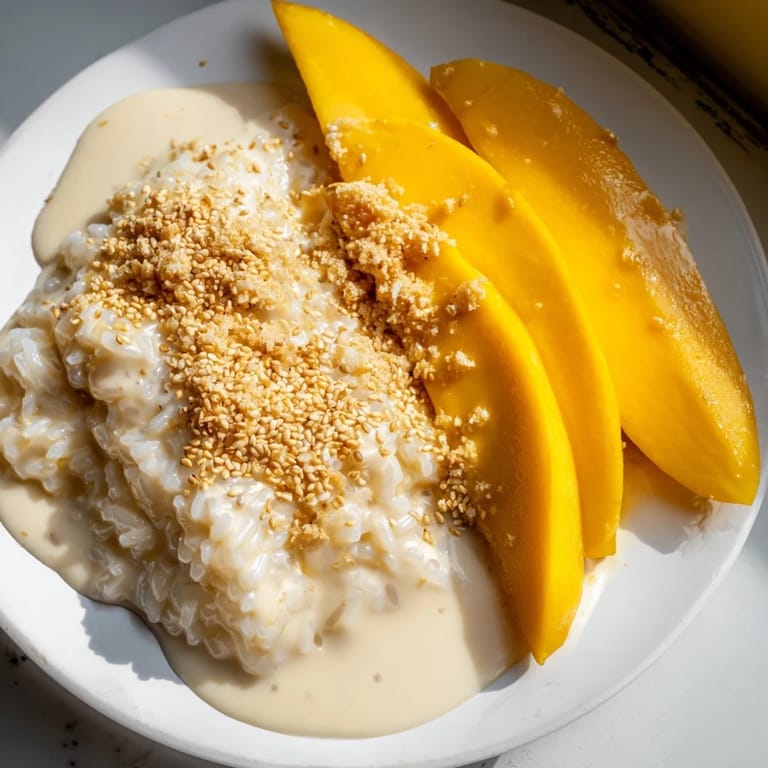
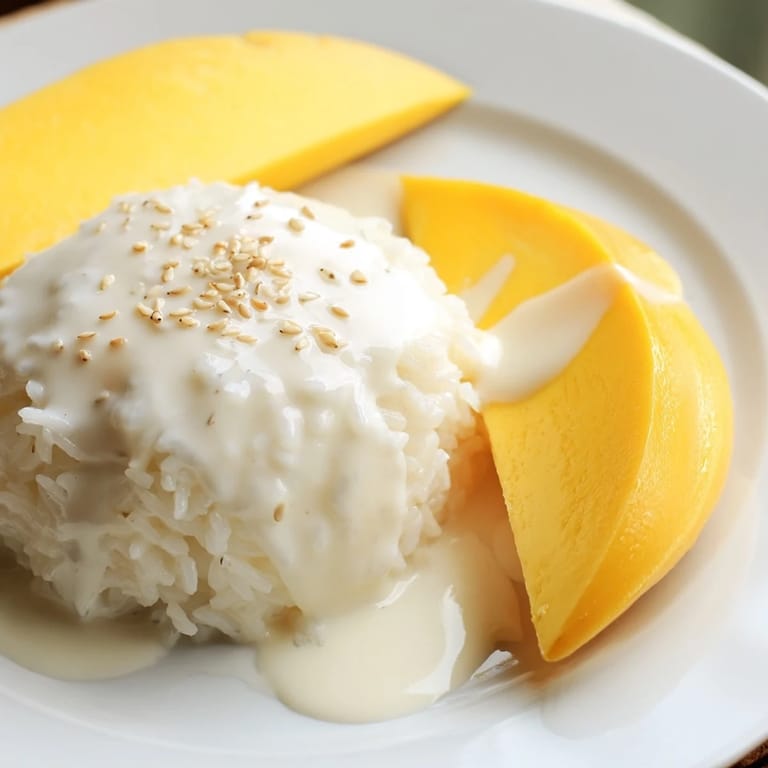
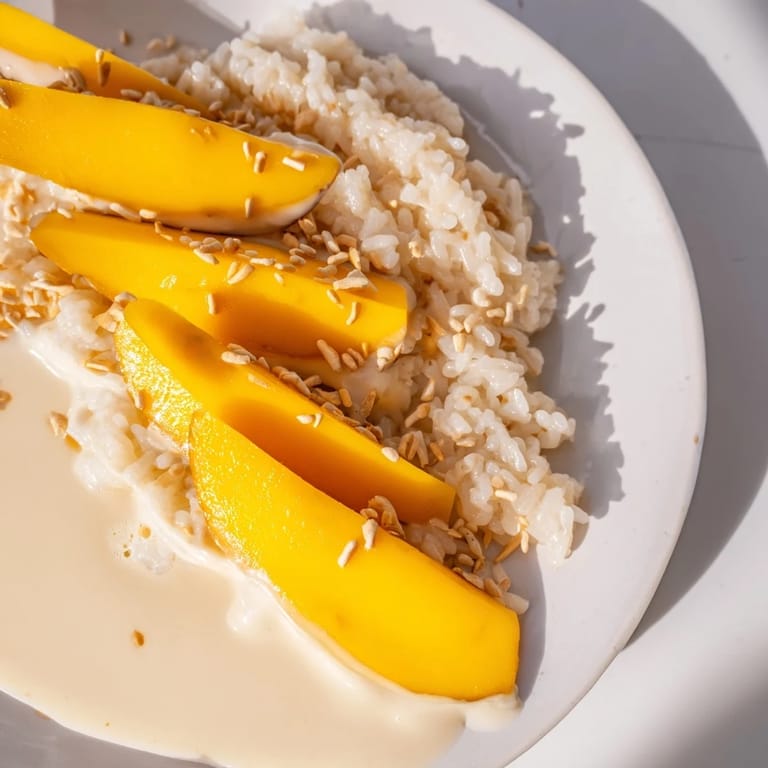
- Mound a generous portion of coconut sticky rice in the center of each plate, fan your mango slices alongside, and drizzle the remaining coconut sauce in a few artistic drops around everything. If you're using them, top with a small dollop of coconut cream and a sprinkle of toasted sesame seeds or mung beans, then serve immediately while the rice is still warm and the mango is cool and refreshing.
 Save to Pinterest
 There's a moment when you take the first spoonful—rice still steaming, mango perfectly chilled, that whisper of coconut in every bite—and you realize you've made something that tastes like a celebration, like someone really understood what comfort food should be. That's the magic of this dish.
Finding the Perfect Mango
The mango is your star player here, and choosing the right one changes everything. A ripe mango should feel heavy for its size, smell sweet and slightly floral at the stem end, and give just a little when you press it gently—not mushy, just yielding. If you can only find firm mangoes, they'll still work, but they won't have that juicy, honeyed quality that makes people close their eyes when they eat. Some seasons and markets have better mangoes than others; when you find a good source, remember it.
The Steaming Technique
I learned the hard way that rushing the steaming step doesn't save time—it just ruins the rice. The cheesecloth keeps the rice from absorbing water while still allowing steam to cook it evenly, and that 25–30 minute window is sacred. You'll know the rice is done when a single grain crushes easily between your fingers and has no hard center. Some people use a rice cooker with a glutinous rice setting, which works beautifully too, and honestly, if that's easier for you, go for it.
Flavor Variations Worth Trying
While the classic version is perfection, there are subtle ways to make it your own. A whisper of vanilla extract stirred into the coconut sauce adds an unexpected warmth, and if you can find pandan leaves, steaming the rice with a few leaves tucked underneath gives it a haunting, floral note that makes people ask what that incredible smell is. For a touch of luxury, try using palm sugar instead of granulated sugar—it gives the sauce a deeper, slightly caramel flavor that pairs beautifully with the fruit.
- Pandan leaves transform the rice into something with subtle floral complexity that feels more authentic to Thai home cooking.
- A tiny splash of rosewater or a cardamom pod simmered in the coconut sauce opens up entirely new dimensions.
- Swapping in a tropical fruit like pineapple, papaya, or passion fruit keeps the spirit of the dish alive while letting you play with seasonal availability.
 Save to Pinterest
 This dessert reminds me that the best meals aren't about impressive techniques or rare ingredients—they're about taking time to do something simple really, really well. Make it for someone you love.
Common Recipe Questions
- → How is the sticky rice prepared for this dish?
The glutinous rice is soaked for several hours, then steamed until tender, ensuring a soft and chewy texture ideal for absorbing coconut flavors.
- → What gives the dish its creamy texture?
Coconut milk is gently heated with sugar and salt, then poured over the steamed rice to infuse it with a rich, creamy taste.
- → Can any variations be used to enhance aroma?
Adding pandan leaves during steaming imparts a fragrant, floral note that complements the coconut and mango beautifully.
- → What toppings can be added for extra texture?
Optional garnishes include a drizzle of coconut cream and a sprinkle of toasted sesame seeds or mung beans for added crunch.
- → How should leftovers be stored?
It's best to enjoy immediately, as refrigeration can harden the rice and alter the dish's texture and flavor.