 Save to Pinterest
 The first time I made a hojicha roll cake was on a quiet Sunday afternoon when a friend mentioned she'd never tried roasted green tea in anything but a cup. Something about that challenge stuck with me, so I spent the evening experimenting with how that toasty, almost caramel-like flavor could work in a delicate sponge. When I pulled the cake from the oven and caught that warm, earthy aroma, I knew I'd stumbled onto something special. The mango twist came later, almost by accident, when I had fruit sitting on the counter and thought, why not? What began as curiosity turned into a recipe I now make whenever I want to impress someone or simply remind myself why I love baking.
I made this for my grandmother last month, and watching her eyes light up when she tasted it felt like a small victory. She's always been the baker in the family, so showing her something new, something that somehow honored both tradition and my own kitchen experiments, meant everything. She asked for the recipe that same afternoon, which tells you something about whether this cake works.
Ingredients
- Eggs, separated: Splitting them matters more than you'd think because the whites need to be completely free of yolk to whip properly, and room temperature eggs whip faster and fuller than cold ones.
- Granulated sugar (divided): We use it in two stages so the yolks get creamy early and the whites whip into clouds, creating the structure that makes this cake so tender.
- Whole milk: This adds moisture without making the cake dense, something I learned after trying various liquids.
- Vegetable oil: Essential for keeping the sponge soft; butter would make it tighter and less forgiving.
- Cake flour, sifted: Sifting twice (once before measuring, once with the other dry ingredients) prevents lumps that would show up as streaks in your cake.
- Cornstarch: A small amount keeps the crumb tender and prevents toughness.
- Hojicha powder: This is where the magic lives, that roasted tea flavor that's warm without being bitter; Japanese brands like DoMatcha or Mizuba are your best bet.
- Salt: Just enough to make all the other flavors pop without tasting salty.
- Heavy cream (chilled): The cold matters because it whips faster and holds its shape longer, and 35% fat minimum ensures you get real peaks.
- Powdered sugar: Dissolves seamlessly into the cream unlike granulated, which can feel gritty.
- Ripe mango: The sweetness and slight tartness balance the earthiness of the hojicha, but it has to be ripe or it tastes flavorless.
Tired of Takeout? 🥡
Get 10 meals you can make faster than delivery arrives. Seriously.
One email. No spam. Unsubscribe anytime.
Instructions
- Set up and preheat:
- Get your oven to 170°C and line your tray with parchment so you have a clean surface to work with when the cake is hot. This step feels small but matters because a hot cake tears easily on an unlined tray.
- Build the yolk base:
- Whisk egg yolks with 40 g sugar until the mixture turns pale and ribbons when you lift the whisk, which means it's incorporated enough air and sugar to be ready for the next step. Add milk and oil and mix until everything disappears, no streaks left.
- Dry ingredients together:
- Sift flour, cornstarch, hojicha powder, and salt into the yolk mixture, then fold gently with a spatula, turning the bowl as you go, until no white streaks remain. This is where you can't be aggressive or you'll squeeze out the air you're trying to keep.
- Make meringue clouds:
- Start beating the egg whites in a completely clean bowl (even a tiny bit of yolk stops this from working) until foamy, then sprinkle in the remaining 40 g sugar slowly while you keep beating. Keep going until stiff peaks form, meaning when you lift the beaters, the peaks stand straight up instead of folding over.
- Combine gently:
- Add the meringue to the batter in three additions, folding each one in completely before adding more, so you keep as much airiness as possible. Think of it like tucking the meringue in rather than stirring it.
- Bake with purpose:
- Pour into the tray smoothly, tap gently a few times to release obvious air bubbles, and bake 13 to 15 minutes until the top springs back when you press it lightly with your finger. It should smell incredible and look pale golden, not dark.
- Cool without drying out:
- While the cake is still warm, flip it onto fresh parchment, peel off the original paper, and loosely cover with a kitchen towel to trap steam so it stays soft. Let it cool completely before moving on or the cream will melt.
- Whip the hojicha cream:
- Pour chilled heavy cream into a cold bowl (you can stick it in the freezer for five minutes) and whip with powdered sugar and hojicha powder until medium-stiff peaks form, where the cream holds shape but still has some wobble. Over-whip and it turns to butter, which I've done and which teaches you to watch carefully.
- Spread and fill:
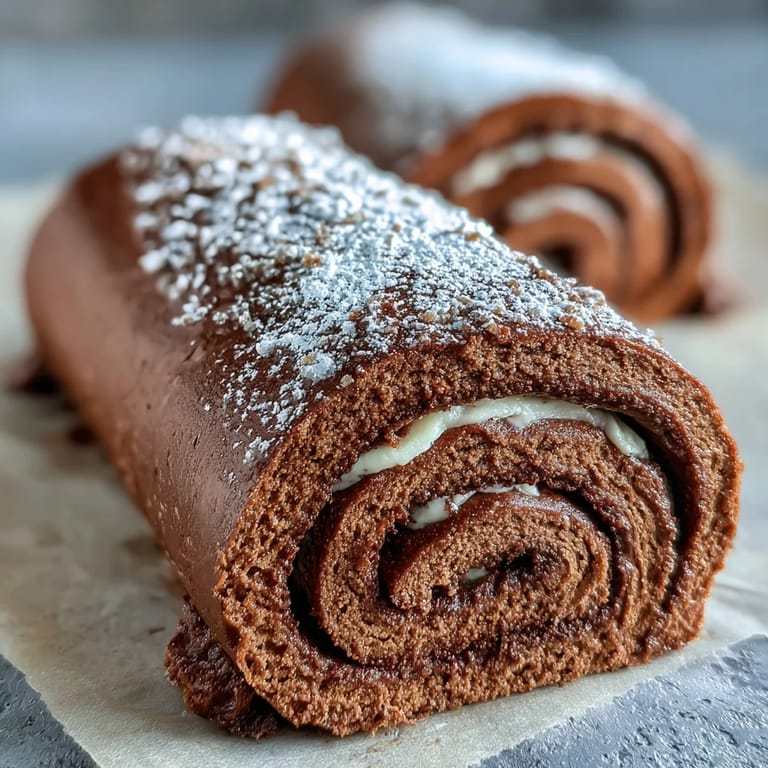
- Once the sponge is completely cool, spread hojicha cream evenly across it with an offset spatula, leaving a small edge clear at the top so the cream doesn't squeeze out when you roll. Arrange mango slices in a line along one short edge.
- Roll like you mean it:
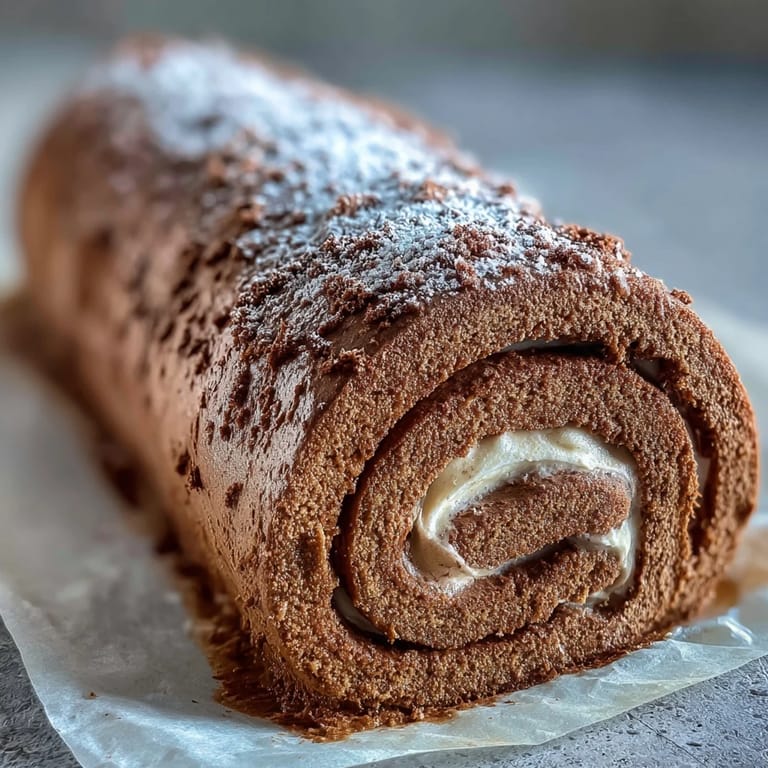
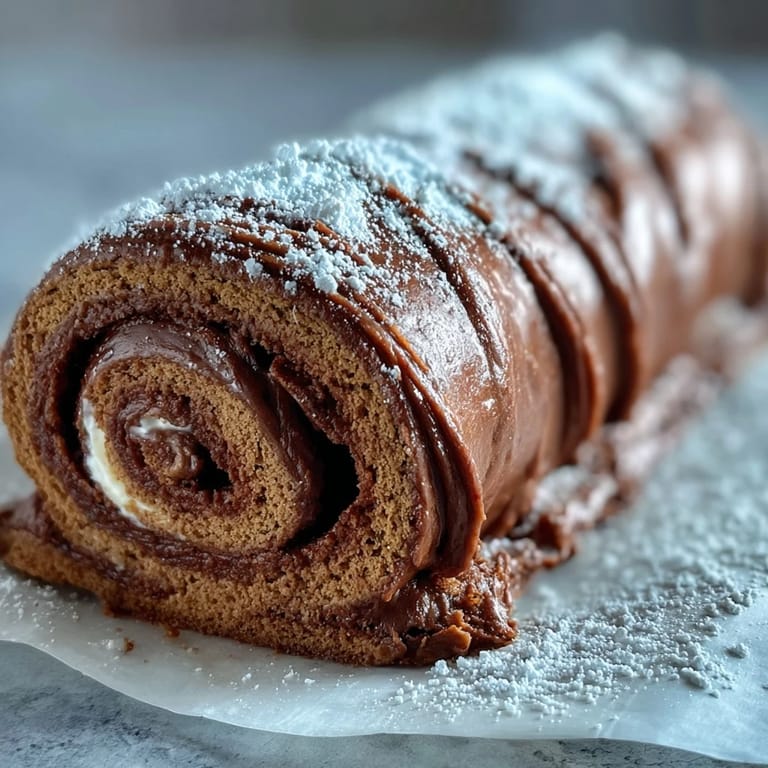
- Using the parchment under the cake, roll from the edge with mango toward you, keeping it snug but not so tight you squeeze out filling, and use the parchment to help guide you. You're creating a spiral, not a burrito.
- Set and serve:
- Wrap the rolled cake in parchment and chill at least 30 minutes, which lets the cream firm up and makes slicing clean instead of messy. Trim the ends before slicing for a polished look and dust with hojicha powder if you want to look fancy.
 Save to Pinterest
 There's a moment when you roll this cake for the first time and it doesn't tear, when the flavors work together exactly as you imagined, that makes you understand why people love baking. It's not just about feeding someone; it's about creating something that didn't exist before, something that tastes like you took the time to care.
Choosing Your Hojicha Powder
Not all hojicha powder tastes the same, and this matters more than it sounds because some brands are more bitter while others are softer and almost caramel-like. I've used DoMatcha and Mizuba with great results, and both ship online if you can't find them locally. The color should be a warm brown, not gray, and it should smell toasty when you open the tin, never musty or old.
Troubleshooting Common Issues
If your cake cracks badly when you roll it, the most common reason is that it cooled while rolled in a towel instead of flat, or you over-baked it slightly and it got a bit dry. If your cream splits or separates while you're whipping, stop immediately because you've over-whipped it, and honestly, it happens to everyone at least once. If your mango releases too much juice and makes the cake soggy, pat the slices dry with paper towels before arranging them, or use slightly less ripe fruit.
Variations That Actually Work
The structure of this cake holds up well to swaps because the hojicha flavor is strong enough to stand with different fruits and even different creams. I've made it with strawberries, raspberries, and peaches, and each one brings something different to the table. Some afternoons I replace a quarter of the heavy cream with mascarpone cheese for a tangier, slightly less rich filling that feels lighter on the palate.
- Try swapping the mango for fresh strawberries, raspberries, or peaches depending on what's in season where you are.
- Use half heavy cream and half mascarpone if you want the filling to taste brighter and less purely sweet.
- Dust the finished cake with powdered sugar, hojicha powder, or even a tiny pinch of fleur de sel to add another layer.
 Save to Pinterest
 This cake sits somewhere between tradition and experimentation, and I think that's exactly where the best home baking lives. Make it, tweak it, make it again.
Common Recipe Questions
- → What is hojicha and how does it affect the flavor?
Hojicha is a roasted green tea that imparts a toasty, nutty aroma and a mild, earthy flavor, adding a warm depth to the sponge and cream.
- → Can I substitute the mango with other fruits?
Yes, strawberries or peaches can be used to provide different fruity notes while maintaining a fresh contrast to the creamy filling.
- → How do I achieve a light, airy sponge texture?
Whipping the egg whites to stiff peaks and gently folding them into the batter helps create a fluffy, airy sponge that holds its shape when rolled.
- → What tips ensure a smooth hojicha cream?
Chill the heavy cream before whipping and gradually add hojicha powder and sugar to ensure even distribution and medium-stiff peaks.
- → How long should I chill the rolled sponge before serving?
Chilling for at least 30 minutes allows the cream to set, making slicing easier and enhancing the flavors' melding.