 Save to Pinterest
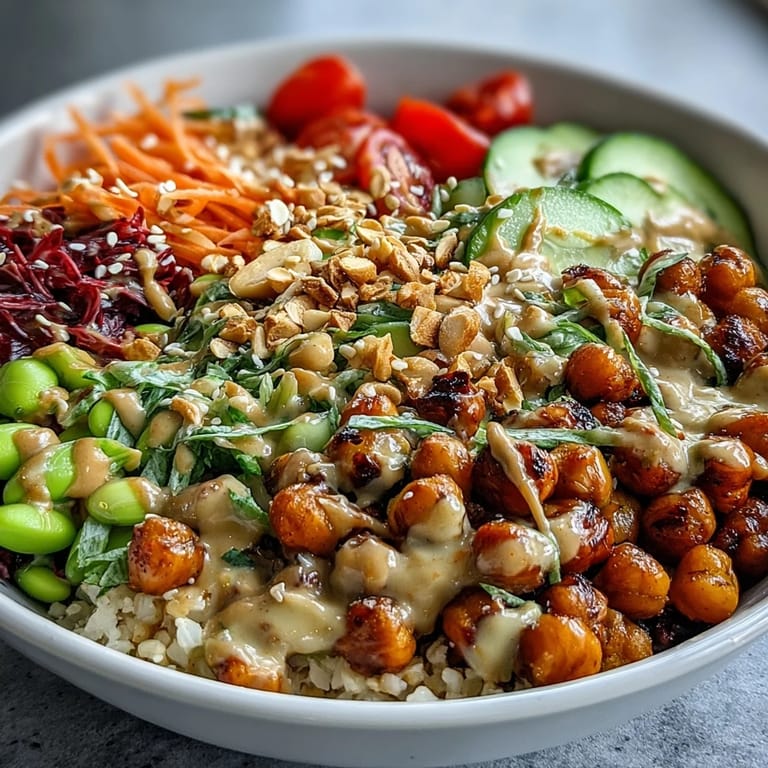
 I discovered this bowl on a Tuesday afternoon when my fridge was half-empty and my energy was lower. I had a can of chickpeas, some slightly wilted vegetables, and a jar of peanut butter staring back at me, and somehow they became the most satisfying lunch I'd made in weeks. The roasted chickpeas turned golden and crispy while I threw together whatever fresh vegetables I could find, and when I drizzled that creamy peanut sauce over everything, it felt less like I was salvaging leftovers and more like I'd actually planned something delicious.
Last month I made four of these for friends who were all trying something new with their diets, and watching everyone pile their own toppings and adjust their sauce was oddly beautiful. Someone asked for extra lime and less sriracha, another person added spinach at the last second, and that's when I realized this bowl isn't really a recipe at all—it's more like a template for whatever makes you happy. We sat around the table and nobody wanted to stop eating.
Ingredients
- Chickpeas (2 cans, drained and rinsed): These are your protein anchor, and rinsing them removes that starchy liquid that would stop them from crisping up beautifully.
- Olive oil (1 tbsp): Just enough to coat the chickpeas and help them turn golden—more than this and they'll get greasy instead of crispy.
- Smoked paprika, cumin, garlic powder, salt, pepper: This spice blend is what transforms plain chickpeas into something you'll crave, so don't skip seasoning them generously.
- Brown rice or quinoa (2 cups cooked): The base that holds everything together; I prefer quinoa because it has its own nutty flavor that plays well with the peanut sauce.
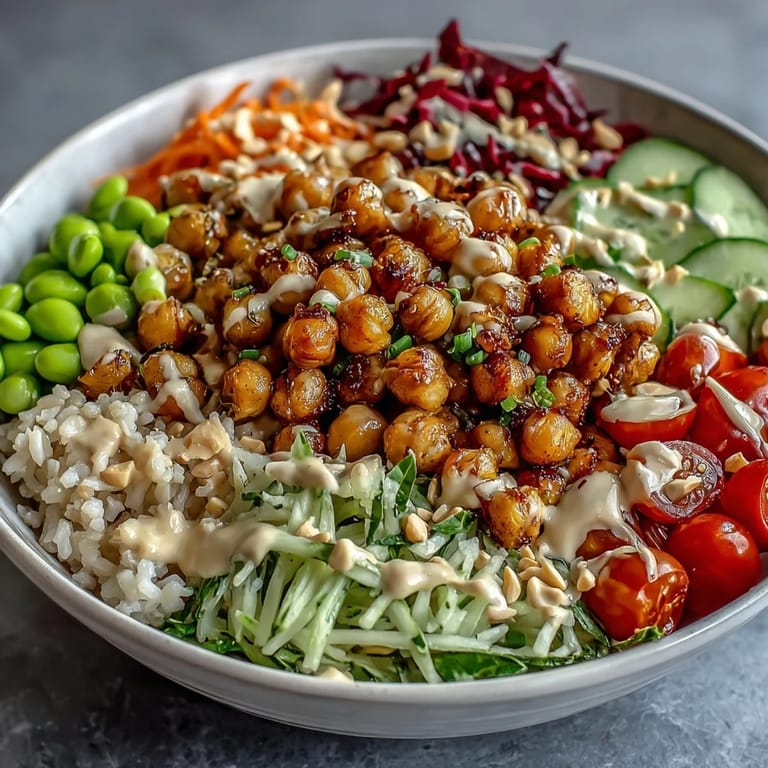
- Fresh vegetables (cabbage, carrots, cucumber, tomatoes, edamame): The color and crunch here matter as much as the nutrition—mix and match based on what looks good at the market.
- Fresh cilantro (1/4 cup chopped): This herb is the unsung hero that lifts everything and keeps the bowl feeling bright and alive.
- Creamy peanut butter (1/3 cup): The heart of your sauce; natural peanut butter works beautifully here, though I won't judge you for using the smooth stuff.
- Soy sauce or tamari (2 tbsp): This adds savory depth that keeps the sauce from being one-note sweet.
- Maple syrup or honey (1 tbsp): A touch of sweetness to balance the salt and vinegar, creating that perfect three-way tension.
- Rice vinegar (1 tbsp): The acid that makes everything taste lighter and prevents the sauce from feeling heavy.
- Sriracha or chili sauce (1 tsp, optional): For those who like heat, but honestly, this sauce is delicious without it too.
- Garlic (1 clove, finely minced): Don't skip this—minced garlic in the sauce adds complexity that jarred garlic just can't match.
- Roasted peanuts (2 tbsp chopped) and sesame seeds for topping: The final crunch that makes each bite interesting.
Tired of Takeout? 🥡
Get 10 meals you can make faster than delivery arrives. Seriously.
One email. No spam. Unsubscribe anytime.
Instructions
- Prep your oven and chickpeas:
- Preheat to 425°F and line a baking sheet with parchment—this prevents sticking and makes cleanup almost enjoyable. In a bowl, toss your drained chickpeas with olive oil and all those warming spices, then spread them out in a single layer.
- Roast until they're golden and crispy:
- Bake for 20–25 minutes, giving the pan a shake halfway through so everything roasts evenly. You'll know they're ready when they smell nutty and toasted and look golden brown.
- Make the sauce while they roast:
- Whisk together peanut butter, soy sauce, maple syrup, rice vinegar, sriracha if you're using it, and minced garlic. Start with 2 tablespoons of warm water and add more slowly until the sauce is silky and pourable, not thick.
- Get your grains and vegetables ready:
- Cook your rice or quinoa if you haven't already, then prep all your vegetables—shred that cabbage, julienne the carrots, slice the cucumber, halve the tomatoes. Having everything prepped before assembly makes the whole process smooth.
- Assemble with intention:
- Divide your grain among four bowls, then arrange the roasted chickpeas, vegetables, and edamame on top in whatever pattern appeals to you. Don't be shy with the peanut sauce—drizzle it generously over everything.
- Finish and serve:
- Sprinkle with chopped peanuts, sesame seeds if you like them, and tear some fresh cilantro over the top. Serve with lime wedges so people can brighten it up to their taste.
 Save to Pinterest
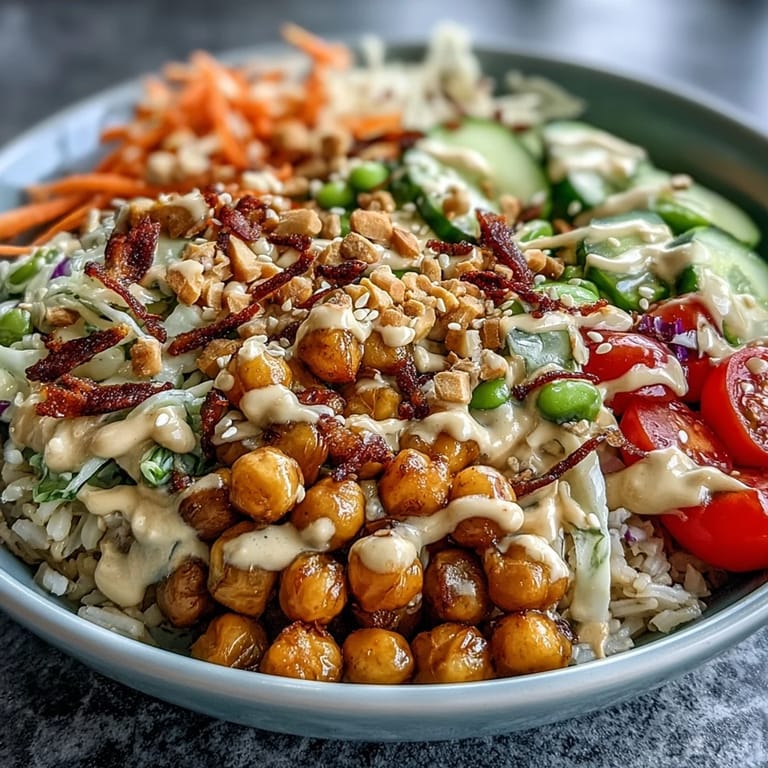
 There's something grounding about a bowl where you can see every element—the golden chickpeas, the jewel-toned vegetables, the sauce pooling in the bottom—and it reminds you that eating well doesn't have to be complicated or joyless. This is the kind of food that makes you feel strong and satisfied in equal measure.
Why This Bowl Actually Stays in Your Rotation
I've made this at least twice a month for the past year, and it never gets boring because you can shift everything slightly based on your mood or what's in season. In summer I add more fresh herbs and lighter vegetables; in fall I'll throw in some roasted sweet potato or butternut squash. The formula is solid enough that it always works, but flexible enough that it never feels repetitive.
The Peanut Sauce Secret
The magic of this sauce isn't in any single ingredient but in the balance between salt, sweet, and acid. The moment you get that ratio right—and you'll know it when you taste it because it'll feel alive on your tongue—you'll understand why people get obsessed with good peanut sauce. I've learned to taste as I go, adjusting a little more maple syrup if it's too sharp or a touch more vinegar if it's too sweet, because that's how you make it yours.
Customization Without Losing the Plot
The beauty of this bowl is that it's forgiving enough to work with whatever you have on hand and still taste intentional. I've made it with kale instead of cabbage, with feta crumbled on top even though it's supposed to be dairy-free, with extra garlic and ginger in the sauce on days when I needed it spicy. The core of chickpeas, sauce, and fresh vegetables holds everything together, so you're free to riff.
- Swap the brown rice for cauliflower rice if you want something lighter, or use farro if you want more chew.
- Add greens like spinach or arugula under the grains to add nutrition without changing the vibe.
- Make the sauce ahead of time and store it in the fridge for up to five days so assembly is even faster on hungry evenings.
 Save to Pinterest
 This bowl has become my answer to the question of what to eat when I want to feel good without overthinking it. It's nourishing, colorful, and genuinely delicious—the kind of meal that takes care of you.
Common Recipe Questions
- → Can I make this bowl ahead of time?
Yes, you can prepare the roasted chickpeas, peanut sauce, and chop vegetables up to 3 days in advance. Store components separately in airtight containers and assemble when ready to serve. The peanut sauce may thicken in the refrigerator—simply whisk in a tablespoon of warm water to restore consistency.
- → What can I substitute for peanut butter?
Almond butter, cashew butter, or sunflower seed butter work well as alternatives. Keep in mind that each will impart a slightly different flavor profile. For a nut-free option, try tahini with a touch of maple syrup for creaminess.
- → How do I store leftovers?
Store assembled bowls in the refrigerator for up to 3 days. For best results, keep the sauce separate and drizzle just before eating. The roasted chickpeas will lose some crunch but remain flavorful. Reheat grains and chickpeas if preferred, or enjoy cold.
- → Can I add other vegetables?
Absolutely. Bell peppers, shredded kale, spinach, roasted sweet potatoes, steamed broccoli, or shredded beets make excellent additions. Consider what's in season and adjust quantities to maintain a balanced bowl.
- → Is this bowl gluten-free?
The bowl is naturally gluten-free when made with tamari instead of soy sauce and using certified gluten-free grains. Always check labels on packaged ingredients like seasonings and sauces to ensure they meet your dietary needs.
- → How can I add more protein?
Increase protein by adding grilled tofu, tempeh, or a hard-boiled egg. Hemp seeds, pumpkin seeds, or additional edamame also boost protein content while adding delightful texture and flavor variations.