 Save to Pinterest
 I discovered the magic of folded beef at a dinner party where I was nervously arranging appetizers on a platter, running out of time. A visiting chef friend suggested I try folding the thin slices into shapes instead of laying them flat, and suddenly what had felt scattered became architectural, almost sculptural. The moment guests started picking up these geometric pieces, their faces lit up—not just because they tasted incredible, but because the presentation itself felt like an invitation to something special. That night taught me that sometimes the simplest ingredients, handled with intention, can become the most memorable moments at a table.
I made this for my sister's book club last spring, and what started as a simple appetizer became the thing people talked about more than the wine. Everyone wanted to know how I'd folded them, whether there was a trick, if they could recreate it at home. Watching someone carefully unfold a geometric beef slice with their fingers and bite into it—there's something intimate about that interaction, something that makes food feel less like sustenance and more like a shared experience.
Ingredients
- Beef carpaccio or very thinly sliced roast beef (300 g): The thinner you source this, the easier the folds and the more delicate the final bite—I learned to ask the butcher for paper-thin slices rather than standard deli thickness.
- Extra virgin olive oil (2 tbsp): This is your base flavor, so choose one you actually taste and enjoy, not the cheapest bottle in the cabinet.
- Soy sauce, gluten-free if needed (1 tbsp): Adds umami depth that makes the beef sing; the gluten-free version tastes almost identical but matters if you're serving anyone with sensitivities.
- Lemon juice (2 tsp): Brings brightness and prevents the beef from feeling heavy on the palate.
- Dijon mustard (1 tsp): A tiny amount gives a subtle kick that catches you on the second bite.
- Freshly ground black pepper (1/2 tsp): Grind it fresh right before mixing—pre-ground loses its bite.
- Sea salt (1/4 tsp): Use fine sea salt so it dissolves evenly into the marinade rather than gritty flakes.
- Baby arugula (40 g): Creates a peppery cushion that grounds the dish and adds color contrast.
- Toasted sesame seeds (2 tbsp): Toasting them yourself releases their nutty aroma and flavor—store-bought toasted seeds work but fresh is noticeably better.
- Finely chopped chives (1 tbsp): Use fresh chives, and chop them just before assembly so they don't wilt or discolor.
- Shaved Parmesan cheese (50 g): A vegetable peeler creates thinner, more elegant shards than a grater.
Tired of Takeout? 🥡
Get 10 meals you can make faster than delivery arrives. Seriously.
One email. No spam. Unsubscribe anytime.
Instructions
- Whisk your magic potion:
- In a small bowl, combine olive oil, soy sauce, lemon juice, Dijon mustard, pepper, and salt. Whisk it gently for about 30 seconds until it emulsifies slightly and the mustard distributes evenly throughout. You'll smell the lemon and mustard meeting the salty undertone—that's your signal it's ready.
- Prepare your canvas:
- Lay the beef slices flat on a clean, dry surface—a cutting board or large plate works perfectly. Pat them gently with a paper towel first to remove any excess moisture, which helps the marinade adhere and the folds hold their shape.
- Brush with intention:
- Using a pastry brush, lightly coat each slice with marinade, being careful not to oversaturate. Reserve about 1 tablespoon for drizzling at the end; this restraint keeps the beef from becoming soggy and preserves its silky texture.
- Fold your art:
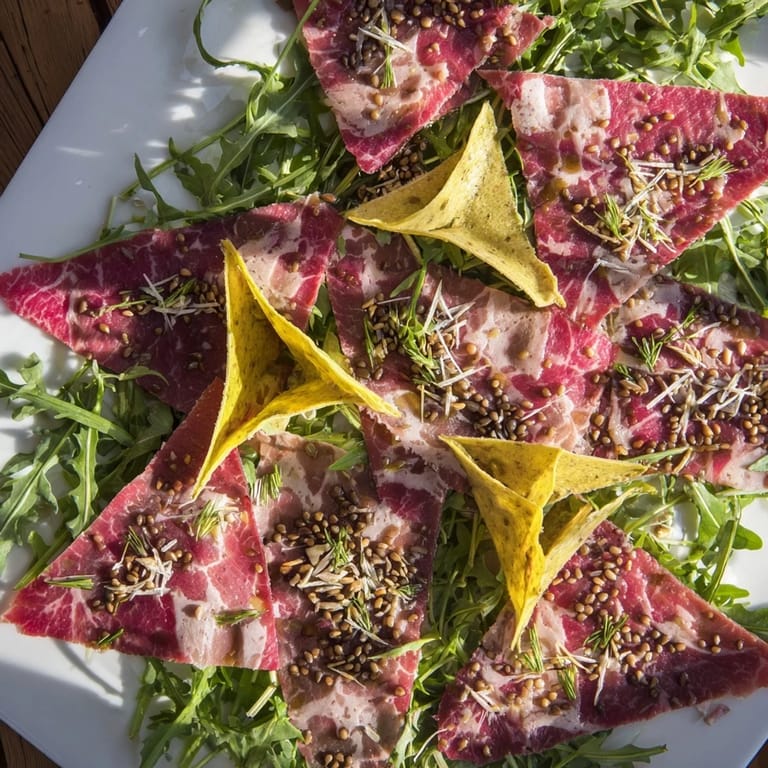
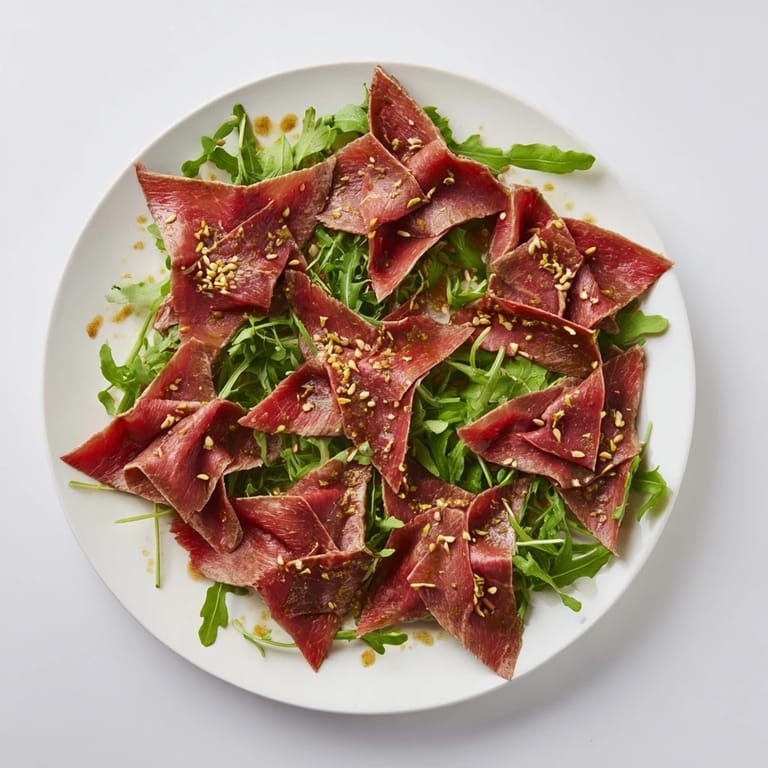
- This is where patience becomes your best friend. Pick up one slice and gently fold it into a triangle by bringing one corner to meet the opposite edge, then fold again if you want a smaller triangle. For squares, fold it in half, then in half again. For fan shapes, accordion-fold the slice back and forth in thirds or quarters. Use gentle pressure—the beef is delicate and tears if you rush. If a fold feels unstable, secure it with a chive stem or small cocktail pick.
- Build your presentation:
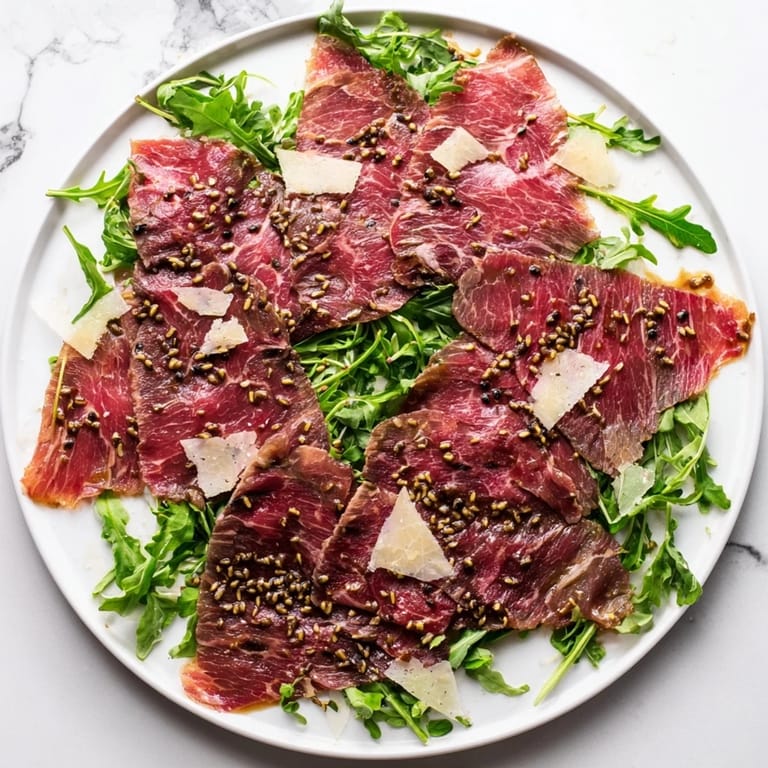
- Arrange the folded beef pieces on a serving platter lined with baby arugula, spacing them so each fold is visible and the arrangement feels intentional rather than crowded. The arugula underneath catches any marinade that drips and adds a peppery note when guests bite through.
- Finish with restraint:
- Sprinkle toasted sesame seeds, chopped chives, and shaved Parmesan over the arranged beef just before serving. Drizzle the reserved marinade in a thin stream across the platter so everyone gets a bit but nothing gets overdressed.
 Save to Pinterest
 The first time I served this, I watched my grandmother carefully pick up a folded piece, examine it from all angles, and then taste it slowly. She said, 'This is how food should be—beautiful and simple at the same time.' That moment changed how I think about cooking; it's not always about complexity, sometimes it's about respecting the ingredient enough to let it shine.
The Geometry of Flavor
What makes this appetizer work isn't just the folding—it's that every fold creates a slightly different texture experience. The outer edges of the beef become slightly firmer from exposure to the marinade and air, while the inner folds stay silkier and more tender. When you bite through a folded piece, you're experiencing three dimensions of texture and flavor instead of the flat, one-note quality of simply arranged slices. I learned this by accident the first time I left folded beef on the counter for five minutes before serving; instead of being disappointed by the texture change, I realized it had actually improved.
Playing with Variations
Once you master the beef version, this technique opens doors. I've folded thinly sliced tuna and salmon for pescatarian guests, and the same geometric shapes work beautifully. Duck breast, smoked salmon, even prosciutto can be transformed this way. The key is using a sharp knife to slice your protein paper-thin, which gives you the flexibility to fold without tearing. Different proteins pair with different marinades—fish loves dill and champagne vinegar, while cured meats appreciate a touch of honey or truffle oil.
Making It Ahead and Serving
When hosting, the beauty of this dish is that most of the work happens without heat or last-minute stress. I prepare the marinade the night before, slice and chill the beef, and even arrange the arugula on the platter hours in advance. The only thing I do in the final 15 minutes is fold the beef, arrange it, and add the garnishes—by then the rest of my kitchen can be focused on everything else. When it's time to serve, I do a final drizzle of marinade and a scatter of fresh chives, and suddenly the table feels special.
- Chill your serving platter in the fridge for 30 minutes before plating so the beef stays cool longer.
- If using cocktail picks to secure folds, soak them in water first so they don't absorb the beef's juices.
- Serve within 20 minutes of folding for the best textural contrast and visual impact.
 Save to Pinterest
 This dish reminds me why I cook at all—it's not about perfection, it's about creating small moments of joy on a plate. Every time someone picks up a folded piece of beef, admires it, and tastes it with genuine pleasure, I'm reminded that food is conversation.
Common Recipe Questions
- → What type of beef works best for folding?
Very thinly sliced beef carpaccio or roast beef is ideal, as it's pliable enough for delicate geometric folds.
- → How can the folded shapes be secured?
Gentle pressure usually holds the folds, but chive stems or cocktail picks can be used for extra stability.
- → Can the marinade be adjusted for dietary needs?
Yes, use gluten-free soy sauce if necessary, and add truffle oil for enhanced flavor if desired.
- → Are there suitable alternatives to beef for this preparation?
Thinly sliced tuna or salmon can be used to create pescatarian-friendly folded appetizers with similar elegance.
- → What garnishes complement the folded beef best?
Baby arugula, toasted sesame seeds, chopped chives, and shaved Parmesan provide a fresh and nutty contrast.
- → How should this dish be served for best presentation?
Arrange folded pieces on a platter lined with arugula and drizzle with reserved marinade just before serving.