 Save to Pinterest
 The first time I bit into a Korean corn dog at a Seoul street market, the contrast stopped me cold—crispy, crunchy exterior giving way to sweet batter, then juicy sausage. I was immediately obsessed with recreating that moment in my own kitchen, fumbling through the process with frozen sausages and way too much confidence. After several attempts, burnt batches, and a kitchen that smelled like a state fair, I finally nailed the technique. Now, these golden sticks have become my go-to when friends drop by unexpectedly, and honestly, they disappear faster than I can make them.
I remember standing in my kitchen on a rainy Sunday with my nephew, both of us in aprons, dipping sausages like we were on some ridiculous cooking show. He kept trying to steal bites of raw batter, and somewhere between laughing at his sticky fingers and the oil popping on the stove, I realized these weren't just snacks—they were an experience. That's when corn dogs stopped being a recipe and became a ritual.
Ingredients
- Beef or chicken sausages: Standard hot dog size works perfectly; I've found that slightly higher-quality sausages with good seasoning make a noticeable difference.
- Wooden skewers: The handle matters more than you'd think—soak them briefly in water so they don't char, and leave enough exposed to actually grip.
- All-purpose flour, pancake mix, and cornmeal: This trinity is what creates that signature texture; don't skip the pancake mix thinking you can substitute, the results just aren't the same.
- Sugar: Two tablespoons might sound like a lot, but it's essential for that subtle sweetness that makes these Korean-style, not American-style.
- Baking powder and salt: Standard leaveners, but measure carefully—too much baking powder makes the batter taste metallic.
- Egg and whole milk: The egg binds everything while the milk creates the right consistency for coating; if your batter feels too thick, add milk slowly until you can dip smoothly.
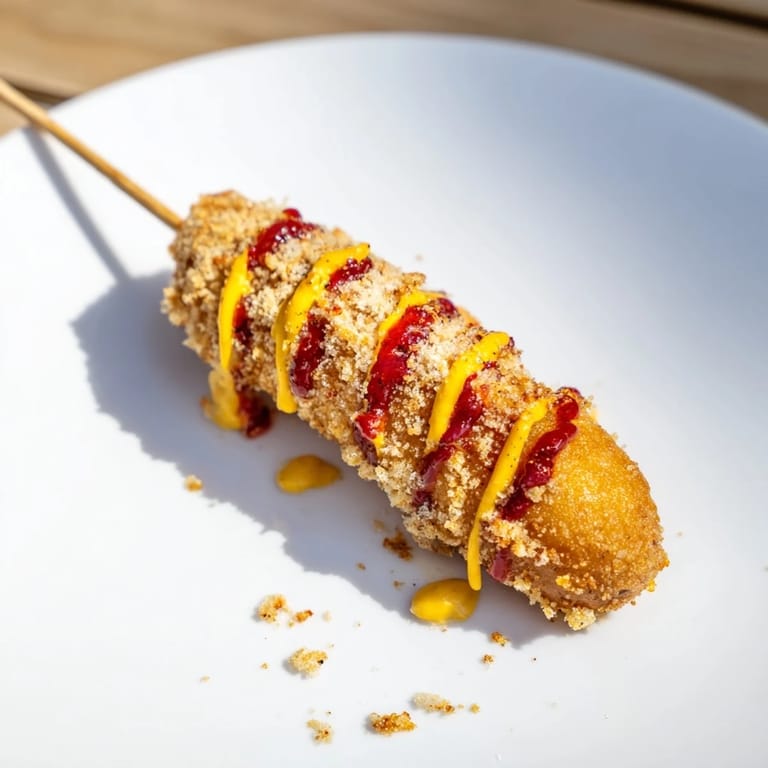
- Panko breadcrumbs: Regular breadcrumbs are fine, but panko gives you that crunch that justifies the effort of making these from scratch.
- Vegetable oil: A neutral, high-heat oil is non-negotiable; I use canola because it's forgiving and affordable.
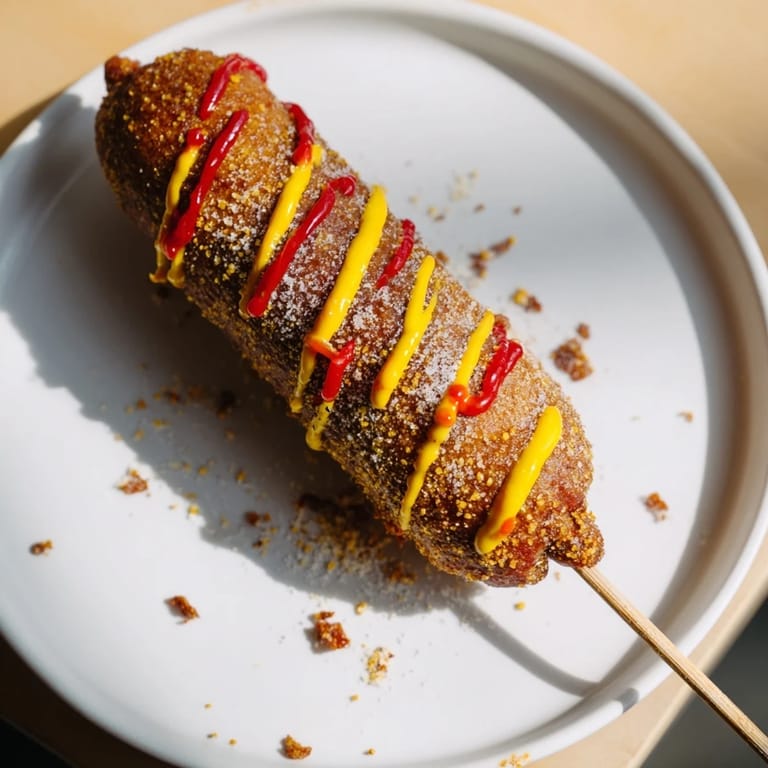
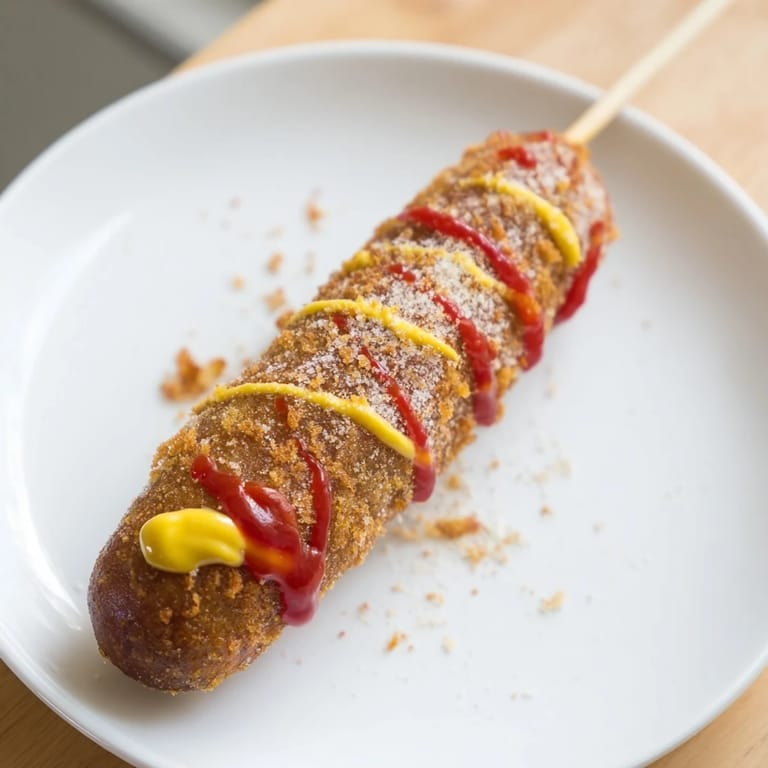
- Ketchup, mustard, and sugar for topping: These are optional but honestly, a light dusting of sugar is the Korean touch that ties everything together.
Tired of Takeout? 🥡
Get 10 meals you can make faster than delivery arrives. Seriously.
One email. No spam. Unsubscribe anytime.
Instructions
- Prepare your sausages:
- Insert a wooden skewer into each sausage lengthwise, making sure you leave at least 3 inches exposed so you have a proper handle. Pat them completely dry with paper towels because moisture is the enemy of a crispy coating.
- Mix your dry ingredients:
- In a large bowl, whisk together flour, pancake mix, cornmeal, sugar, baking powder, and salt until there are no lumps. This step prevents streaky batter later, so don't rush it.
- Create the batter:
- Pour in the egg and milk, whisking gently until you have a smooth, thick consistency that clings to a spoon. If it's too thick and tears when you dip, add milk a tablespoon at a time until it flows like wet cake batter.
- Set up your dipping station:
- Pour the batter into a tall, narrow glass so you can fully submerge each sausage without making a mess everywhere. Spread your panko breadcrumbs on a flat plate nearby.
- Heat your oil:
- Get your oil to exactly 350°F, using a thermometer because guessing leads to either greasy or burnt corn dogs. Let it stabilize for a minute—this temperature is your sweet spot.
- Coat and bread:
- Dip each skewered sausage into the batter, twisting slowly to coat evenly, then immediately roll it in panko, pressing gently so the crumbs actually stick. Confidence helps here—hesitant pressing leads to crumbs sliding off in the oil.
- Fry with patience:
- Carefully place 2–3 corn dogs into the oil at a time and let them fry for 3–4 minutes, turning occasionally with tongs so they brown evenly. You're looking for a deep golden color, almost mahogany in spots, which takes longer than you think but is absolutely worth the wait.
- Drain and rest:
- Remove them with tongs and lay them on paper towels to cool slightly and drain excess oil. They'll stay hot and crispy for a solid 10 minutes.
- Serve with your choice of toppings:
- Dust lightly with sugar, drizzle with ketchup and mustard, or go wild with sweet chili sauce if you're feeling adventurous.
 Save to Pinterest
 There was this one evening when a friend showed up with her picky teenage daughter, and I nervously presented these corn dogs wondering if a kid would actually eat them. Watching that kid's face light up after the first bite, then asking for seconds with her mouth full—that's the moment I realized I'd cracked the code. It wasn't fancy food; it was joy on a stick.
The Sweet and Savory Balance
What makes Korean corn dogs different from their American cousins is this deliberate sweetness in the batter—not cloying or dessert-like, but a gentle whisper of sugar that plays against the savory sausage and salty panko crust. I spent weeks trying to get this balance right, accidentally making batters that tasted like fried doughnuts or batters that were completely bland. The magic is in respecting that two tablespoons of sugar; it seems small, but it's the difference between a corn dog and a Korean corn dog.
Oil Temperature as Your Secret Weapon
I learned this lesson the hard way after pulling corn dogs with pale, soggy coatings and internally raw sausages. An instant-read thermometer changed everything because 350°F isn't just a guideline—it's the exact point where the batter sets and crisps before the oil even starts to brown it. Too cold, and you end up with an oily mess; too hot, and the outside burns while the inside stays ice-cold. Once I started monitoring and adjusting heat throughout the cooking process, consistency improved dramatically.
Variations and Upgrades
After mastering the basic version, I started experimenting with additions that transformed these from snacks into something more interesting. A chunk of mozzarella inserted before the sausage creates a cheese surprise that catches people off guard in the best way, and mixing diced mozzarella directly into the batter creates pockets of melted richness throughout. Some evenings I skip the ketchup and mustard entirely and serve these with sweet chili sauce or honey mustard, which feels more authentically Korean-inspired and honestly elevates the whole experience.
- Try serving with sweet chili sauce for authenticity and a hint of heat.
- For a cheese lover's twist, insert a small piece of mozzarella onto the skewer under the sausage before battering.
- Leftover corn dogs reheat beautifully in a 350°F oven for 8–10 minutes, recovering most of their original crispness.
 Save to Pinterest
 These corn dogs have become my confidence snack—the thing I make when I want to impress someone or when I just need to feel like I can execute something really well. Every time I pull a golden batch from the oil and watch someone's reaction to that first bite, I'm reminded that sometimes the best food moments aren't complicated; they're just honest and made with a little bit of care.
Common Recipe Questions
- → What sausages can be used for these corn dogs?
Standard beef or chicken sausages work perfectly and hold well on skewers during frying.
- → Can I make the batter ahead of time?
It's best to prepare the batter fresh before frying to maintain the ideal consistency and crispiness.
- → How do I achieve a crispy coating?
Rolling the battered sausages in panko breadcrumbs before frying at 350°F ensures a golden, crunchy exterior.
- → Are there suggested toppings for serving?
Ketchup, yellow mustard, and a light dusting of sugar add traditional sweet and tangy touches.
- → Can I add cheese to these corn dogs?
Yes, adding diced mozzarella to the batter or inserting a cheese chunk on the skewer creates a delicious gooey center.