 Save to Pinterest
 Last winter, after a week of feeling completely drained and sort of hollowed out by the endless gray skies, I found myself craving something that felt like a warm hug from the inside out. I'd never been someone who believed in food as medicine until my grandmother handed me a steaming bowl of miso soup when I was eight years old and sick with the flu, and suddenly the world felt less threatening. This ginger-miso broth became my ritual during those months when the wind rattled against my windowpanes and I needed something that could make me feel grounded again. There's something almost magical about how the ginger warms your throat while the miso settles deep in your stomach, like it's rearranging everything that feels wrong and making it right.
My friend Sarah came over for lunch last February, still nursing a cold that had lingered for weeks, and I made this soup while she sat wrapped in one of my blankets on the couch. She watched me slice the ginger so thin it was almost translucent and asked why I bothered with such precision when it was just soup. I told her that the thinner the ginger, the more evenly it releases its warmth into the broth, and she rolled her eyes until she took that first sip and literally stopped talking for a full minute. Now she texts me every time she feels even a little under the weather, asking if I have time to make that soup again.
Ingredients
- Water or vegetable broth: I've discovered that low-sodium broth gives you more control over the final seasoning, but honestly, water works beautifully if your miso is quality
- Fresh ginger: The two-inch piece is non-negotiable, and I learned to slice it paper-thin so it infuses without becoming overpowering or fibrous
- Garlic cloves: Thinly sliced rather than minced, because they'll mellow as they simmer and won't bite back the way raw garlic does
- White or yellow miso paste: White miso is sweeter and lighter while yellow brings more depth, but either works as long as you never boil it after adding
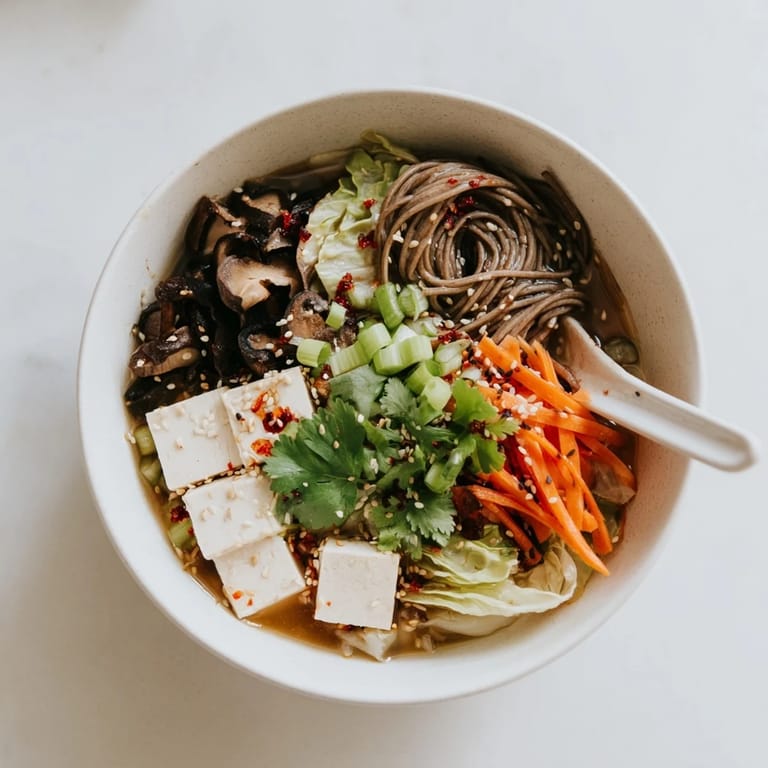
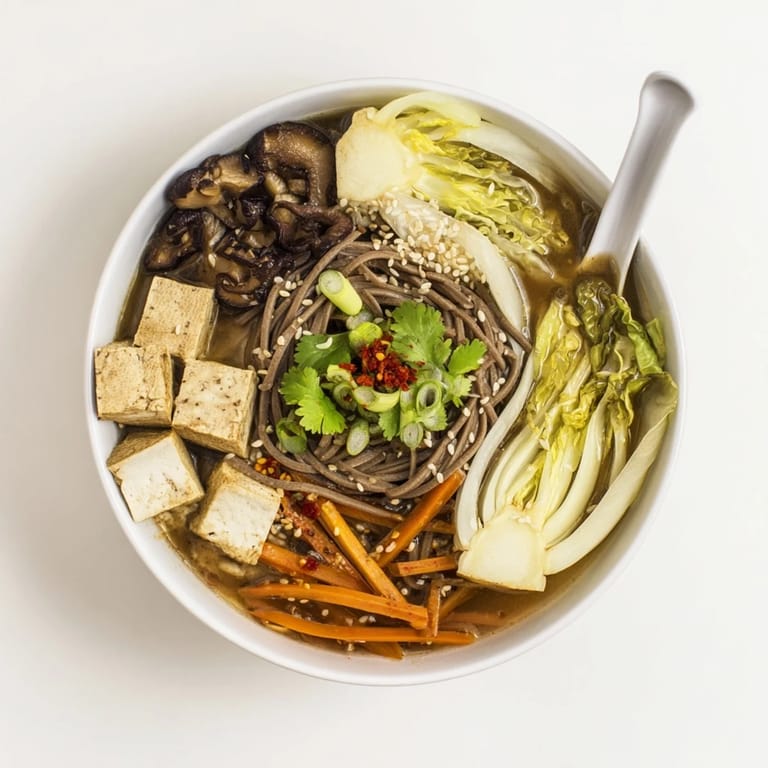
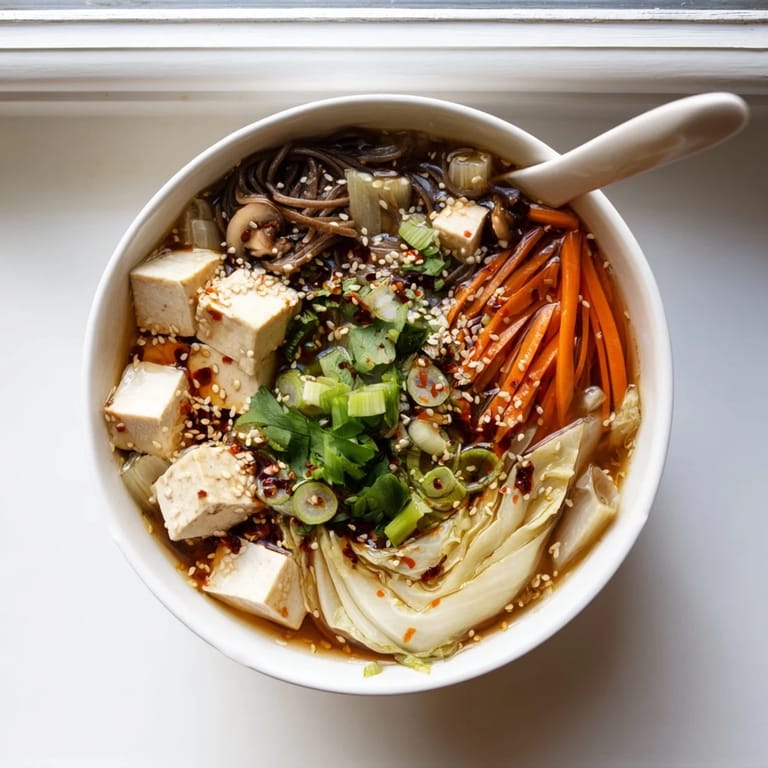
- Napa cabbage: This becomes silky and tender in the broth, absorbing all that ginger-miso flavor while holding onto just enough crunch
- Carrot: Julienned into matchsticks adds beautiful color and a subtle sweetness that balances the salty miso
- Shiitake mushrooms: They bring this incredible earthy quality that makes the soup feel much more substantial than it actually is
- Scallions: Fresh brightness on top that cuts through the richness and makes everything taste alive
- Toasted sesame seeds: These little nutty pops of flavor make such a difference, I never skip them anymore
- Fresh herbs: Cilantro adds brightness while parsley brings a more subtle herbal note, but both are completely optional
- Chili oil or flakes: Just enough warmth to make you sit up straighter, but not so much that it overshadows the ginger
- Silken tofu: When I want something more substantial, these tender cubes turn this from a light broth into a proper meal
- Soba or rice noodles: Sometimes I just want carbs in my soup, and these cook separately so they don't cloud the broth
Tired of Takeout? 🥡
Get 10 meals you can make faster than delivery arrives. Seriously.
One email. No spam. Unsubscribe anytime.
Instructions
- Build your broth foundation:
- Pour your water or vegetable broth into a large pot and bring it to a gentle simmer over medium heat, watching for those tiny bubbles that tell you it's ready but not yet boiling aggressively
- Infuse with aromatics:
- Add your sliced ginger and garlic to the simmering liquid, then lower the heat slightly and let it steep for about 10 minutes until your kitchen starts smelling like warmth itself
- Add the vegetables:
- Toss in the napa cabbage, carrot matchsticks, and sliced shiitake mushrooms, letting them simmer for another 5-7 minutes until the cabbage is wilted and tender but still has some backbone
- Dissolve the miso properly:
- Remove the pot completely from the heat, then scoop out a ladle of hot broth into a small bowl with your miso paste, whisking until completely smooth before pouring it back into the soup
- Finish with additions:
- If you're using tofu cubes or cooked noodles, fold them in gently now and let them warm through for just 2 minutes so they don't fall apart
- Serve with intention:
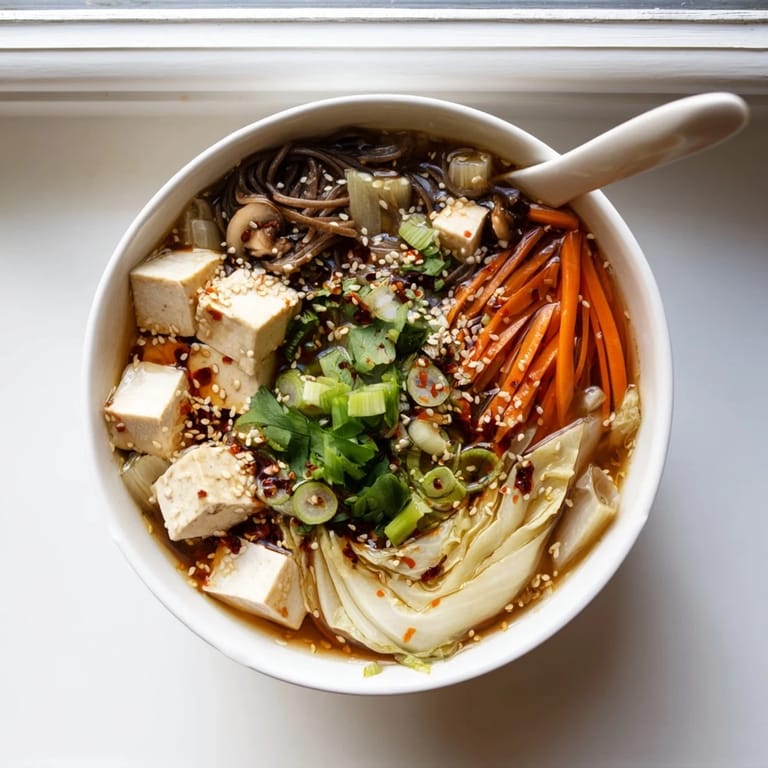
- Ladle the soup into bowls and scatter scallions, sesame seeds, fresh herbs, and that optional hit of chili oil or flakes on top, then serve while it's still steaming hot
 Save to Pinterest
  Save to Pinterest
 There was this one Sunday morning when I made a massive pot of this soup while listening to the rain hammer against the kitchen windows, and something about the ritual of slicing vegetables and watching the broth transform felt so deeply comforting that I found myself tearing up for no reason at all. My roommate wandered in, sleepy and confused, and I handed her a bowl without saying anything. She took one sip, looked at me with wide eyes, and said, "I feel like you just fixed something I didn't even know was broken." That's when I understood that this recipe had become less about sustenance and more about whatever it is that makes a house feel like home.
Building Flavor Depth
I've started adding a splash of soy sauce or tamari right at the end sometimes, just to deepen that umami foundation without overpowering the delicate miso. It's completely unnecessary but creates this extra layer that makes people ask what your secret ingredient is. The trick is using just enough to enhance without making the soup taste distinctly soy-heavy.
Making It Your Own
Bok choy works beautifully in place of napa cabbage, bringing a slightly peppery bite and satisfying crunch. Spinach is another favorite addition, stirred in at the very end so it wilts just slightly but stays vibrant. I've even added daikon radish in winter when I wanted something more substantial, and its mild sweetness pairs unexpectedly well with the ginger.
Serving Suggestions
This soup has become my go-to when friends come over feeling exhausted or under the weather, and I've learned that it pairs surprisingly well with crusty bread for dipping. A crisp white wine cuts through the richness if you're serving it as a first course, but green tea feels more appropriate when you're curled up alone on the couch.
- Set up little bowls of toppings on the table so everyone can customize their own bowl
- Keep some extra miso mixture whisked and ready if anyone wants a stronger flavor
- Remember that the soup will continue to absorb flavors as it sits, so taste and adjust before serving leftovers
 Save to Pinterest
  Save to Pinterest
 Some recipes are just instructions, but this one somehow became the thing I turn to when everything else feels uncertain and I need something I can trust to be good.
Common Recipe Questions
- → Can I make this soup ahead of time?
Yes, you can prepare the broth and vegetables in advance. Store them separately and add the miso paste just before serving to preserve the beneficial probiotics and fresh flavor.
- → What vegetables work best in this soup?
Napa cabbage, carrots, and shiitake mushrooms are traditional, but you can easily substitute bok choy, spinach, daikon radish, or enoki mushrooms based on what's available.
- → Why shouldn't I boil the miso?
Boiling miso paste destroys the beneficial probiotics and can make the flavor bitter. Always remove the pot from heat before whisking in the miso mixture.
- → Is this soup gluten-free?
The base is naturally gluten-free, but some miso brands contain barley. Check labels carefully and use certified gluten-free miso if needed. Soba noodles also typically contain wheat.
- → Can I add protein to make it more filling?
Silken tofu, edamame, or cooked chicken work beautifully. For heartier meals, add cooked soba or rice noodles during the final warming step.