 Save to Pinterest
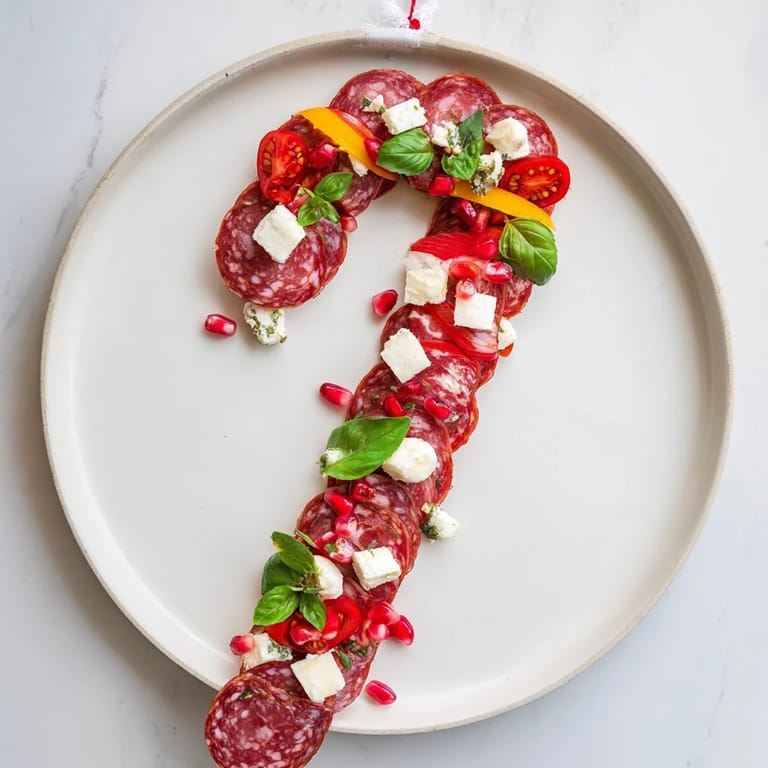
 I'll never forget the year I decided to turn my holiday charcuterie board into something that would make guests actually gasp when they walked in. My sister had just sent me a photo of a candy cane-shaped appetizer spread, and I thought, why not make something that celebrates the season while tasting absolutely delicious? That first time I arranged the red salami and white mozzarella in that bold zigzag pattern, I realized I'd stumbled onto something special—a board that's equal parts edible art and genuine crowd-pleaser.
I made this board for my neighbors' holiday open house a few years ago, and watching people's faces light up when they saw that unmistakable red and white zigzag pattern made me feel like I'd created actual holiday magic. One guest asked for the recipe, but I realized there isn't really one—it's more of a philosophy about arranging beautiful ingredients with intention and a touch of festive spirit.
Ingredients
- Mozzarella cheese, sliced or small balls (200 g): The creamy white base of your candy cane shape. Fresh mozzarella or bocconcini work beautifully because they're mild enough to let the other flavors shine, and the white color creates that crucial contrast with the red salami
- Goat cheese, sliced or crumbled (100 g): Optional, but it adds a tangy sophistication and another layer of white creaminess that makes the pattern feel more intentional
- Dry-cured salami, sliced (200 g): The bold red star of your arrangement. Choose a good quality salami—it's the primary flavor here, and thin slices make the pattern more dramatic
- Prosciutto, rolled (100 g): Optional, but those delicate pink rolls add elegance and work perfectly tucked into the spaces between your other ingredients
- Cherry tomatoes, halved (100 g): These add another pop of red and a burst of fresh sweetness that cuts through the richness of the meats and cheeses
- Red bell pepper, sliced into strips (1): Adds crisp texture and keeps the color story cohesive with those deep reds
- Pomegranate seeds (50 g): These are the garnish that makes people slow down and really look at your board. They add jewel-like color and a surprising tart burst
- Grapes, red or green (100 g): Choose what looks good to you. They add roundness visually and provide natural sweetness as a palate cleanser
- Fresh basil or rosemary sprigs: These tucked throughout add fragrance and a green note that keeps everything feeling fresh and bright
- Assorted crackers or gluten-free crackers (150 g): Your blank canvas for all these beautiful ingredients. Pick a mix of textures
- Baguette, sliced (1 small, optional): For those who want something more substantial or prefer bread to crackers
- Whole-grain mustard or honey (1 small bowl): The sharp or sweet note that ties savory elements together
- Cranberry chutney or fig jam (1 small bowl): This is your bridge flavor—tart and sweet and inherently festive
Tired of Takeout? 🥡
Get 10 meals you can make faster than delivery arrives. Seriously.
One email. No spam. Unsubscribe anytime.
Instructions
- Set your stage:
- Start with a clean, large rectangular or oval serving board on your work surface. Take a moment to visualize where your candy cane curve will flow—typically from one upper corner, swooping toward the center, then back out to the opposite side. This doesn't need to be perfect; the slightly imperfect curve is actually what makes it feel handmade and charming.
- Create the candy cane curve:
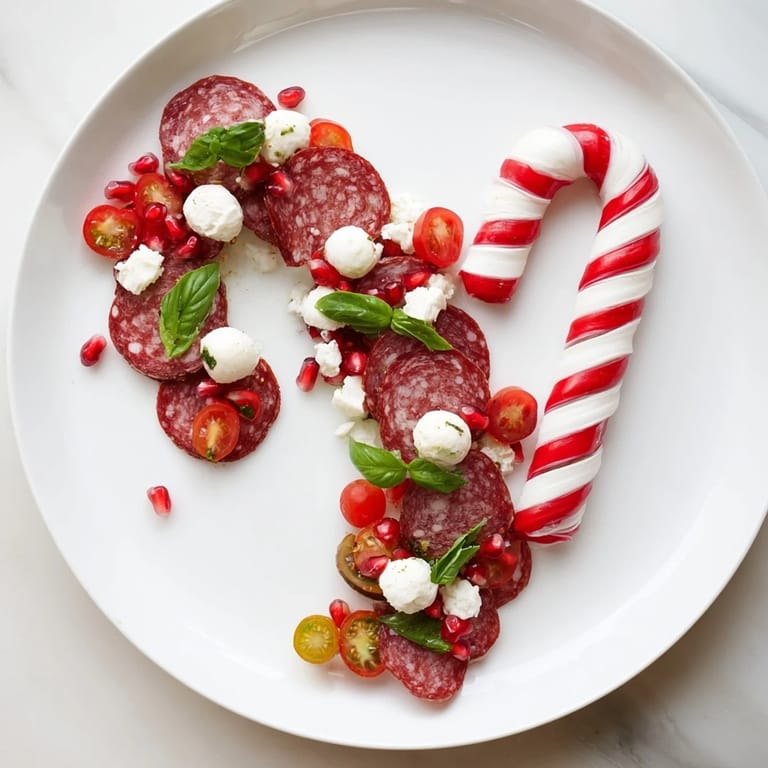
- Begin arranging your salami slices in that swooping S-pattern, overlapping them slightly so you can see the beautiful deep red color. The overlapping isn't just for looks—it creates little pockets where other ingredients will nestle. Now alternate with your mozzarella slices, creating that striking red-and-white contrast. Think of it like painting with your ingredients. You want enough visual rhythm that people immediately recognize the shape.
- Fill the pattern:
- Tuck crumbled or sliced goat cheese into the gaps, and if you're using prosciutto, loosely roll those delicate slices and position them where they catch the light. This middle layer adds depth and makes the board feel generous and full.
- Add the festive accents:
- Place your cherry tomato halves along the red sections of your curve, alternating with strips of red bell pepper. These fresh elements brighten the board and promise freshness to come. Scatter pomegranate seeds in little clusters—they're like edible garnish that also delivers flavor.
- Bring in the supporting players:
- Add clusters of grapes around the board, tucking them into any empty spaces. They should feel organic, like they grew there. Tuck fresh basil or rosemary sprigs throughout, letting them poke out naturally. These herbs do double duty—they look beautiful and they make the whole board smell like the holidays.
- Position the crackers and bread:
- Arrange your crackers along the edges of the board in a casual, inviting way, or if you prefer, pile them in a separate basket nearby. Slice your baguette and lean the slices against other elements so they're visible and accessible. This isn't about rigid organization—it's about abundance and accessibility.
- Add your dips:
- Place small bowls of mustard and chutney right on the board or just beside it. These little bowls become focal points and give guests permission to dig in with intention.
- The final flourish:
- Step back and look at your creation. If you see any sparse areas, add a few more herbs or a few more pomegranate seeds. The board should feel full and generous, like you've given it real thought. Serve immediately while everything is fresh and your guests can see it in all its glory.
 Save to Pinterest
 This board became my signature move not because I'm particularly talented at arrangement—I'm really not—but because people respond to food that's been arranged with care and a sense of play. It turned a simple appetizer spread into a moment where guests paused, appreciated the beauty, took a photo, and then dove in with real joy. That's the real magic here.
Customizing Your Candy Cane Board
The beauty of a charcuterie-style board is that it bends to your will and your preferences. For a vegetarian version, omit the salami and prosciutto entirely and double up on your cheeses. Add roasted red peppers (which have a deeper, sweeter flavor than raw), marinated artichoke hearts, and perhaps some marinated olives for that salty, briny element the meat was providing. The structure stays the same—the candy cane shape is still your guide—but now you're celebrating vegetables instead. You can swap mozzarella for white cheddar or Havarti if you want something with a bit more sharpness, or add a creamy burrata if you're feeling luxurious. The ingredients adapt; the philosophy of creating a visually stunning, seasonally appropriate spread remains constant.
Pairing and Serving Strategy
I've learned that what you serve this board with matters almost as much as what's on it. A crisp white wine like Pinot Grigio or Sauvignon Blanc is a natural partner—the acidity cuts through the richness of the cheeses and meats. Sparkling beverages work beautifully too, especially if you're celebrating something specific. The board works best when presented at room temperature, about 30 minutes after you arrange it. This gives the cheeses a chance to soften slightly so they're more palatable, and it lets the flavors of everything meld together in the best way. Set small plates, napkins, and maybe some small forks nearby, and let your guests graze. It's the most elegant way to eat, because there's no pressure to finish, and people end up trying more different combinations than they would with a traditional plated appetizer.
Making It Seasonally Yours
While this board is inherently festive, you can shift its personality based on the season and what's available. In spring, add fresh strawberries and edible flowers. In summer, add stone fruits and fresh corn chips. In fall, use dried apricots and swap some reds for deep purples and oranges. The candy cane shape keeps its holiday meaning, but the ingredients whisper the season. That said, there's something special about making this exact board as a nod to winter, using the bold red and white to echo actual candy canes. The nostalgia of that color combination, the festive feeling it creates—there's a reason these colors matter in winter. Honor that instinct when you build your board.
- Keep in mind that different boards work for different occasions, and that's perfectly fine
- Don't feel locked into the candy cane if a different shape speaks to you and your guests
- The real secret is taking time to arrange thoughtfully, whatever shape you choose
 Save to Pinterest
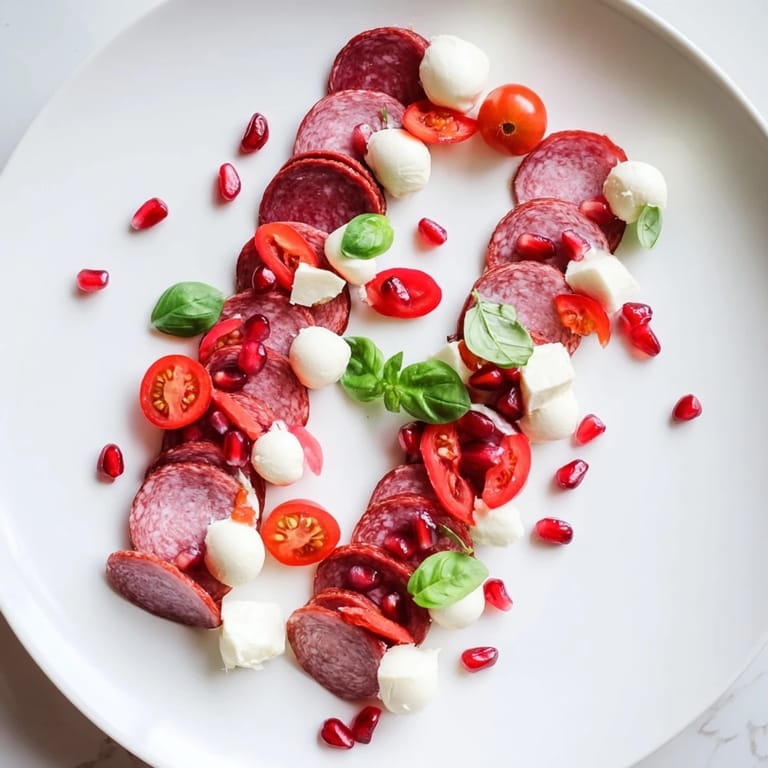
 This candy cane board is proof that you don't need complicated recipes or fancy techniques to create something that feels special and festive. Sometimes the most memorable food is simply beautiful ingredients, thoughtfully arranged, served with genuine warmth.
Common Recipe Questions
- → How do I create the candy cane shape?
Arrange the salami and mozzarella alternately in overlapping slices, starting at a corner and curving in an S-shape to resemble a candy cane.
- → Can I make this board vegetarian?
Yes, omit the meats and add more cheeses, roasted peppers, and marinated artichokes for added texture and flavor.
- → What are good dipping accompaniments to serve?
Whole-grain mustard, honey, cranberry chutney, and fig jam pair beautifully with the cheeses and meats on the board.
- → How can I make this board gluten-free?
Use gluten-free crackers instead of regular ones and skip the baguette or choose a gluten-free alternative.
- → What drinks complement this holiday board?
Crisp white wines or sparkling beverages enhance the fresh and savory flavors presented in the board.