 Save to Pinterest
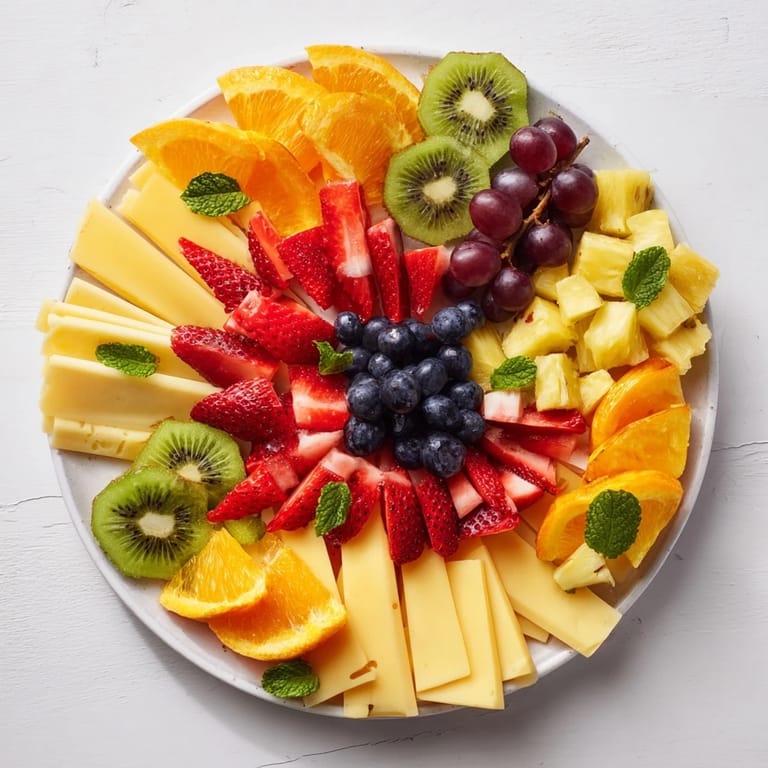
 My cousin's wedding required an appetizer that would make guests pause mid-conversation, and I found myself standing in the kitchen with a round platter, wondering if I could actually pull off something that looked like it belonged in a design magazine. Arranging fruit and cheese into a kaleidoscope pattern felt impossibly ambitious until the first wedge of strawberry hit the board next to a triangle of aged cheddar, and suddenly the geometry made sense. What started as nervous planning transformed into something meditative—each color choice building on the last, creating this hypnotic rhythm that even I didn't expect to work so well. When the platter came out, the room actually quieted for a second, which felt like victory enough.
I learned the power of this platter at a casual dinner where I'd forgotten to prepare a proper starter, grabbed whatever fruit and cheese I had on hand, and arranged it in concentric circles out of pure improvisation. My friend said it looked too beautiful to eat, and then everyone crowded around trying to figure out the pattern before the cheeses got too warm. That night taught me that sometimes the simplest things—fruit, cheese, and a bit of intentional arrangement—can become the most memorable part of a meal.
Ingredients
- Seedless red grapes: These stay firm and glossy, holding their jewel-like appearance even as the platter sits on the table—pick ones that feel heavy for their size.
- Fresh strawberries: Halving them creates the perfect surface to catch light, and cutting them just before arranging prevents the juices from weeping onto the cheese.
- Kiwi: The bright green interior provides stunning color contrast, and the slight tartness balances the sweeter fruits beautifully.
- Pineapple: Cut into small wedges so they feel delicate and refined rather than chunky, softening their natural boldness.
- Blueberries: These become your fill-in-the-gaps secret weapon, tucking into spaces and adding pops of deep purple where you need them most.
- Orange: Segmenting it by hand rather than slicing keeps the shape interesting and the texture distinct from other round fruits.
- Aged cheddar: The sharpness cuts through the fruit's sweetness, and the firm texture holds a clean wedge shape that photographs well.
- Manchego: Nutty and slightly crystalline, this cheese brings sophistication and slices into thin, elegant wedges that feel special.
- Brie: The creamy white interior provides visual contrast, though handle gently as it softens quickly—keep it cool until the last moment.
- Goat cheese: Sliced into rounds, it offers tangy complexity and a pale hue that grounds the arrangement visually.
- Fresh mint: Optional but worth including for that final whisper of green and a hint of coolness that elevates the whole presentation.
Tired of Takeout? 🥡
Get 10 meals you can make faster than delivery arrives. Seriously.
One email. No spam. Unsubscribe anytime.
Instructions
- Prep everything first:
- Wash and cut all fruits and cheeses while your platter is still empty—this gives you freedom to arrange without rushing. Pat the fruit dry with paper towels so it gleams under light rather than looking wet.
- Start at the center:
- Place a single wedge of fruit at the very middle of your round platter, then lay down a cheese wedge right next to it, creating the first two points of your pattern. This anchors the entire design.
- Build the first circle:
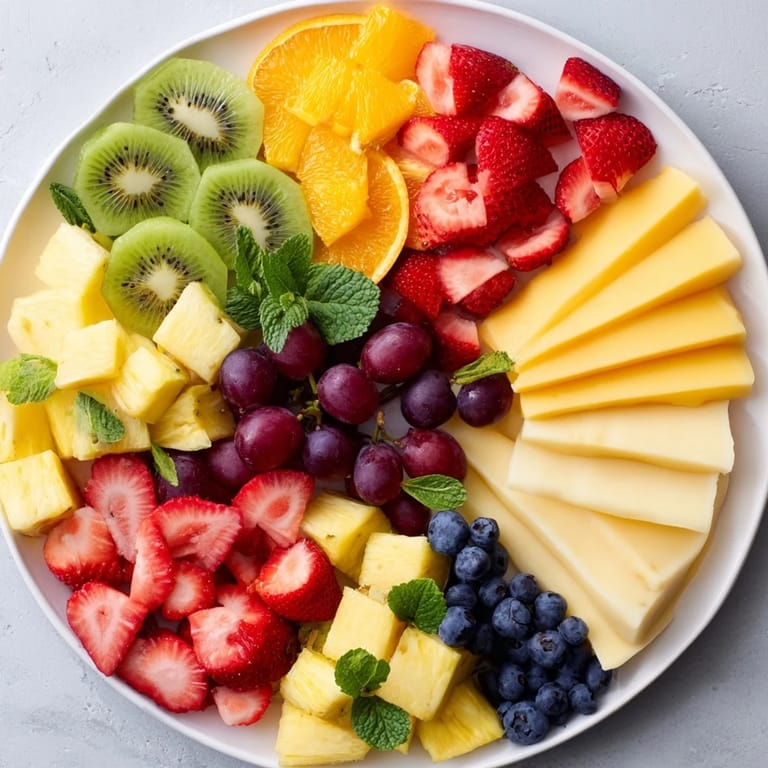
- Alternate between one fruit type and one cheese type as you move clockwise, maintaining even spacing so each wedge mirrors the one before it. Step back frequently to check for symmetry—your eye is the best guide here.
- Add concentric rings:
- Once the first circle is complete, begin a new ring just inside or outside it, using a different fruit-and-cheese pairing to deepen the kaleidoscope effect. The repetition is what makes it magical.
- Fill the gaps:
- Tuck blueberries or small grapes into any spaces between larger wedges, using them to enhance the color pattern rather than cover mistakes. They're like the punctuation that finishes the sentence.
- Finish with mint:
- Scatter fresh mint leaves across the platter just before serving, letting them nestle naturally between the wedges. This adds a final layer of freshness and color.
 Save to Pinterest
 There's a moment right before serving when you stand back and see the whole pattern come into focus—all those individual pieces suddenly reading as one unified design, like a mosaic. That's when you know it's going to work, and whatever effort you put into the arrangement feels completely worth it.
The Geometry of Appetite
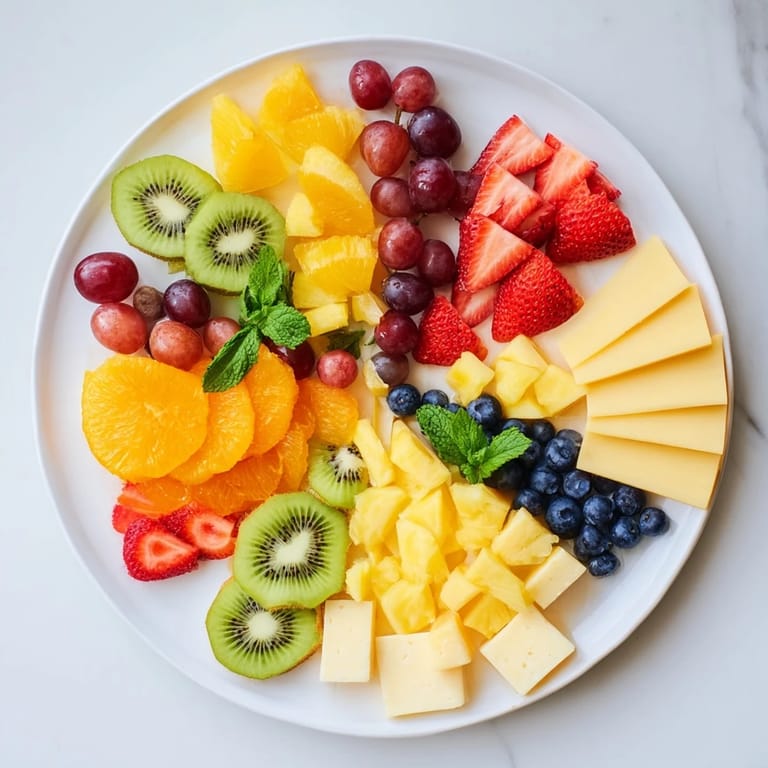
What makes this platter work isn't just the flavors, though they matter—it's the way your brain recognizes pattern and symmetry. We're drawn to order, and when food presents itself in a harmonious, intentional way, we slow down and actually notice what we're eating instead of just grabbing. The kaleidoscope effect transforms a simple cheese board into something that feels ceremonial, even if you're just snacking before dinner.
Choosing Your Cast of Characters
The specific fruits and cheeses you choose will shift the vibe entirely. Spring calls for strawberries and bright pastels; summer screams for all the stone fruits and creamy fresh cheeses; autumn invites deeper oranges and grapes; winter can embrace pomegranate and aged, complex cheeses. Pay attention to what's in season and what looks vibrant at the market—dull fruit makes even the best arrangement feel flat. The beauty of this platter is that it's a canvas for whatever's best right now.
Timing and Temperature
This platter reaches peak beauty and flavor in the 30 minutes after you finish arranging it, so time your prep accordingly. Make it too far in advance and the fruits will start to weep slightly into the cheeses, and the cheese will soften unevenly. Too close to serving and you'll be frantic. Find that sweet spot where you can step back, admire your work, and then let guests discover it fresh.
- Keep soft cheeses on the outer edges where they're less likely to be crushed as people reach in.
- If your kitchen is warm, arrange the platter on ice or over a bowl of ice to keep everything cool and firm.
- This is one of those rare dishes that's actually better made moments before serving rather than hours ahead.
 Save to Pinterest
 This platter proves that sometimes the most impressive things we make don't require any cooking at all, just a bit of thoughtfulness and an eye for how colors speak to each other. Serve it with something cold and sparkling, watch people slow down when they see it, and feel genuinely proud of something so simple you almost didn't believe it would work.
Common Recipe Questions
- → How do I achieve the kaleidoscope effect?
Arrange alternating wedges of fruit and cheese in concentric circles on a round platter, ensuring colors and shapes balance symmetrically.
- → Can I substitute the cheeses?
Yes, feel free to swap in cheeses with similar textures and shapes to maintain the visual harmony and flavor balance.
- → What fruits work best for presentation?
Use colorful, firm fruits that can be sliced into wedges or segments, such as strawberries, kiwi, pineapple, blueberries, grapes, and orange segments.
- → How long can the platter be prepared in advance?
It is best served fresh but can be covered and refrigerated shortly before serving to preserve freshness and appearance.
- → Any tips for enhancing flavor contrast?
Adding fresh mint leaves as garnish and filling gaps with grapes or blueberries boosts both aroma and visual appeal while balancing flavors.