 Save to Pinterest
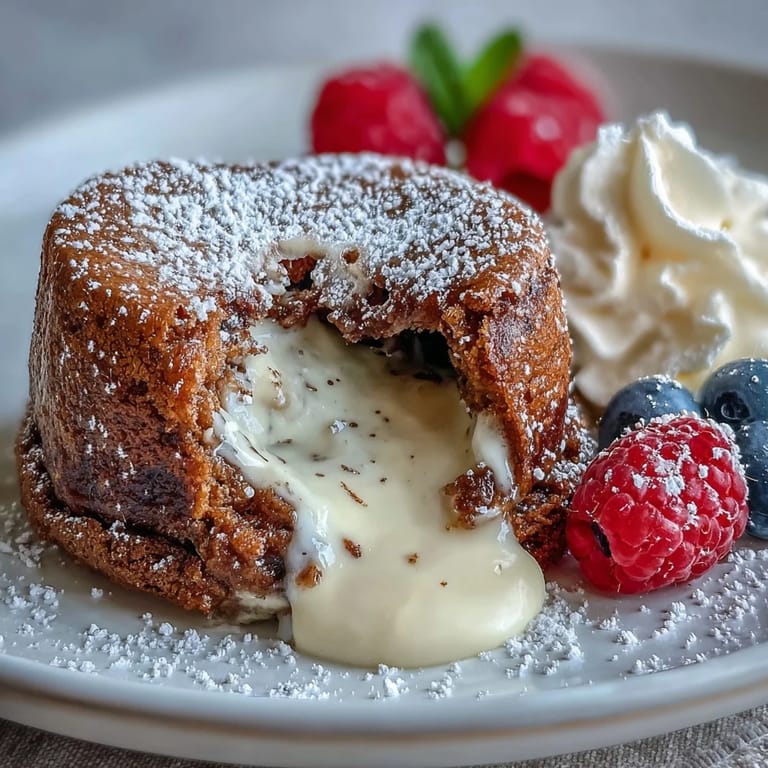
 Hojicha White Chocolate Lava Cake is a decadent individual dessert featuring a molten center of creamy white chocolate infused with the nutty, roasted aroma of hojicha tea. This Japanese fusion treat offers a sophisticated experience for tea lovers and dessert enthusiasts alike.
Save to Pinterest Each cake is a delicate balance of sweetness and earthiness, designed to impress with its elegant presentation and warm, flowing core. It is the perfect indulgence for a quiet moment or as a showstopping finale to a gourmet meal.
Ingredients
Tired of Takeout? 🥡
Get 10 meals you can make faster than delivery arrives. Seriously.
One email. No spam. Unsubscribe anytime.
- 80 g (2.8 oz) white chocolate, chopped
- 60 g (4 tbsp) unsalted butter, plus extra for greasing
- 2 large eggs
- 1 large egg yolk
- 60 g (1/3 cup) granulated sugar
- 30 g (1/4 cup) all-purpose flour
- 2 tbsp hojicha powder (roasted green tea, finely ground)
- Pinch of salt
- Optional: Powdered sugar, for dusting
- Optional: Fresh berries or whipped cream
Instructions
- Step 1
- Preheat the oven to 200°C (390°F). Grease four ramekins (approx. 6–8 oz capacity) with butter and lightly dust with flour, tapping out any excess.
- Step 2
- Melt the white chocolate and butter together in a heatproof bowl set over a pot of barely simmering water (double boiler method), stirring until smooth. Remove from heat and let cool slightly.
- Step 3
- In a separate mixing bowl, whisk together the eggs, egg yolk, and sugar until pale and slightly thickened, about 2–3 minutes.
- Step 4
- Sift in the flour, hojicha powder, and salt. Gently fold to combine.
- Step 5
- Pour the melted white chocolate mixture into the egg mixture and fold until just incorporated. Do not overmix.
- Step 6
- Divide the batter evenly among the prepared ramekins.
- Step 7
- Place ramekins on a baking tray and bake for 12 minutes, or until the edges are set but the centers remain soft and jiggly.
- Step 8
- Remove from oven and let rest for 1–2 minutes. Carefully run a thin knife around the edges and invert each cake onto serving plates.
- Step 9
- Dust with powdered sugar and serve immediately, optionally with berries or whipped cream.
Zusatztipps für die Zubereitung
For extra molten centers, reduce the baking time by exactly one minute to ensure the core remains liquid and flows beautifully upon serving.
Varianten und Anpassungen
You can easily create a different flavor profile by substituting the hojicha powder with matcha powder for a vibrant green tea variation.
Serviervorschläge
This dessert pairs beautifully with a glass of ice-cold milk or a shot of espresso to complement the deep, roasted tea notes of the hojicha.
 Save to Pinterest
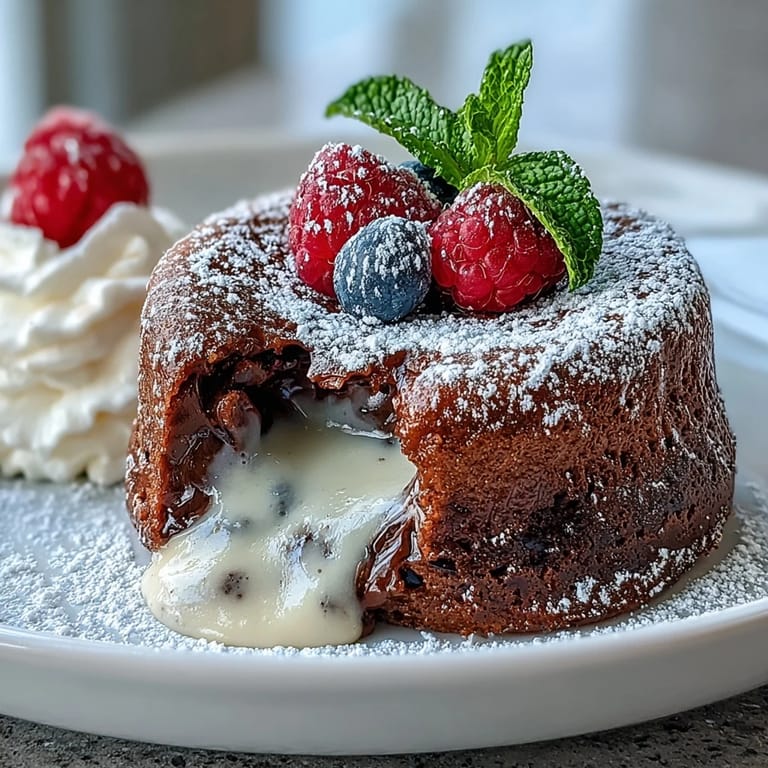
 Enjoy these cakes immediately while they are warm to experience the perfect contrast between the soft outer cake and the creamy, roasted tea-infused center.
Common Recipe Questions
- → What makes the center molten?
The precise baking time of 12 minutes at high heat sets the edges while keeping the center soft and jiggly. Removing from heat after 12 minutes creates that signature flowing texture.
- → Can I make these ahead of time?
Prepare batter up to 4 hours ahead and refrigerate in ramekins. Add 1-2 extra minutes baking time if baking chilled. Best served immediately while centers are warm and flowing.
- → What is hojicha?
Hojicha is Japanese roasted green tea with a nutty, caramel-like flavor and reddish-brown color. The roasting process reduces bitterness, making it perfect for desserts paired with sweet ingredients.
- → Why use egg yolk plus whole eggs?
The extra yolk adds richness and helps create the creamy molten texture. Yolks provide more fat and emulsifiers than whole eggs alone, resulting in smoother, more luxurious centers.
- → Can I substitute matcha for hojicha?
Yes, matcha works as a direct substitute. Expect a more grassy, vibrant flavor profile compared to hojicha's nutty notes. Use the same 2 tablespoon quantity for the best results.
- → How do I know when they're done?
Edges should be set and firm to the touch, while the center still jiggles slightly when gently shaken. A toothpick inserted near the edge should come out clean, but the center will remain wet.