 Save to Pinterest
 I discovered hojicha one autumn afternoon when a friend handed me a small tin of roasted green tea leaves, insisting I try it in something sweet. That cup of hojicha—toasty, nutty, almost caramel-like—sparked an idea that wouldn't leave me alone. What if I built an entire cake around it? Not as an afterthought, but as the main character, layered with butter and dark chocolate to bring out its subtle depth. This cake became my answer to that question.
I made this cake for my sister's quiet birthday during a rainy November evening, just the two of us in the kitchen. We paired each slice with a pot of hojicha tea, and somewhere between the second bite and her closed eyes, I realized this wasn't just dessert anymore. It had become a small ritual, something that made an ordinary Tuesday feel intentional and warm.
Ingredients
- Cake flour: This is your secret to tenderness; all-purpose flour will make the cake slightly dense, so don't swap it out.
- Eggs at room temperature: They incorporate more air and create that signature sponge structure that makes every bite feel weightless.
- Granulated sugar: Beaten with eggs for 5-7 minutes until pale and thick—this isn't a suggestion, this is where the magic happens.
- Whole milk and melted butter: Adding these separately prevents a dense, gluey texture; think of them as the final permission slip for moisture and richness.
- Hojicha loose leaf tea: If you can find it loose instead of bagged, you'll get a cleaner, more nuanced infusion that tastes less like dust and more like roasted fields.
- Unsalted butter for the buttercream: Softened to almost melting helps you avoid lumps and creates that cloud-like texture that spreads like silk.
- Powdered sugar, sifted: Lumps are the enemy here; sifting takes three minutes but saves you from grainy frosting.
- Dark chocolate 60-70% cocoa: This balance keeps the ganache from being too bitter or too sweet, letting the hojicha be the star.
- Heavy cream: Room temperature or slightly warm works best because temperature shock can seize the chocolate.
Tired of Takeout? 🥡
Get 10 meals you can make faster than delivery arrives. Seriously.
One email. No spam. Unsubscribe anytime.
Instructions
- Prepare your pans and oven:
- Heat your oven to 175°C and line two round pans with parchment paper cut to fit the bottom snugly. This isn't about perfection; it's about making sure your delicate cake doesn't stick.
- Whip eggs and sugar into clouds:
- In a large bowl, beat room-temperature eggs with granulated sugar on high speed for 5-7 minutes until the mixture is pale, thick, and ribbons fall from the beater. You'll know it's ready when it looks like soft mousse and triples in volume.
- Fold in flour gently:
- Sift cake flour and salt together, then fold into the egg mixture in three additions using a spatula with gentle strokes—don't stir or you'll deflate all that air you just trapped.
- Temper the wet ingredients:
- Whisk together room-temperature milk, cooled melted butter, and vanilla extract. Stir a few spoonfuls of batter into this mixture first to warm it up, then fold the whole thing back into the main batter so it doesn't shock the delicate foam.
- Bake until golden:
- Divide batter evenly between pans and bake for 20-22 minutes until the top springs back when touched and a skewer comes out clean. The kitchen will smell warm and slightly sweet, which means you're almost there.
- Cool with patience:
- Let cakes rest in their pans for 10 minutes so they set slightly, then turn them out onto a wire rack to cool completely. Trying to frost a warm cake is like frosting a cloud—it won't work.
- Steep hojicha into buttercream:
- Heat milk until it steams, add loose hojicha leaves, and let them sit for 10 minutes while the kitchen fills with that toasty roasted scent. Strain carefully and cool the infused milk to room temperature before using.
- Beat butter into silk:
- Combine softened butter, sifted powdered sugar, and salt, beating for 3-4 minutes until fluffy and pale. This takes time because air creates texture.
- Fold in hojicha milk slowly:
- Add cooled hojicha milk gradually while beating, stopping to scrape down the bowl so you don't end up with lumps hiding in the corners. The final buttercream should look smooth, creamy, and taste of autumn.
- Make glossy ganache:
- Heat heavy cream until it steams, pour it over chopped dark chocolate, and let it sit untouched for 2 minutes. Then stir slowly until the chocolate melts into a glossy, smooth glaze and cool to room temperature.
- Stack and frost with care:
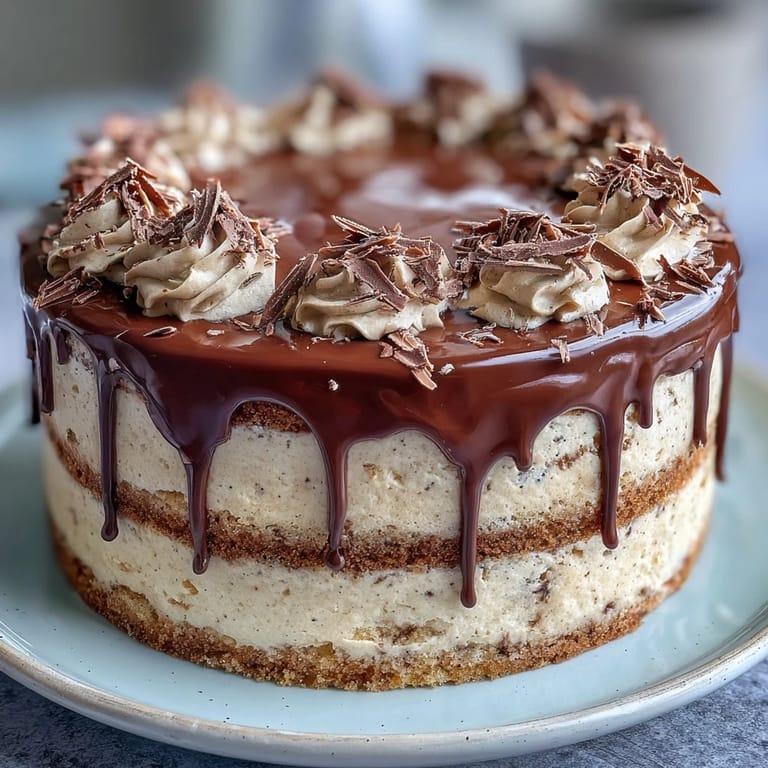
- Place one cooled cake layer on your plate, spread half the hojicha buttercream evenly over the top using an offset spatula. Add the second layer and frost the top and sides with remaining buttercream, making it as smooth or rustic as you like.
- Ganache and chill:
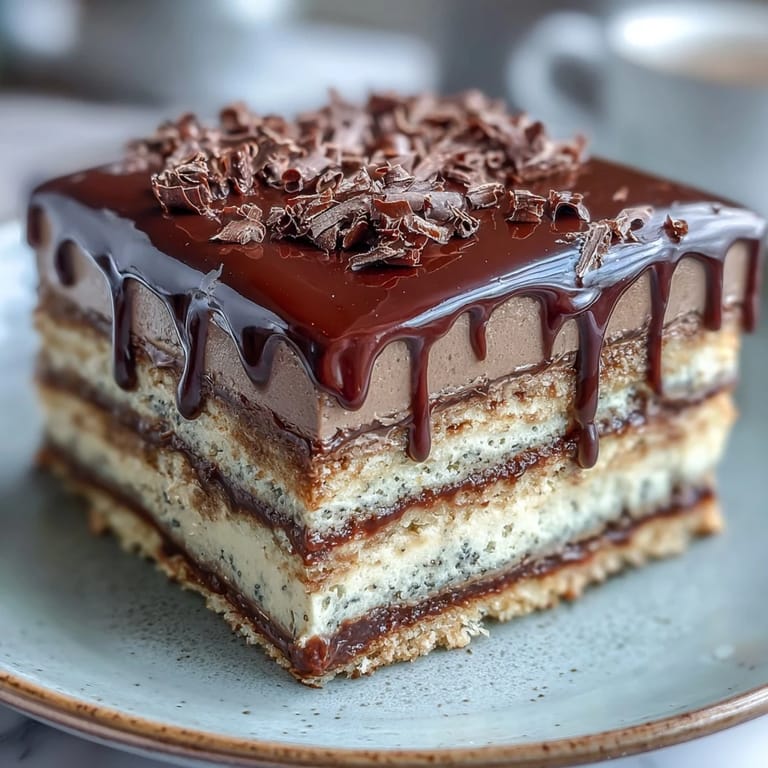
- Pour cooled ganache over the frosted cake, letting it pool on top and drip naturally down the sides. Chill for 30 minutes before slicing so every layer sets properly and cuts cleanly.
 Save to Pinterest
 There's a moment when you pour that dark ganache over the frosted cake and watch it slowly cascade down the sides like liquid chocolate silk, and suddenly all the measuring and waiting and careful folding makes sense. That's when you know you've created something worth sharing, something that tastes like care.
The Story of Hojicha in Desserts
Hojicha is roasted green tea, and somewhere in that roasting process it loses its grassy edge and gains something warm, almost nutty, almost caramel-like. It's less delicate than regular matcha and more forgiving in sweets because the roasting mellows it out. Bakers and pastry chefs have been discovering this for years, but it still feels like a secret worth sharing with people who love both tea and chocolate.
Why This Cake Works for Special Moments
This isn't a cake you throw together on a Tuesday afternoon; it's a cake you plan for, the kind that signals you've set aside time and care for someone. The three-layer construction, the attention to temperature and timing, the way hojicha and dark chocolate speak to each other—all of it adds up to something that feels thoughtful. When people taste it, they taste the deliberation, and that matters more than perfection.
Variations and Final Thoughts
Once you master the base, you can adjust the hojicha strength by steeping longer or using more leaves, dust the ganache with a little extra hojicha powder for visual contrast, or garnish with thin chocolate shavings for elegance. Serve each slice alongside a cup of hojicha tea or a light oolong, and watch the flavors echo each other on the palate. This cake rewards patience and planning, and it's worth every minute.
- Make sure your ingredients are at the right temperature before you start—room temperature really is the foundation of a tender, airy sponge.
- If the ganache thickens too much before pouring, gently reheat it over a warm water bath for a few seconds until it flows again.
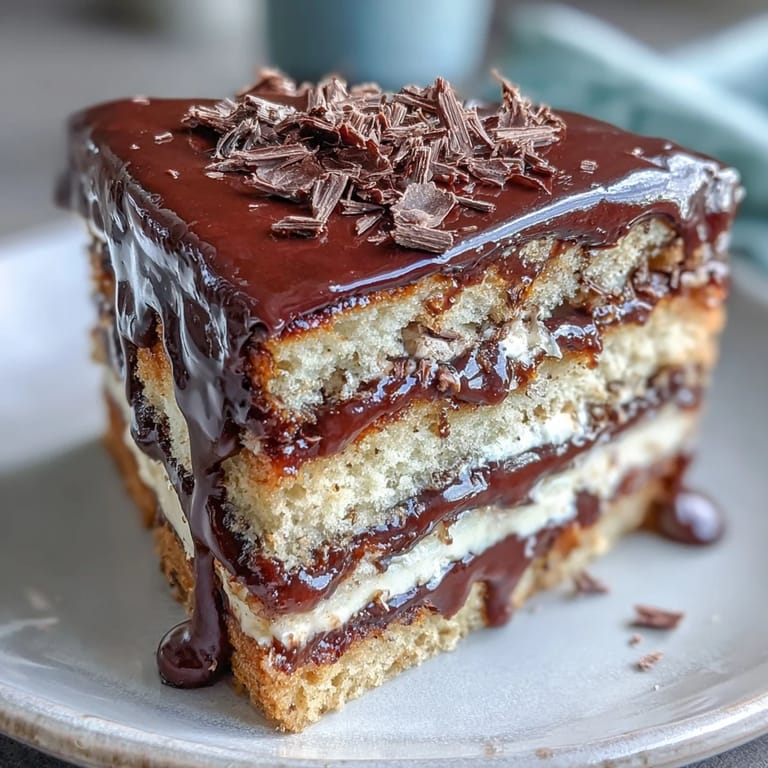
- Chill for the full 30 minutes before cutting; this gives you clean slices instead of crumbly mess.
 Save to Pinterest
 This cake is a love letter to anyone who understands that the best desserts are the ones made with intention and time. Slice it, share it, and let the combination of roasted tea and dark chocolate remind you why you started baking in the first place.
Common Recipe Questions
- → What is hojicha and how does it affect the cake's flavor?
Hojicha is a roasted green tea that imparts a toasty, nutty aroma and mild flavor, enhancing the buttercream with subtle warmth and earthiness.
- → How do you ensure the buttercream is smooth and creamy?
Beat the butter until light and fluffy before gradually mixing in cooled hojicha-infused milk and powdered sugar, creating a silky texture.
- → What type of chocolate is recommended for the ganache?
Use dark chocolate with 60–70% cocoa content for a balanced bitterness that complements the hojicha's mellow notes.
- → Can the cake be prepared ahead and chilled?
Yes, assembling and chilling the cake for at least 30 minutes helps set the layers and meld flavors before serving.
- → Are there tips for strengthening the hojicha flavor?
Steeping hojicha leaves longer in warm milk or increasing the amount of tea used enhances the infusion's intensity in the buttercream.