 Save to Pinterest
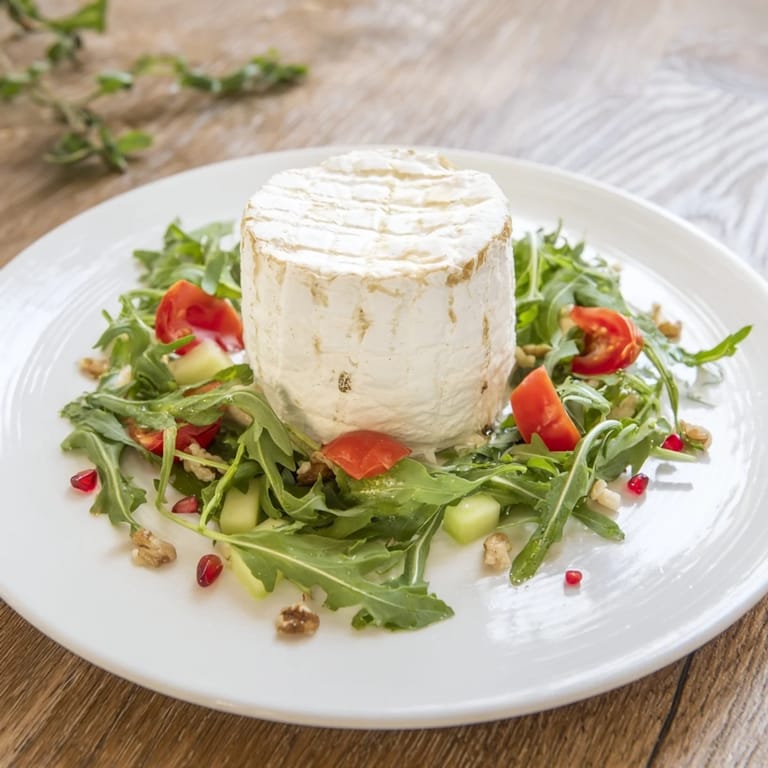
 I discovered this salad during a summer dinner party that almost didn't happen. My friend cancelled last minute, and instead of ordering takeout, I found myself staring at a beautiful wedge of Saint-Marcellin cheese and a pile of just-picked vegetables. On impulse, I arranged everything like spokes on a wheel, all pointing inward to that creamy center, and something clicked. It was architecture you could eat, and when guests arrived an hour later, they forgot to be disappointed about the cancelled plans.
The first time I made this for more than four people, I panicked about scale. Would it still feel special on a larger platter? I doubled the vegetables and used two cheese wheels instead of one, placing them at opposite corners. My sister walked into the kitchen, stopped, and just said, "Okay, now I understand why you made it that way." That's when I knew the concept was bigger than the ingredients.
Ingredients
- Baby arugula: Use it as your baseline green—it's mild enough not to fight the cheese, but peppery enough to matter. If arugula seems wilted at the market, grab a new bunch; it's the first thing that shows age.
- Cherry tomatoes: Halve them just before arranging to keep the cut sides bright and fresh-looking. Summer tomatoes are non-negotiable; in winter, skip them or your salad will taste like watery obligation.
- Cucumber: A mandoline makes these thin enough to look elegant, but a sharp knife works fine if you're patient. The thinner you slice, the more they'll catch the light.
- Watermelon radish: This is your visual anchor—those pink and white rings are why people gasp. If you can't find one, use regular radishes thinly shaved, but you'll lose some of that "whoa" moment.
- Pomegranate seeds: Buy them pre-seeded if you're short on time; nobody needs to wrestle with a pomegranate before guests arrive. They add tartness and jewel-like pops of color that feel intentional.
- Toasted walnuts: Toast them yourself for five minutes in a dry pan if you have time—the smell alone makes the kitchen feel purposeful. Store-bought toasted walnuts are fine too, just check they're not stale.
- Extra-virgin olive oil: This tastes like the dressing itself, so don't skimp. Use something you'd actually want to taste on its own.
- White balsamic vinegar: It's milder and sweeter than regular balsamic, which matters here because you want the cheese flavor to lead. If you only have dark balsamic, use half the amount.
- Honey: A teaspoon sounds small, but it rounds out the dressing and plays beautifully against the sharpness of mustard and arugula.
- Dijon mustard: This isn't decoration—it emulsifies the dressing so it clings to the vegetables instead of pooling at the bottom of the board.
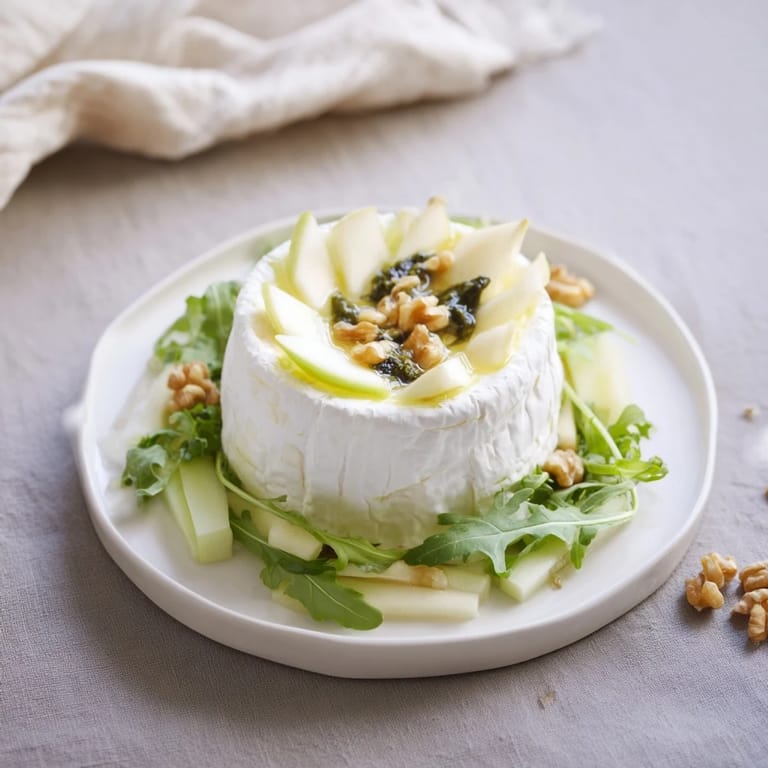
- Artisanal cheese wheel: Choose something with personality: Saint-Marcellin is buttery and almost runny when ripe, Brie is creamy and approachable, aged Camembert has more tang. Visit a cheese counter if you can and ask what's at its peak today. That conversation changes everything.
Tired of Takeout? 🥡
Get 10 meals you can make faster than delivery arrives. Seriously.
One email. No spam. Unsubscribe anytime.
Instructions
- Set the stage with your centerpiece:
- Place the cheese wheel on its small plate or pedestal toward one corner of your large board—off-center feels more deliberate than dead-center. This is your anchor point; everything else radiates from here.
- Create the first arc with arugula:
- Arrange the arugula in a sweeping curve that flows outward from the cheese like lines pointing home. Don't make it too tight; a little looseness looks intentional, like the greens are reaching.
- Layer the structure:
- Working in curved rows, place your cucumber slices, tomato halves, and watermelon radish slices so they all angle inward toward the cheese. Think of yourself as drawing with vegetables—each ingredient is a line, and they all lead somewhere.
- Scatter the finishing pieces:
- Drop the pomegranate seeds and walnuts along the arrangement, keeping the directional feel alive. These shouldn't look random; they're the punctuation marks on your edible map.
- Make the dressing:
- Whisk the oil, vinegar, honey, and mustard together in a small bowl until it tastes balanced—the honey should round out any harsh edges, and the mustard should whisper, not shout. Taste it, season it, make it yours.
- Finish and serve:
- Drizzle the dressing lightly over everything except the cheese wheel itself—the cheese gets to stay pristine and centered. Bring it to the table before anyone eats, so they can see what you made before it becomes part of them.
 Save to Pinterest
 One night, a guest who usually just picks at salads went straight for the cheese, spread it on a tomato slice, grabbed some arugula, and ate the whole thing in one bite. Then she looked surprised, like she'd just discovered something she didn't know she wanted. That's the moment I realized the salad works because it doesn't feel like a salad at all—it feels like permission.
Why Arrangement Matters
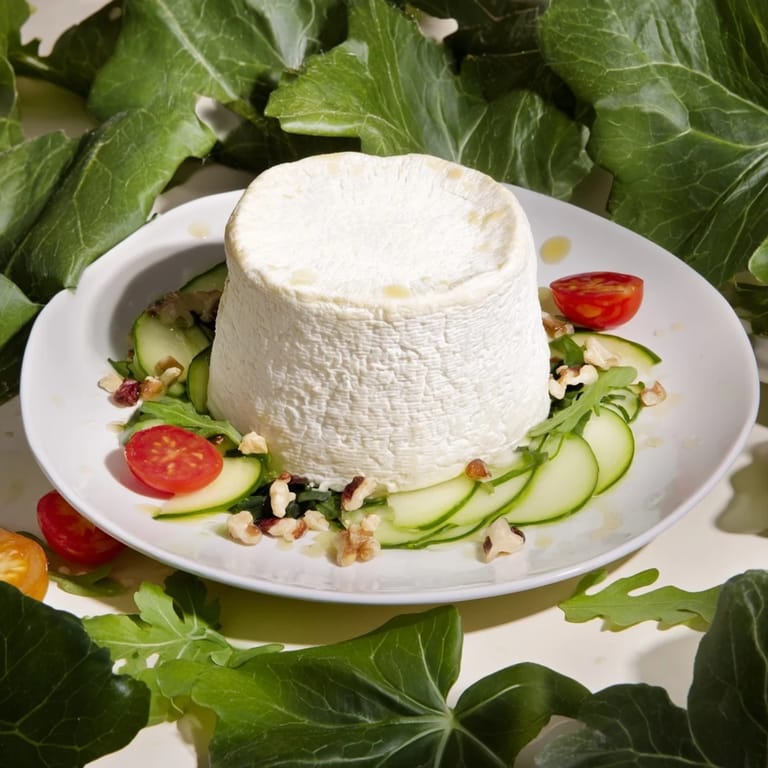
There's a reason this salad asks you to think about how things sit on the board. When every ingredient points toward the center, your eye naturally follows—you understand the cheese is the story, and everything else is supporting cast. It also means that every bite someone builds for themselves has intention. They're not just grabbing random things; they're creating something deliberate. That small act of thoughtfulness changes how food tastes.
Cheese Selection Beyond the Basics
The beauty of an artisanal cheese wheel is that no two are quite the same. A Humboldt Fog brings earthiness and a surprising nuttiness; a local soft-ripened cheese supports whatever farmers and cheesemakers believe in in your area. If you're feeling adventurous, ask your cheese shop what's ripe that day and trust their recommendation. The slightly funky, specific flavor of a cheese you've never tried before often becomes the reason you remember a meal.
Making It Your Own
This salad is a framework, not a prison. If you love smoked salmon, layer it in; if pomegranate seeds aren't in season, use something else that catches light and adds tartness. Edible flowers—pansies, nasturtiums, calendula petals—turn it from beautiful into genuinely stunning. Some cooks add thinly shaved Parmigiano; others use crispy chickpeas. The only rule is that everything should feel like it belongs with the cheese at the center.
- Think of the vegetables as your palette—swap them based on season and what looks good at the market.
- The dressing can lean more floral with a touch of champagne vinegar, or more herbaceous with fresh tarragon.
- Pair it with something cold and crisp to drink, and you've got a moment that feels like it cost more effort than it actually did.
 Save to Pinterest
 This salad taught me that food doesn't have to be complicated to feel special. Sometimes the most beautiful meals are just a few good things, arranged with a little intention.
Common Recipe Questions
- → What type of cheese works best for this salad?
Soft-ripened cheeses like Saint-Marcellin, Brie, Camembert, or Humboldt Fog complement the fresh ingredients wonderfully, offering creamy texture and rich flavor.
- → Can I add protein to make this more filling?
Yes, thinly sliced prosciutto or smoked salmon can be added for a non-vegetarian option that enriches the salad's flavor and heartiness.
- → How should the salad be dressed?
A light drizzle of extra-virgin olive oil, white balsamic vinegar, honey, Dijon mustard, salt, and pepper dressing enhances the fresh ingredients without overwhelming the cheese centerpiece.
- → What is the best way to arrange the ingredients?
Arrange baby arugula in sweeping arcs radiating from the cheese wheel, layering other produce like cherry tomatoes and cucumber slices angled toward the cheese for a visually dramatic effect.
- → Are there any suggested pairings for this salad?
This salad pairs beautifully with chilled Sauvignon Blanc or a dry rosé, complementing its fresh and nutty flavors.