 Save to Pinterest
 The first time I made pho at home, I was trying to chase down a memory of a steaming bowl I'd had on a rainy afternoon in a tiny Hanoi restaurant. My kitchen smelled nothing like it should, so I burned the ginger and onion intentionally—watching them char in the flame like the vendor had done. That one decision changed everything. Now when I need comfort fast, pho is my answer, and this express version taught me that you don't need hours to capture that deep, aromatic magic.
I made this for my partner on a Tuesday when he came home saying he felt under the weather, and watching him blow on that first spoonful then close his eyes—that's when I realized pho isn't just food, it's a reset button. He had three bowls that night, and by the end, he was laughing again.
Ingredients
- Low-sodium beef or chicken broth: Use 8 cups as your foundation; it lets the spices shine instead of drowning them out.
- Fresh ginger and onion: These two are non-negotiable—the char brings complexity that makes people ask what your secret ingredient is.
- Star anise, cinnamon stick, and cloves: The holy trinity of pho spice; toast them in a dry pan first if you have time, it wakes them up.
- Fish sauce and soy sauce: Both needed, neither should dominate—they anchor the broth in savory depth.
- Dried or fresh rice noodles: Fresh noodles are silkier, but dried work beautifully too; just don't overcook them or they'll turn mushy.
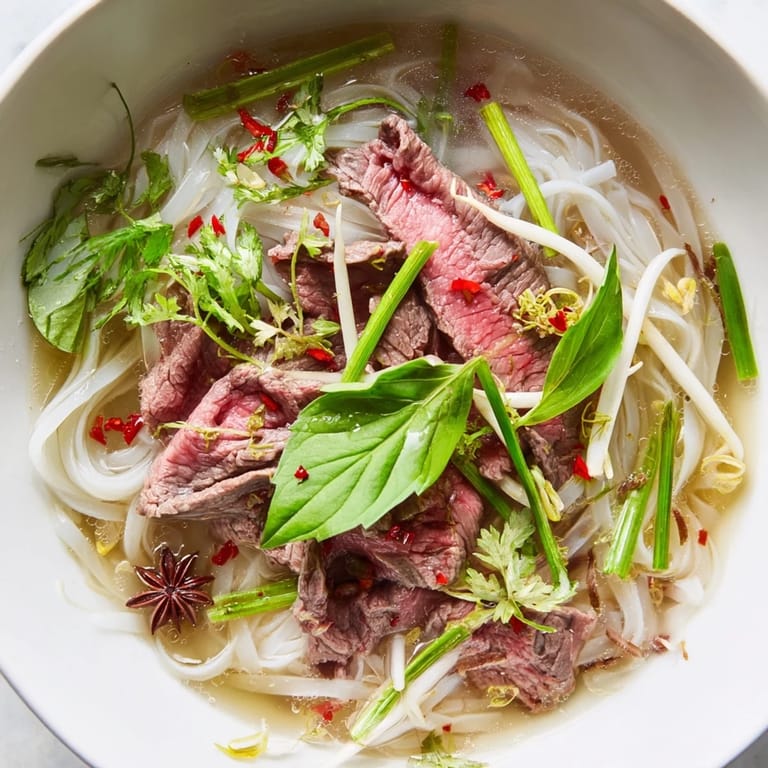
- Beef sirloin, thinly sliced: The thinner you slice it, the faster the hot broth cooks it; have your knife sharp.
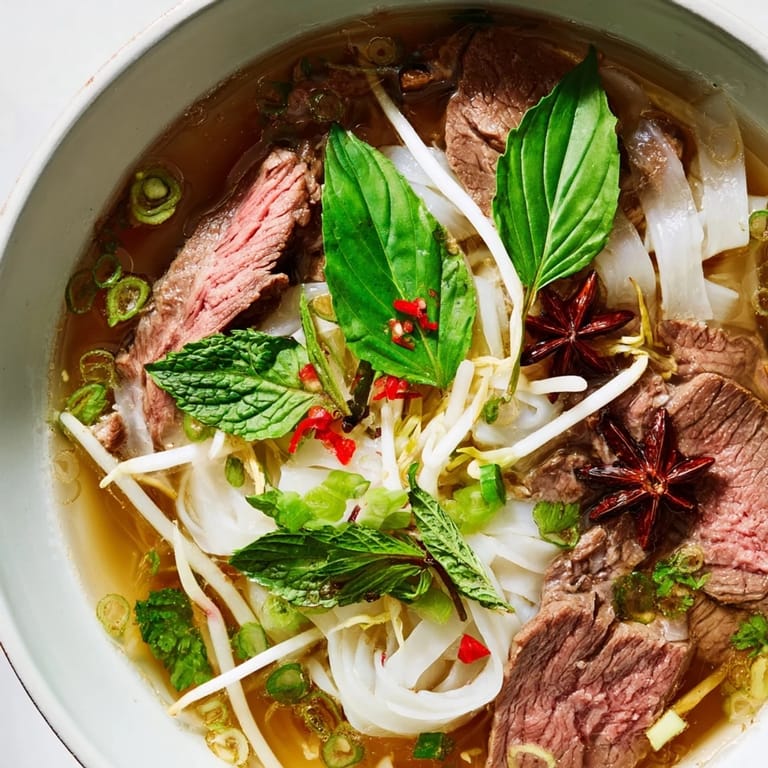
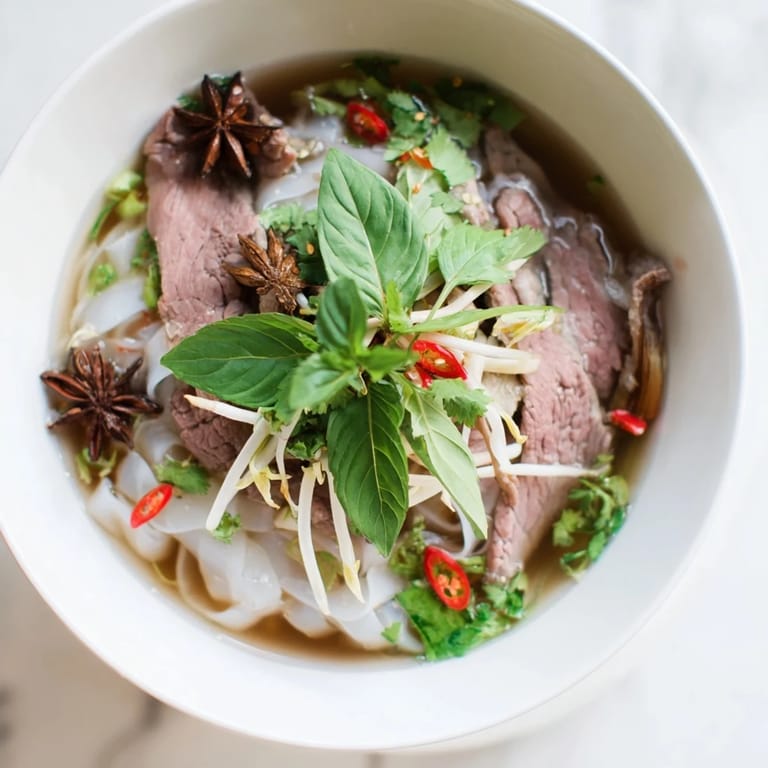
- Fresh herbs and garnishes: Thai basil, cilantro, bean sprouts, and lime are where you taste your own preference—go generous.
Tired of Takeout? 🥡
Get 10 meals you can make faster than delivery arrives. Seriously.
One email. No spam. Unsubscribe anytime.
Instructions
- Char your aromatics:
- Place the halved onion and ginger slices directly over a flame or in a hot dry pan until they blacken slightly on the edges. This step feels like cheating because it's so simple, but it transforms your broth from good to unforgettable.
- Build the broth base:
- Combine the charred onion and ginger with your broth, star anise, cinnamon, and cloves in a large pot. Bring it to a rolling boil, then drop the heat low and let it simmer uncovered for 20 minutes while the spices infuse and the broth develops color and fragrance.
- Season to taste:
- After the 20 minutes, add fish sauce, soy sauce, sugar, and salt. Taste it—this is your moment to adjust; simmer for 5 more minutes, then strain out all the solids through a fine-mesh strainer and return the clear golden broth to the pot on low heat.
- Cook your noodles:
- While the broth simmers, cook your rice noodles according to package directions in a separate pot of boiling water. Drain them gently and divide them among four large serving bowls.
- Arrange your meat:
- Lay the paper-thin beef slices over the warm noodles in each bowl, arranging them so the hot broth will reach every piece.
- The magic pour:
- This is the moment—ladle the steaming broth directly over the raw meat and noodles. Watch as the heat instantly cooks the beef to tender perfection, the noodles relax, and the whole bowl comes alive with steam and aroma.
- Top and serve:
- Crown each bowl with a generous handful of bean sprouts, fresh basil, cilantro, sliced scallions, and chili if you want heat. Serve with lime wedges, hoisin, and sriracha on the side and eat immediately.
 Save to Pinterest
 My neighbor smelled the pho one evening and knocked on my door asking what I was making, and fifteen minutes later she was sitting at my table with a bowl. We didn't talk much, just ate and occasionally caught each other's eyes when the flavors hit right. That's when pho stopped being a dish and became an invitation.
The Spice Balance
When I first made this, I was heavy-handed with the star anise and nearly overpowered the whole thing. Now I know that pho is a conversation between spices, not a solo performance. The cinnamon whispers in the background, the cloves add warmth without announcing themselves, and the anise gives that distinctive licorice note that makes people lean in and sniff their bowl. If you're making this for the first time, smell the broth before you serve it—you'll know if it smells right, and that instinct matters more than any measurement.
Charring Matters
I learned the hard way that a quick toast of the spices in a dry pan before they hit the broth deepens everything. It takes two minutes and changes the entire profile. If you have a gas stove, hold the ginger and onion over the flame with kitchen tongs and let them char until the edges blacken—it's theatrical and it works. If you have electric, use a hot cast-iron skillet and press them down for a proper sear. Some of my best cooking decisions came from trying what restaurants do and realizing I could replicate it at home.
Customization and Flexibility
The beauty of pho is that it invites you to play. I've made it with chicken when beef wasn't in the house, with tofu when I wanted it lighter, and even with shrimp for something unexpected. The broth is the star, and the protein is just a supporting actor. Some people add mint, some add fried shallots, some add both. I once added a poached egg because I had one and wanted richness, and it wasn't traditional but it was delicious.
- Keep extra broth on the table so people can adjust the strength to their taste.
- If you're cooking for vegetarians, use vegetable broth and double up on the charred aromatics for depth.
- Fresh herbs are not optional, but their exact combination is entirely up to you and what you have on hand.
 Save to Pinterest
 Pho Express is my favorite kind of recipe—one that feels indulgent but doesn't demand hours of your life, and tastes like you've given something real. Make it, and I promise you'll understand why people stand in line for this soup.
Common Recipe Questions
- → What is the base of the broth?
The broth combines beef or chicken stock with aromatics like star anise, cinnamon, cloves, ginger, and onion for a fragrant flavor.
- → Can I use a vegetarian option?
Yes, substitute vegetable broth and tofu in place of meat for a flavorful plant-based alternative.
- → How are the noodles prepared?
Flat rice noodles are cooked according to package instructions, then placed in bowls before adding broth and meat.
- → What garnishes complement this dish?
Fresh bean sprouts, Thai basil, cilantro, scallions, thinly sliced chili, lime wedges, hoisin sauce, and Sriracha enhance the flavors.
- → How do I achieve extra depth in the broth?
Lightly charring the onion and ginger before simmering releases richer aromas and deepens the broth’s flavor.