 Save to Pinterest
 The first time I attempted a fusion broth, my kitchen smelled like a collision between a Tokyo ramen shop and a Bangkok street stall. My roommate poked her head in, confused by the curry paste meeting miso aroma. That experimental night taught me that Thai red curry and white miso are actually best friends. Now this bowl is the most requested dinner when friends visit, especially on rainy Sundays.
Last winter, my sister was recovering from surgery and craved something comforting but exciting. I brought over a pot of this steaming fusion ramen. She took one sip and actually cried, saying it tasted like warmth in a bowl. Now whenever anyone needs healing, this is what I make.
Ingredients
- Vegetable oil: Creates the foundation for sautéing aromatics without overpowering delicate flavors
- Onion, garlic, and ginger: The aromatic trio that builds depth in every great soup base
- Thai red curry paste: Brings coconutty heat and that signature Thai fragrance
- White miso paste: Adds fermented sweetness and creates that silky restaurant style mouthfeel
- Fish sauce: The secret ingredient that makes people ask what is in this
- Sesame oil: Finish with this for a nutty aroma that hits your nose before the first spoonful
- Chicken breasts: Poaching directly in the broth infuses meat with flavor while keeping it tender
- Ramen noodles: Fresh noodles absorb the broth better but dried work in a pinch
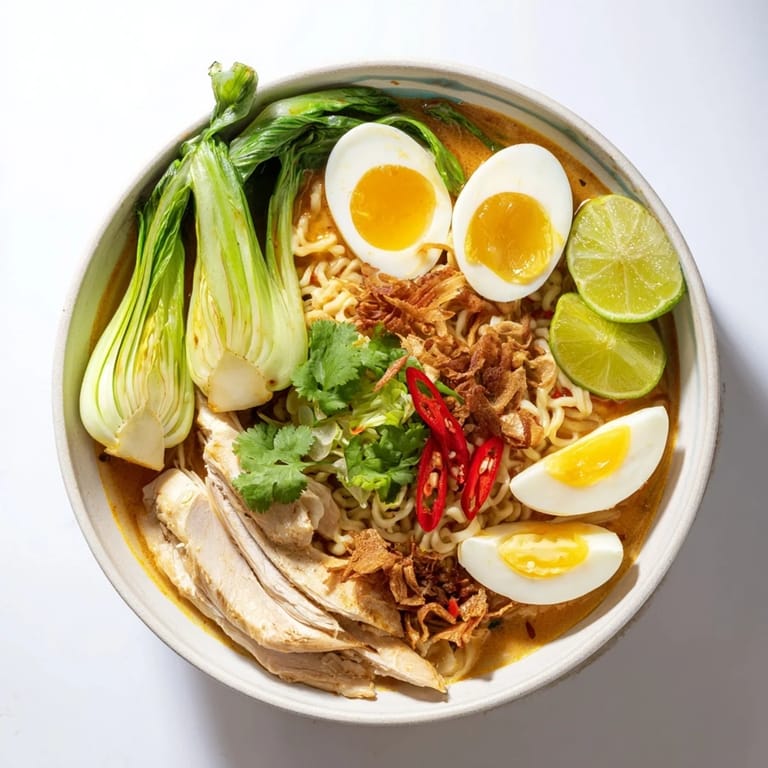
- Bok choy: Adds fresh crunch and a pop of green color against the golden broth
- Soft boiled eggs: The creamy yolk creates richness when stirred into the hot soup
- Crispy shallots: Do not skip these, they provide essential texture contrast in every bite
Tired of Takeout? 🥡
Get 10 meals you can make faster than delivery arrives. Seriously.
One email. No spam. Unsubscribe anytime.
Instructions
- Sear the chicken:
- Season both sides generously with salt and pepper. Heat oil in your large pot over medium heat and cook chicken 2 to 3 minutes per side until golden brown but not cooked through. Remove to a plate and reserve.
- Build the aromatic base:
- In the same pot, add fresh oil and cook the chopped onion for 2 minutes until translucent. Add garlic and ginger, stirring constantly for 1 minute until the raw smell dissipates. Stir in the red curry paste and let it bloom in the hot oil for another minute.
- Create the fusion broth:
- Pour in the chicken broth and bring everything to a gentle simmer. Return the seared chicken to the pot and cook for 12 to 15 minutes until the meat is completely cooked through. Remove chicken to a cutting board and shred or slice into thin pieces.
- Season and finish:
- Whisk in the miso paste, soy sauce, fish sauce, and sugar until fully dissolved. Stir in the sesame oil and keep the broth hot but avoid boiling, which can make the miso grainy and harsh.
- Perfect the eggs:
- Bring a separate small pot of water to a rolling boil. Gently lower eggs and cook for exactly 7 minutes for that perfect jammy center. Immediately transfer to an ice bath to stop cooking, then peel carefully.
- Cook noodles and vegetables:
- Prepare ramen noodles according to package directions. During the final 2 minutes, add halved bok choy to the boiling water to blanch until bright green and tender crisp.
- Assemble your bowls:
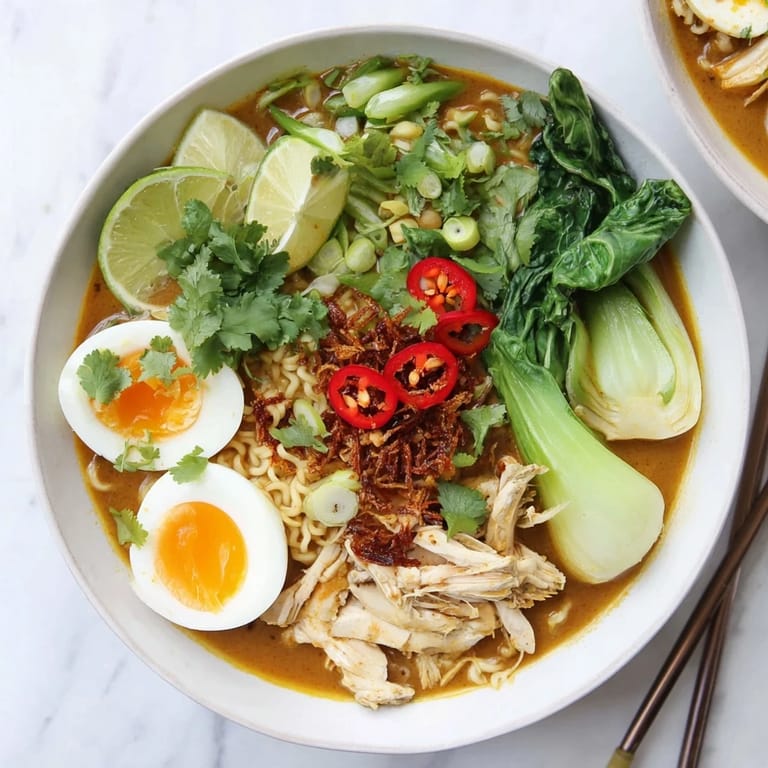
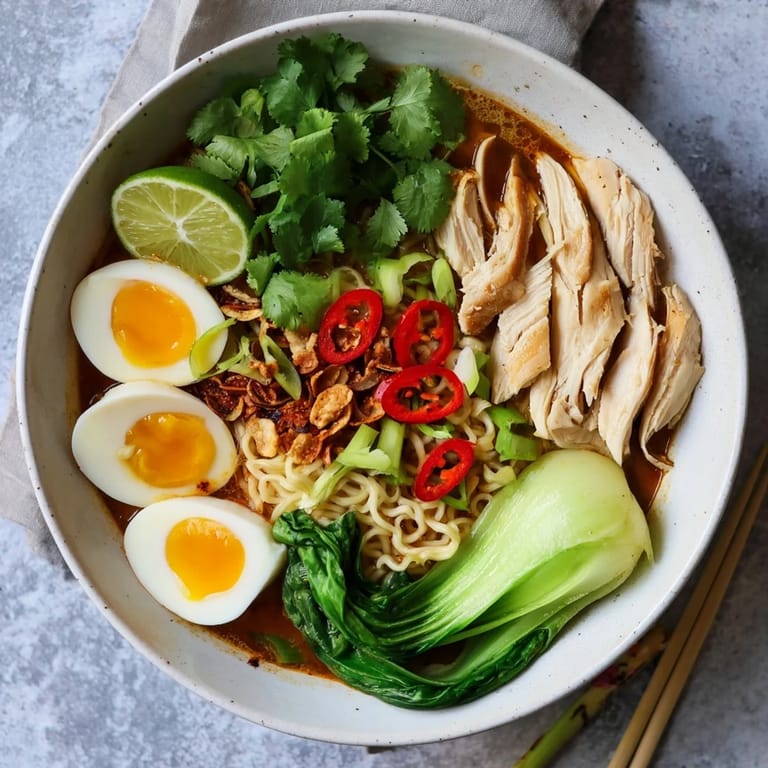
- Divide noodles and bok choy among four deep bowls. Ladle the steaming hot broth over the noodles. Arrange sliced chicken, halved eggs, and top generously with crispy shallots, scallions, chili slices, and fresh cilantro. Serve immediately with lime wedges on the side.
 Save to Pinterest
 This recipe became a household staple during a particularly brutal February when my partner and I were both working late every night. Coming home to that aromatic broth simmering on the stove felt like a hug after exhausting days. Now whenever I smell sesame oil and curry paste together, I feel instantly taken care of.
Making It Your Own
Experiment with different protein options like poached salmon or shrimp during the last few minutes of cooking. The broth adapts beautifully to whatever you have on hand, though the chicken poaching method creates the most flavorful base.
Noodle Wisdom
Fresh ramen noodles from the refrigerated section make a noticeable difference in texture and broth absorption. If using dried noodles, slightly undercook them since they will continue soaking up hot broth in the bowl.
Serving Suggestions
A crisp, cold beer or dry Riesling cuts through the rich broth perfectly. Keep extra lime wedges on the table since a squeeze right before eating brightens all the flavors.
- Set out chili oil for guests who want extra heat
- Have napkins ready, eating ramen is a messy but wonderful experience
- Cook the eggs while the broth simmers to save time
 Save to Pinterest
 There is something magical about a bowl of noodles that can transport you across continents with one spoonful. I hope this recipe finds its way into your regular rotation, bringing warmth and comfort to your table too.
Common Recipe Questions
- → Can I make this vegetarian?
Yes, substitute vegetable broth for chicken broth, replace the chicken breasts with firm tofu cubes, and omit the fish sauce. Add tofu during the last 5 minutes of simmering to absorb the flavorful broth.
- → How spicy is this dish?
The heat level is mild to medium, coming from 2 tablespoons of Thai red curry paste. Adjust the spice by adding more or less curry paste, or include sliced fresh chili peppers as a topping for extra heat.
- → Can I use dried ramen noodles instead of fresh?
Absolutely. Dried ramen noodles work well—just cook them according to package instructions. Fresh noodles cook faster (2-3 minutes), while dried typically take 4-5 minutes. Add bok choy during the last 2 minutes regardless of noodle type.
- → How do I store leftovers?
Store broth, chicken, and noodles separately in airtight containers for up to 3 days. Reheat broth gently, warm the chicken, and cook fresh noodles when ready to serve. Toppings like crispy shallots and soft-boiled eggs are best added fresh.
- → What can I substitute for bok choy?
Spinach, Swiss chard, or baby bok choy work well. Add leafy greens like spinach during the last minute of cooking to wilt them slightly. For crunchier vegetables, try snap peas or sliced mushrooms.
- → Can I freeze the broth?
Yes, the broth freezes beautifully for up to 3 months. Let it cool completely before transferring to freezer-safe containers. Thaw overnight in the refrigerator and reheat gently before serving.