 Save to Pinterest
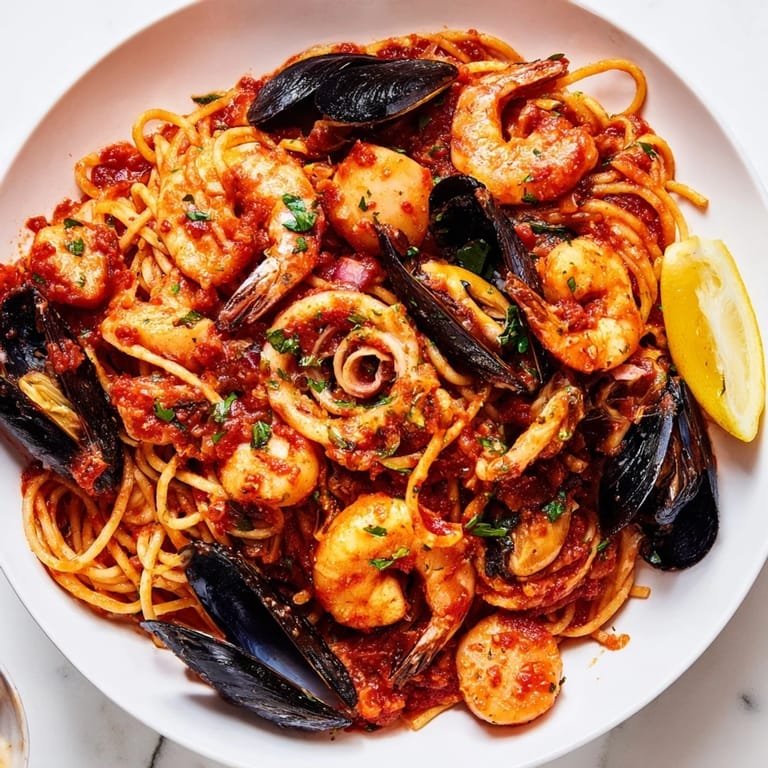
 There's something about the smell of garlic hitting hot olive oil that makes you forget what time it is. I learned to make this seafood marinara on a quiet Tuesday evening when a friend texted asking if I could throw together dinner for four—no warning, just faith that I'd figure it out. I'd never combined shrimp, mussels, squid, and scallops in one pan before, but watching them blush and curl in that vibrant tomato sauce felt like conducting something beautiful. The kitchen filled with that salty, briny perfume, and suddenly we weren't just eating pasta; we were having an experience.
My mom once watched me make this and said, 'That's how you know someone's learned to cook—when they don't panic about the mussels.' She was right. There was this moment of held breath waiting for them to open, and when they did, I understood that cooking seafood isn't about control; it's about listening to what the ingredients tell you. That dinner we made together became her favorite restaurant story, except we never left home.
Ingredients
- Large shrimp: 200g peeled and deveined—buy the biggest ones you can find because they stay tender and their sweetness balances the brininess of the other seafood.
- Mussels: 200g cleaned and debearded—these give the sauce an ocean-deep flavor that nothing else can replicate, and they're the most forgiving seafood to cook.
- Squid rings: 150g—they turn tender if you cook them fast or long, but never in between, so keep the heat up or cover and simmer.
- Sea scallops: 150g—their sweetness is delicate, so add them last to avoid overcooking; they need just 2–3 minutes.
- Spaghetti or linguine: 350g—the strands catch the sauce better than tubes, and pasta water is your secret weapon for silky binding.
- Olive oil: 2 tbsp quality extra-virgin—this is where you taste the difference, so don't skip.
- Onion: 1 small, finely chopped—the sweetness mellows as it softens, building the sauce's foundation.
- Garlic: 3 cloves minced—add it after the onion softens so it doesn't burn and turn bitter.
- Red pepper flakes: 1/2 tsp optional—a whisper of heat cuts through the richness without overpowering the seafood.
- Crushed tomatoes: 800g canned—better than fresh for this because they're already broken down and cook into the sauce seamlessly.
- Tomato paste: 2 tbsp—this concentrate adds depth and slight sweetness, mellowing any sharpness from the wine.
- Dry white wine: 100 ml—Pinot Grigio or Sauvignon Blanc, it reduces and brings acidity that keeps the sauce bright.
- Dried oregano and basil: 1 tsp each—these are Italian fundamentals; fresh herbs wilt away, but dried ones persist through the simmering.
- Sugar: 1/2 tsp—a pinch balances acidity from the tomatoes so the sauce doesn't taste sharp.
- Sea salt and black pepper: to taste—taste as you go; the seafood adds its own saltiness.
- Fresh parsley: 2 tbsp chopped—always finish with something green and fresh to cut through the warmth of the cooked sauce.
- Lemon wedges: to serve—these squeeze brightness over the plate at the last moment, pulling everything into focus.
Tired of Takeout? 🥡
Get 10 meals you can make faster than delivery arrives. Seriously.
One email. No spam. Unsubscribe anytime.
Instructions
- Get the water going:
- Fill a large pot with salted water—it should taste like the sea—and bring it to a rolling boil before you add pasta. This jump-starts cooking and helps the pasta absorb seasoning evenly.
- Build your sauce base:
- Heat olive oil in a deep skillet over medium heat. Add onion and let it soften for 2–3 minutes until it turns translucent and sweet-smelling. Stir in minced garlic and red pepper flakes, cooking just long enough for the raw garlic smell to fade—about 1 minute—so the flavors meld instead of clash.
- Deglaze with wine:
- Pour in white wine and let it bubble and reduce for 2 minutes. You'll hear it sizzle and smell the alcohol cook off, leaving behind a subtle, dry sweetness that anchors the sauce.
- Build the tomato foundation:
- Add crushed tomatoes, tomato paste, oregano, basil, sugar, salt, and pepper. Stir everything together until the paste dissolves into the tomatoes, then let it simmer uncovered for 10 minutes, stirring occasionally, so the flavors deepen and the sauce thickens slightly.
- Add seafood in stages:
- Start by sliding in squid rings and scallops; they need 2 minutes before you add the more delicate shrimp and mussels. Once shrimp and mussels go in, cover the skillet and cook for 3–4 minutes until shrimp turn pink and mussels pop open—discard any that stay shut because they weren't fresh enough.
- Marry pasta and sauce:
- Drain pasta, reserving 1/2 cup of that starchy water. Gently toss pasta into the seafood sauce, using some of that reserved water to loosen everything into a silky, cohesive dish—the starch in that water is what makes the sauce cling instead of sliding off.
- Taste and finish:
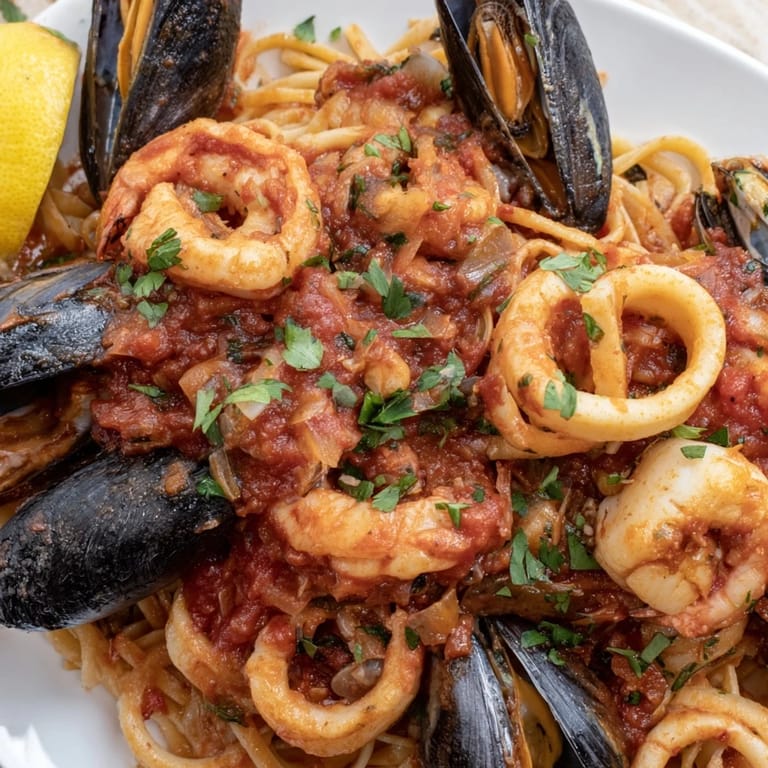
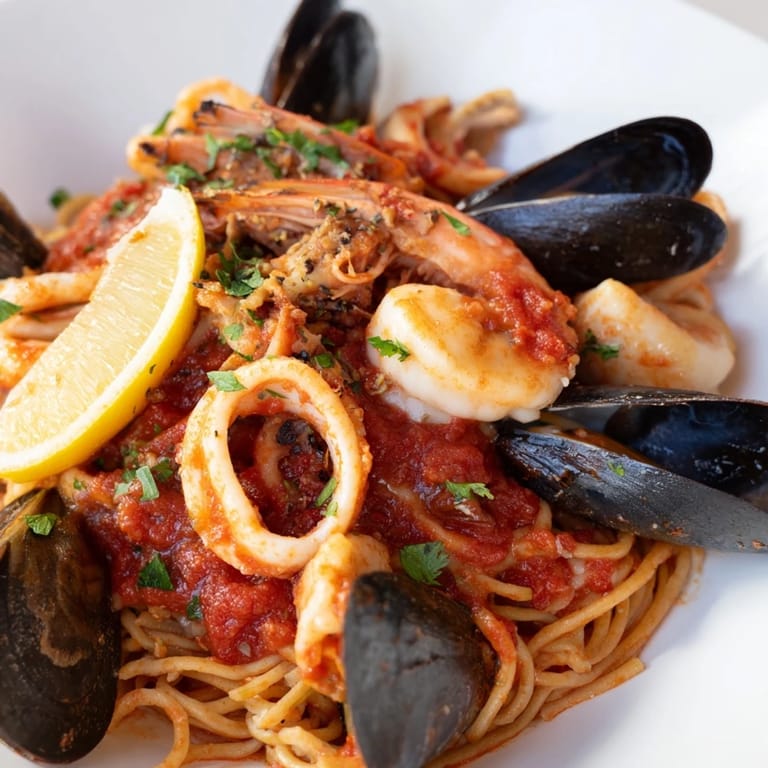
- Before plating, taste and adjust salt and pepper because seafood and pasta both absorb seasoning differently. Serve immediately with fresh parsley scattered across the top and lemon wedges on the side so people can squeeze brightness over their own plates.
 Save to Pinterest
 I'll never forget when my partner took one bite, closed their eyes, and just smiled without saying anything. That silence meant more than any compliment because it meant the dish had done what I intended—it tasted like care and the sea and home all at once. Cooking seafood this way stopped feeling like following a recipe and started feeling like speaking a language I'd always wanted to learn.
Why Seafood Matters in This Dish
Each seafood brings its own personality to the table. Shrimp are sweet and buttery, mussels are briny and earthy, squid adds a tender chewiness, and scallops contribute a delicate sweetness that feels almost luxurious. When they cook together in the same sauce, they don't compete—they harmonize, creating a chorus of flavors that a single seafood could never achieve alone. This combination is what makes the dish feel special enough for guests but simple enough to make on a Tuesday.
The Sauce Is Everything
The marinara here isn't just a vehicle for seafood; it's a foundation built slowly and deliberately. The tomatoes simmer long enough to lose their rawness, the garlic mellows into sweetness, and the wine brings acidity that keeps everything from feeling heavy. I learned this the hard way by rushing the sauce, thinking more time cooking meant less time for me—but sauce made in haste tastes hurried. Give this sauce the 10 minutes it asks for, and it'll reward you with depth that tastes like you've been cooking since morning.
Timing and Flexibility
The whole dish comes together in 45 minutes because each component is ready to go when you need it. The pasta finishes as the sauce peaks, the seafood cooks in the final minutes, and everything hits the plate while the warmth is still alive. If you're nervous about timing, cook your pasta first and set it aside; the sauce will stay warm while you add seafood. You can also swap any of the seafood for what's fresh at your market—clams, firm white fish, or even extra shrimp work beautifully if that's what speaks to you.
- Fresh seafood makes all the difference, so buy it the same day you cook if possible.
- Don't skip the pasta water; it's the bridge between pasta and sauce that makes everything feel unified.
- Lemon at the table is non-negotiable because it's the final note that makes every bite sing.
 Save to Pinterest
 This seafood marinara taught me that cooking doesn't require pretension or fancy techniques; it just requires paying attention and honoring what's in front of you. Every time I make it, someone says it tastes like a restaurant, and I smile because the only difference between this and a restaurant dish is the love stirred in while the sauce simmers.
Common Recipe Questions
- → What seafood is best for this dish?
Use large shrimp, mussels, squid rings, and sea scallops for a balanced blend of flavors and textures.
- → How should the pasta be cooked?
Cook the pasta until al dente in salted boiling water for the best texture and flavor absorption.
- → Can I adjust the sauce’s spiciness?
Yes, the red pepper flakes are optional and can be adjusted to taste for mild or spicy heat.
- → Is white wine necessary in the sauce?
White wine adds depth and acidity but can be replaced with seafood stock or omitted if preferred.
- → What garnishes complement this pasta?
Freshly chopped parsley and lemon wedges brighten the dish and enhance the seafood flavors.