 Save to Pinterest
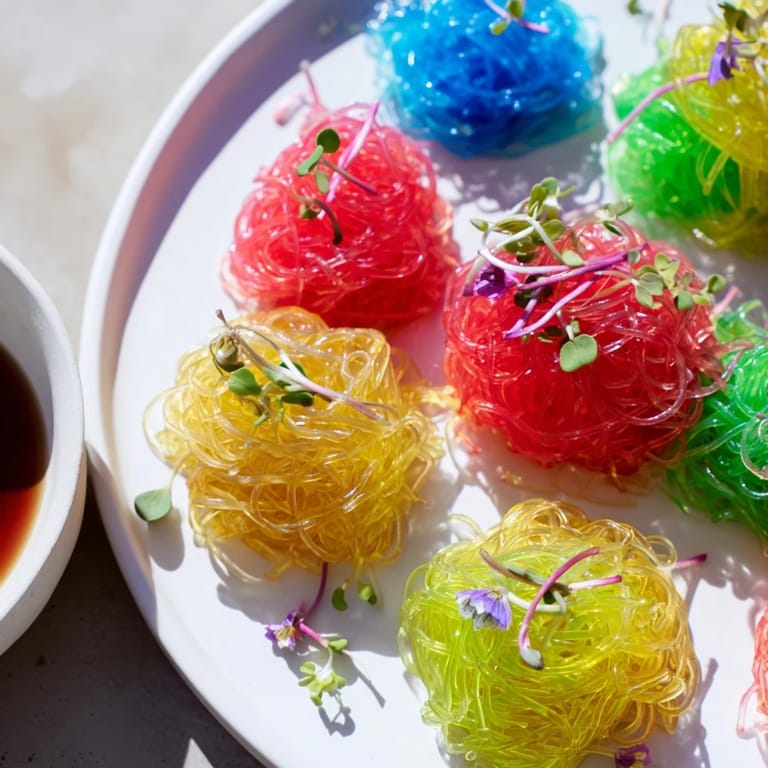
 I discovered neon noodles by accident at a late-night kitchen experiment with my friend who challenged me to make something edible that glowed under blacklight. What started as a joke became genuinely delicious—those bouncy, jewel-toned strands turned heads at the dinner party, and everyone wanted to know the secret. The magic came down to agar-agar, a plant-based gelling agent that creates a texture somewhere between firm jelly and chewy pasta, and the pure joy of playing with vivid food coloring without guilt.
The first time I actually nailed the piping technique was at a small dinner where I was trying to impress someone who claimed they'd eaten everything. I remember the quiet concentration as I squeezed the hot agar into ice water, the little hissing sounds, the way the colors bloomed and stayed distinct instead of bleeding together. When they took a bite, closed their eyes, and said nothing for a few seconds, I knew I'd created something worth repeating.
Ingredients
- Water: This is your base and determines how much noodle you'll make; 500 ml gives you enough for four generous servings.
- Agar-agar powder: The unsung hero that transforms liquid into bouncy noodles; unlike gelatin, it's completely plant-based and sets without refrigeration, though cold water speeds things up beautifully.
- Sugar: A tablespoon sweetens the noodles just enough to balance the savory sauce without making them dessert-like.
- Food coloring: Gel or liquid colors work; gel gives more vibrant hues with less dilution, and a drop or two goes surprisingly far.
- Soy sauce or tamari: The backbone of your dipping sauce; tamari keeps everything gluten-free if that matters to you or your guests.
- Rice vinegar: Adds brightness and tang without overpowering the delicate noodles.
- Mirin: Brings subtle sweetness and body to the sauce, making it feel complete.
- Sesame oil: Just a teaspoon adds toasty depth that makes people ask what that incredible flavor is.
- Fresh ginger: Grated fresh is warmer and more alive than powder; it wakes up your palate between bites.
- Scallion: The fresh, sharp note that makes the sauce feel alive rather than just salty.
- Toasted sesame seeds: Optional but highly recommended for crunch and nutty flavor.
Tired of Takeout? 🥡
Get 10 meals you can make faster than delivery arrives. Seriously.
One email. No spam. Unsubscribe anytime.
Instructions
- Dissolve the agar foundation:
- In a saucepan, combine 500 ml water, 7 g agar-agar powder, and 1 tablespoon sugar. Bring to a boil over medium heat, stirring constantly until the powder completely dissolves—you'll notice the liquid becomes crystal clear and smooth, about 2 to 3 minutes.
- Add your color dreams:
- Remove from heat and quickly divide the hot liquid among separate bowls, one for each color you want. A drop or two of food coloring goes a long way; stir until the color is even and vibrant.
- Pipe into noodles:
- Working quickly before the agar cools and thickens, use a syringe or squeeze bottle to pipe colored agar into a bowl of ice water, creating noodle-like strands. They'll set in just 1 to 2 minutes and feel firm to the touch—if you prefer, pour into a flat tray instead, let set completely, then slice into thin ribbons with a sharp knife.
- Chill and store:
- Rinse the finished noodles gently under cold water to remove any excess, then drain well. Refrigerate until serving time; they keep for several hours and actually taste better when properly chilled.
- Mix the dipping sauce:
- In a small bowl, whisk together 80 ml soy sauce, 1 tablespoon rice vinegar, 1 tablespoon mirin, 1 teaspoon sesame oil, 1 teaspoon grated fresh ginger, and 1 teaspoon sugar. Stir until the sugar dissolves completely, then add finely sliced scallion and sesame seeds if using.
- Plate and present:
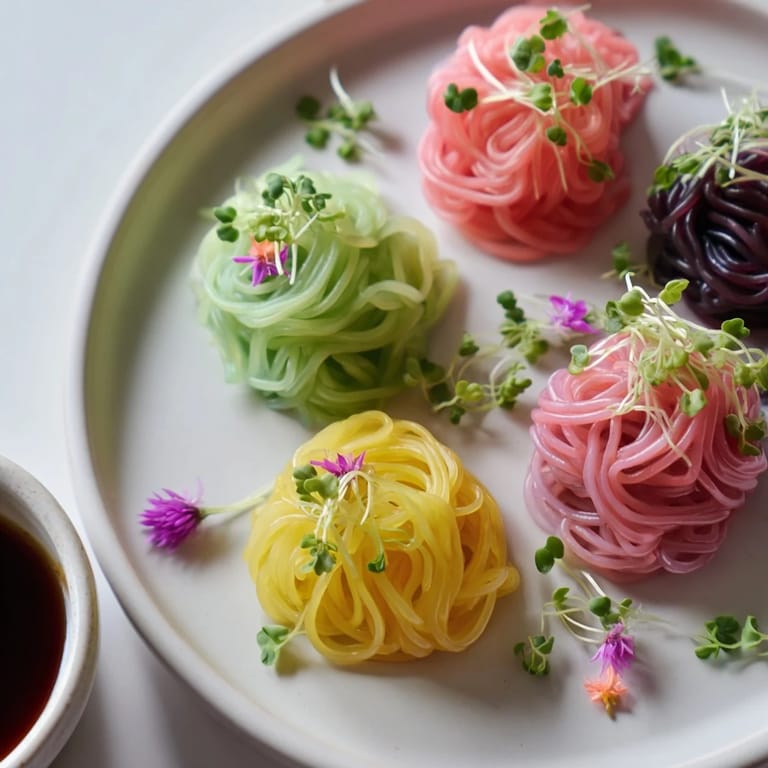
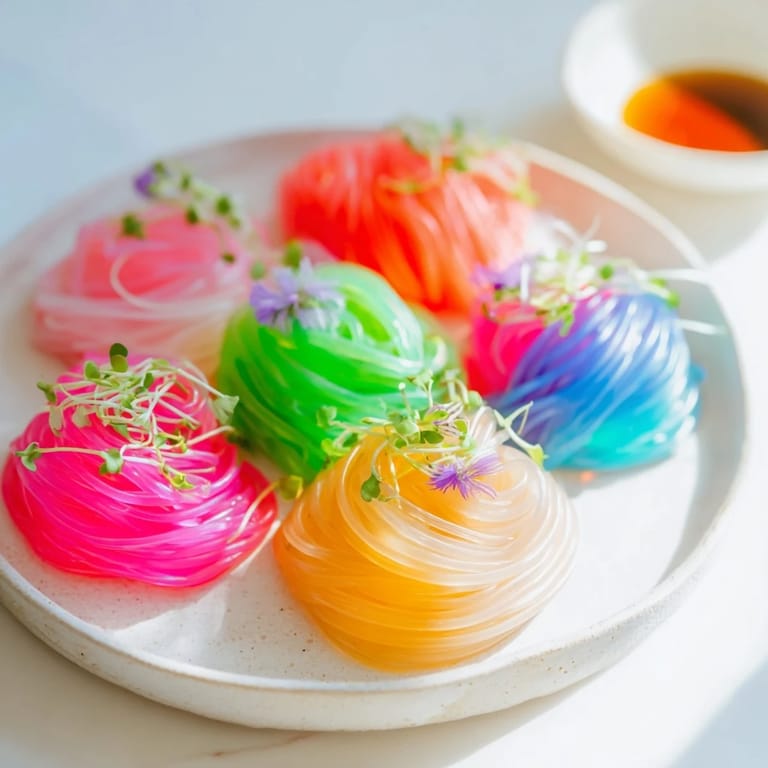
- Bundle the chilled noodles into small nests on serving plates, garnish with microgreens or edible flowers if desired, and set a small bowl of sauce beside each serving for dipping.
 Save to Pinterest
 There's something special about watching someone's surprise turn into delight when they realize neon noodles are actually good, not just novelty. One guest told me it felt like eating edible art, which is exactly the kind of compliment that makes you want to cook the dish again and again.
The Science of Bounce
Agar-agar is derived from red algae and has been used for centuries in Asian cuisine, but most home cooks have never heard of it. Unlike gelatin, which relies on protein bonding, agar-agar creates a gel through a polysaccharide network that sets at a much higher temperature, meaning you can skip the hours in the fridge. The bouncy texture comes from this unique molecular structure; it's firm enough to hold a shape but elastic enough to give slightly when you bite it, which creates that playful, almost surprising sensation on your tongue.
Playing with Color and Flavor
The real magic of this dish is how much room it leaves for your personality and what you have on hand. Gel food coloring gives you the most control and vibrancy, but natural alternatives like spirulina (soft green), butterfly pea flower (deep indigo), and beet juice (warm rose) work beautifully if you want to skip artificial dyes. Each natural option brings its own subtle flavor note that adds depth to the noodles themselves, though you'll need slightly more volume since natural colors are less concentrated.
Beyond Appetizers
While neon noodles shine as an opener, they work beautifully in other contexts too. Serve them as a palate cleanser between courses at a fancy dinner, nestle them into a chilled soup for visual drama, or pile them into a vibrant salad bowl for a party that feels like it was designed by someone from the future. A few restaurants now use similar techniques for amuse-bouches, but your homemade version will always taste fresher and feel more personal.
- Add a drop of yuzu juice or chili oil to the sauce for extra complexity and heat.
- Make extra noodles and toss them with a light sesame dressing for a next-day cold noodle salad.
- Keep the sauce separate until serving time so the noodles stay firm and don't absorb excess liquid.
 Save to Pinterest
 This dish lives somewhere between food and celebration, and that's exactly where it should stay. Make it when you want to remind people that cooking can be playful, surprising, and delicious all at once.
Common Recipe Questions
- → What gives the noodles their vibrant colors?
Food-safe neon gel or liquid coloring agents are used to tint the agar-agar mixture before setting, with options for natural alternatives like spirulina or butterfly pea powder.
- → How is the bouncy texture of the noodles achieved?
The agar-agar powder sets into a firm yet springy gel when boiled and cooled, creating a uniquely bouncy noodle texture different from traditional wheat noodles.
- → Can the dipping sauce be adjusted for gluten sensitivity?
Yes, substituting soy sauce with tamari keeps the sauce gluten-free without compromising its savory flavor.
- → What tools are best for shaping the agar-agar noodles?
A syringe or squeeze bottle helps pipe the colored agar mixture into thin, noodle-like strands. Alternatively, pouring into a tray and slicing works well.
- → How should the noodles be stored before serving?
Once set and rinsed, the noodles should be refrigerated to keep them chilled and firm until ready to serve.
- → Are there any allergen considerations to keep in mind?
Contains soy from the sauce and sesame seeds if used in garnish. Gluten can be avoided by choosing tamari. Check labels on colorings and sauces for hidden allergens.