 Save to Pinterest
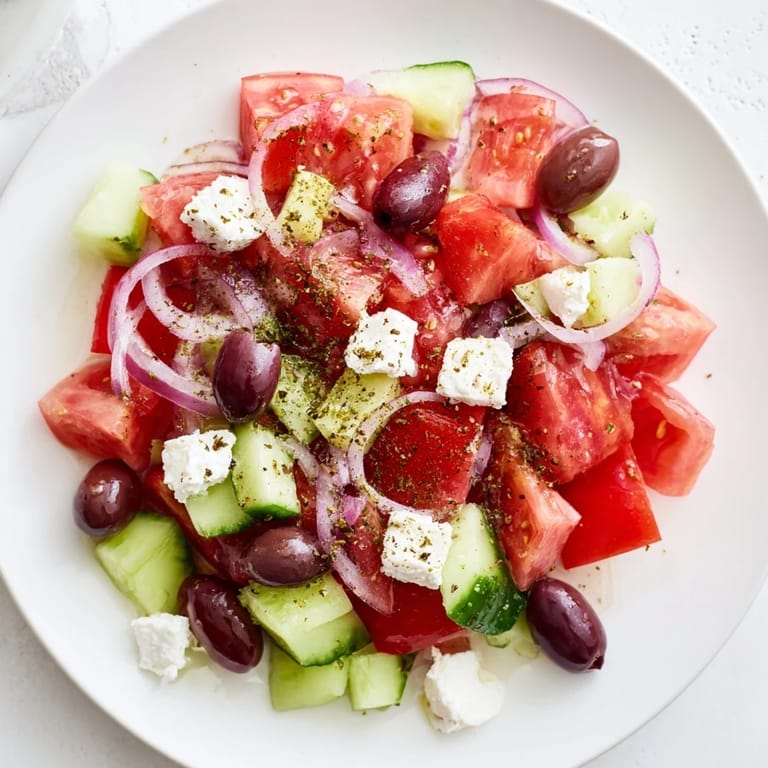
 There's something about a Mediterranean salad that stops you mid-conversation. I was visiting a friend's kitchen in Athens one summer, and she threw this together while we talked, barely looking at what she was doing—just pulling tomatoes from a bowl, chunks of cucumber, olives that had been sitting in her fridge. The olive oil she used was green and peppery, the kind that smells like standing in a grove. I watched her dress it with such ease, and suddenly I understood that this wasn't a recipe at all; it was just good ingredients getting out of their own way.
I made this for a potluck once thinking no one would touch it—salad seemed too plain compared to the pasta dishes and casseroles everyone else brought. It was gone before everything else, and someone asked for the recipe written down because, as they said, they'd been eating salads wrong their whole life.
Ingredients
- Ripe tomatoes: The foundation of everything—choose ones that smell like tomato, not the mealy supermarket kind, and cut them just before serving so they don't weep into the bowl.
- Cucumber: A good crisp one keeps the salad from feeling heavy; peel it in strips if you want a prettier presentation, or leave the skin on for texture.
- Red onion: Slice it thin and let it sit in the dressing a few minutes to take the sharp edge off while keeping its color and crunch.
- Feta cheese: Use real feta if you can; the difference is real, and crumbling it with your hands instead of a knife keeps it from turning to paste.
- Kalamata olives: Pit them yourself if you have time, or buy them already pitted—their brininess is what gives this salad its voice.
- Extra virgin olive oil: Don't waste a fancy one here if you prefer to save it for dipping bread, but decent olive oil makes a noticeable difference in how the salad tastes.
- Red wine vinegar: Just a splash; it's the whisper that brings everything into focus without overwhelming the delicate vegetables.
- Dried oregano: A small pinch is enough; this is Mediterranean seasoning, not Italian, so restraint is the point.
Tired of Takeout? 🥡
Get 10 meals you can make faster than delivery arrives. Seriously.
One email. No spam. Unsubscribe anytime.
Instructions
- Prep your vegetables:
- Dice your tomatoes and cucumber into generous chunks, not tiny pieces; this salad wants some substance. Slice your red onion into half-moons thin enough to be tender but thick enough to hold up.
- Layer in the bowl:
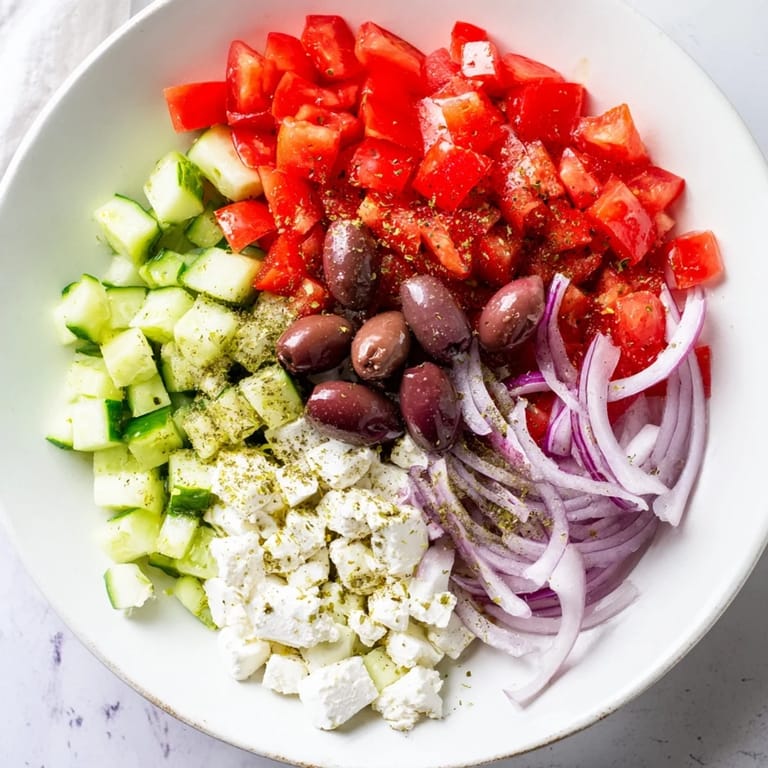
- Start with the tomatoes and cucumber, scatter the olives through, and add the red onion. Crumble or cube your feta over the top, but don't toss yet—let everything sit there a moment so you can see what you're working with.
- Make the dressing:
- In a separate small bowl, whisk the olive oil and vinegar together with oregano, salt, and pepper. Taste it straight from the whisk; it should make you want more.
- Bring it together:
- Pour the dressing over the salad and toss with a gentle hand, using a wooden spoon or your hands to make sure everything gets coated without shattering the feta into dust. Serve right away.
 Save to Pinterest
 I once made this for someone who said they didn't like salad, and watching them reach for a second bowl while arguing that this was different was its own small victory. Food shouldn't have to convince anyone, but sometimes it does.
When to Make This
Summer is the obvious answer, when tomatoes are at their peak and the last thing you want is a hot kitchen. But it works year-round as a side to grilled fish or chicken, and even in winter, a decent hothouse tomato with good feta and olives beats a lot of other choices. I've made it at the tail end of spring when the first real tomatoes show up, and I've made it in autumn when the heat is finally gone and cooking doesn't feel like punishment.
Playing with Variations
The beauty of this salad is that it invites tinkering without needing permission. A few capers add a sharp pop that some people crave; roasted red peppers if you want something sweeter; a handful of chopped fresh mint instead of parsley if that's what's growing in your garden. I've added white beans to make it more filling, crumbled some walnuts for texture, even thrown in halved cherry tomatoes instead of diced for a different mouthfeel. The core stays the same, but you get to make it yours.
Serving and Storage
Serve this cold or at room temperature—somewhere in the middle is often best, letting the flavors come through without the cold flattening them. It doesn't keep well overnight because the vegetables break down and the whole thing gets soggy, so make it closer to when you'll eat it. If you have leftovers, they're still good crumbled into warm pita bread with a little yogurt the next day, which is almost a different dish and somehow just as welcome.
- Save any extra dressing to drizzle on grilled vegetables or use it to start another salad the next day.
- If you're taking this to a picnic or potluck, pack the dressing separately and toss it in just before serving.
- A squeeze of fresh lemon juice right at the end brightens everything if the salad tastes a bit flat.
 Save to Pinterest
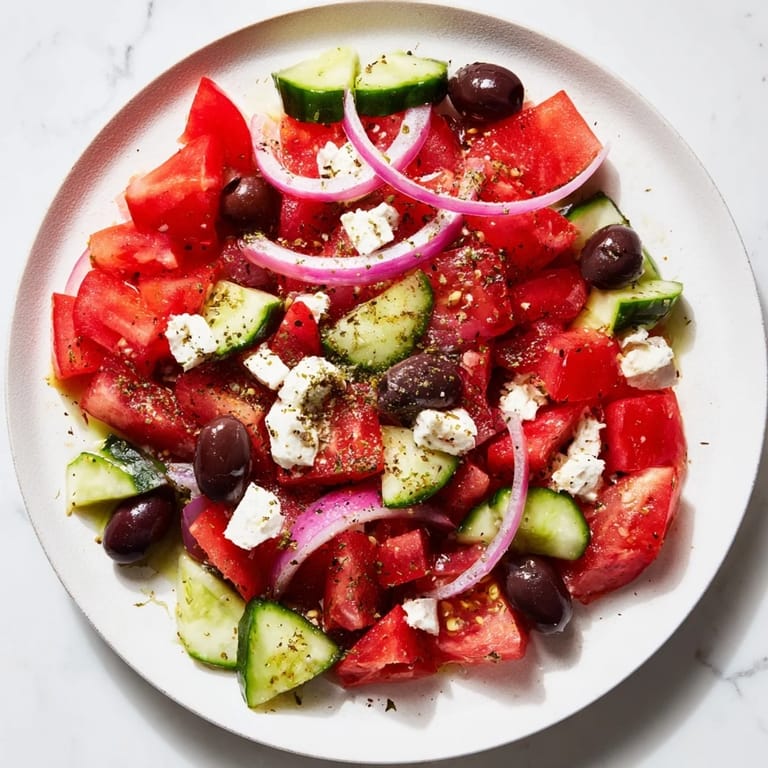
 This salad reminds me that some of the best things don't need effort or fuss, just good ingredients and a moment to let them shine. That's worth remembering when cooking starts to feel complicated.
Common Recipe Questions
- → What type of olives work best in this salad?
Kalamata olives provide a rich, slightly tangy flavor that complements the fresh vegetables and feta perfectly.
- → Can I use a different cheese than feta?
While feta adds creamy saltiness, firm goat cheese or halloumi can be good alternatives for varied texture and taste.
- → How should the dressing be prepared?
Whisk extra virgin olive oil, red wine vinegar, dried oregano, salt, and freshly ground pepper together until blended for a flavorful dressing.
- → Is it possible to add other vegetables?
Yes, bell peppers or capers can add extra flavor and texture, enhancing the salad’s vibrancy.
- → What herbs complement this salad best?
Fresh parsley or mint offers refreshing herbal notes that brighten the overall taste.