 Save to Pinterest
 I discovered laksa on a humid afternoon in a small Malaysian restaurant tucked between two shop houses, where the cook was stirring an enormous pot of this golden-red broth that filled the entire space with an intoxicating smell of coconut, lemongrass, and spice. The first spoonful hit differently than any curry I'd had before—creamy but bright, heat that built slowly rather than attacked, with this underlying sweetness that made me want another bite immediately. I spent the next week chasing that flavor at home, adjusting and tasting, until I realized the secret wasn't in perfection but in the way each ingredient seemed to wake up the others. Now when I make it, that same magic fills my kitchen, and I'm transported back to that humid afternoon every single time.
I made this for a friend who'd been having a rough week, and watching her face when she took that first slurp made me realize food really does heal something in you. She closed her eyes, took another spoonful, and just said, 'I needed this.' That's when I understood laksa isn't just dinner—it's the kind of dish that says, I care about you enough to spend time getting this right.
Ingredients
- Vegetable oil: Neutral and high-heat tolerant, it lets the aromatics bloom without competing flavors.
- Onion, garlic, ginger, and lemongrass: This quartet is the foundation—they're what makes your kitchen smell like a proper Asian market, and they infuse the entire broth with soul.
- Laksa paste: Buy it or make it; either way, this is where the laksa identity lives, so don't skip it or substitute with curry powder.
- Coconut milk: Full-fat, please—it's what makes this creamy and luxurious without being heavy.
- Vegetable broth: Use a good one; it's half the broth, so it matters.
- Soy sauce and sugar: Salt and sweetness balance the spice and bring everything into harmony.
- Rice noodles: Thick or thin, soaked or cooked—choose what feels right, but soak them gently so they don't break.
- Tofu: Firm tofu crisps up beautifully and holds the broth's flavors while staying tender inside.
- Vegetables: Carrots, bell pepper, snow peas, and bean sprouts bring color, crunch, and freshness that cuts through the richness.
- Spring onions, cilantro, and lime: These are the final wake-up call—they brighten everything and make each bowl feel alive.
Tired of Takeout? 🥡
Get 10 meals you can make faster than delivery arrives. Seriously.
One email. No spam. Unsubscribe anytime.
Instructions
- Wake up the base:
- Heat oil in your pot and add onion, garlic, ginger, and lemongrass. You'll know it's right when the kitchen fills with that distinctive Southeast Asian smell—fragrant and slightly sweet. Keep stirring so nothing catches, and let the onions turn translucent and soft, about 3 to 4 minutes.
- Build the flavor:
- Stir in laksa paste and let it cook for a full 2 minutes, which might feel long but releases all those spice and herb compounds. The paste will darken slightly and smell impossibly aromatic.
- Create the broth:
- Pour in coconut milk first, then vegetable broth, stirring well to make sure the paste dissolves completely and the coconut milk doesn't separate. The color will shift to that gorgeous warm orange-red that makes you excited to eat.
- Season and simmer:
- Add soy sauce, sugar, and a pinch of salt, then let everything simmer uncovered for 10 minutes. This isn't rushed time—it's when the flavors start talking to each other and the broth deepens.
- Prepare the noodles:
- While the broth simmers, soak or cook your rice noodles according to the package, then drain them well. Wet noodles will dilute the broth when you ladle it, so this matters.
- Fry the tofu:
- Heat a nonstick skillet and fry your tofu cubes until they're golden and slightly crispy on all sides. They'll hold their texture better in the hot broth this way.
- Add the vegetables:
- Add carrots, bell pepper, and snow peas to the broth and simmer for 3 to 4 minutes until they're just tender but still have a slight bite. You're looking for that balance between cooked and fresh.
- Assemble with intention:
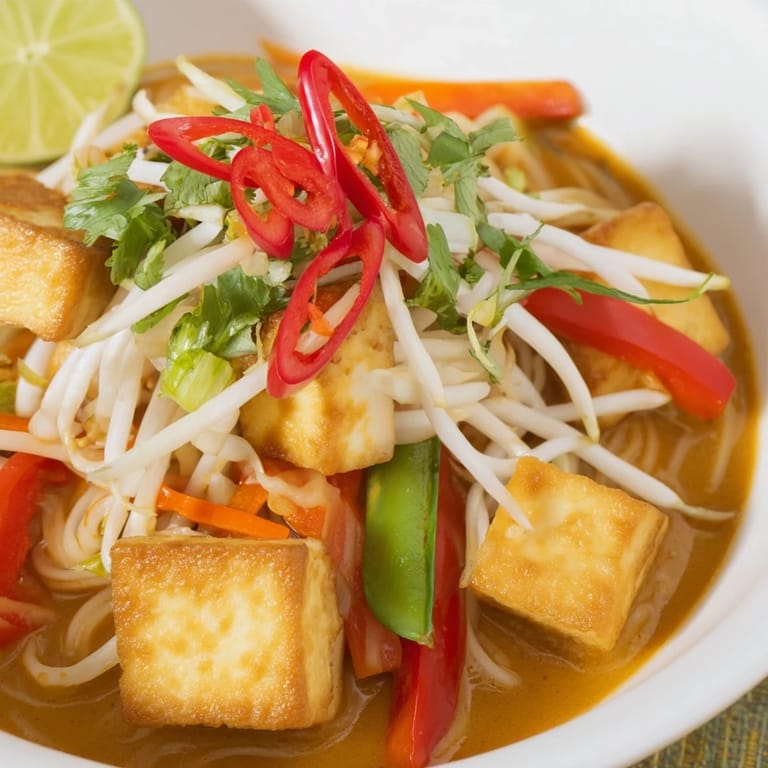
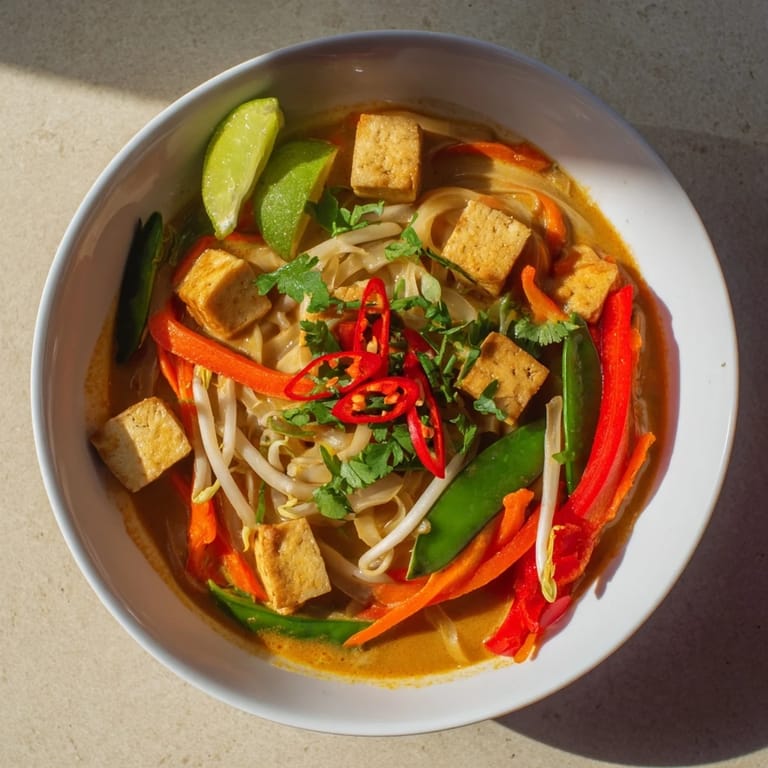
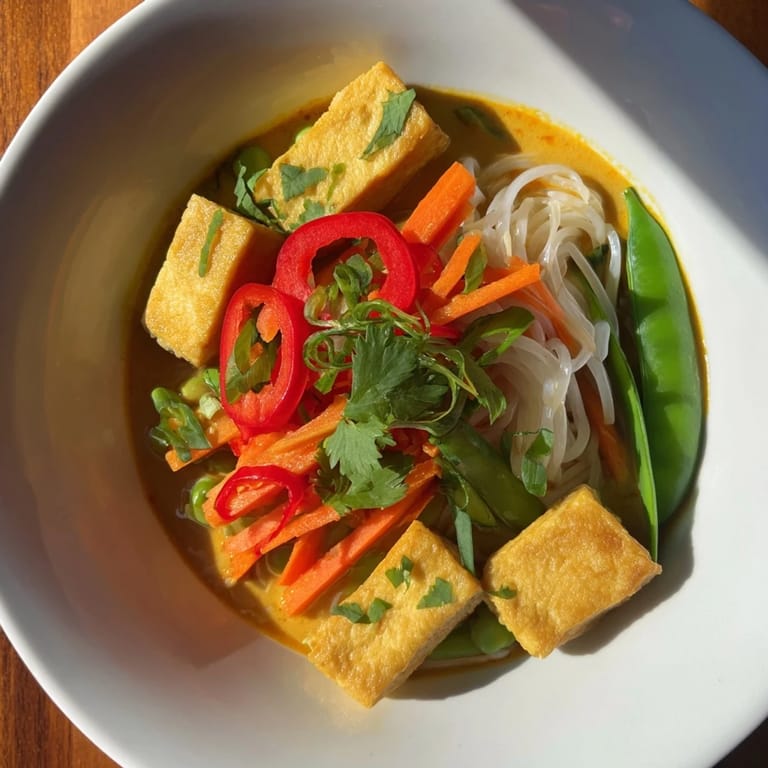
- Divide noodles among bowls, ladle the hot broth and vegetables over them, and top with fried tofu, bean sprouts, spring onions, cilantro, and chili slices if you like heat. Serve lime wedges on the side so everyone can adjust the brightness to their taste.
 Save to Pinterest
 There was a moment when I made this for a dinner party and someone asked if I'd gotten it from a restaurant because it tasted too good to be homemade. I didn't correct them—I just smiled and ladled another bowl, knowing that the best compliment is when people can't believe you made it in your own kitchen.
The Science of Laksa's Balance
Laksa works because it layers three distinct tastes that somehow enhance each other: the coconut provides richness and sweetness, the laksa paste delivers heat and depth, and the lime juice and fresh herbs cut through with brightness and acid. This balance is why a bowl feels simultaneously indulgent and refreshing. The longer the broth simmers, the more the spices soften and integrate, which is why day-old laksa often tastes better than the version you just made.
Customizing Without Losing the Soul
The beauty of laksa is that it welcomes improvisation once you understand its core. If your market has baby corn, add it. If you love mushrooms, slice them thin and let them absorb the broth. Some people add hard-boiled eggs for a protein boost, and that's genuinely delicious. The constant should always be the broth itself—that's what makes it laksa—but everything else can shift based on what's in your kitchen or what sounds good on the day.
Why This Dish Deserves Your Time
Laksa is one of those dishes that feels fancy and complicated but rewards you for showing up. It's the kind of food that teaches you how different cultures build flavor, and it does it in a single pot. Every time you make it, you're practicing a skill, and every time someone eats it, they're getting a little piece of Malaysian food culture wrapped in warmth and care.
- Make the broth earlier in the day if you want—it only gets better as it sits, and you can reheat and assemble right before serving.
- If you're cooking for someone with a shellfish allergy, check that your laksa paste is free of shrimp or fish ingredients.
- A squeeze of lime at the very end, when the bowl is in front of you, makes a difference that's impossible to overstate.
 Save to Pinterest
 This laksa has become the dish I make when I want to feel connected to the kitchen and to the people eating with me. It's proof that you don't need fancy equipment or impossible-to-find ingredients to make something that tastes like love in a bowl.
Common Recipe Questions
- → What type of noodles is best for this dish?
Rice noodles, either thick or vermicelli, work best as they absorb the flavorful broth and maintain a pleasant texture.
- → Can I substitute tofu with another ingredient?
Yes, you can replace tofu with cooked chicken or shrimp if preferred, but tofu keeps it vegetarian and adds a delicate texture.
- → How do I enhance the broth’s flavor?
Sautéing aromatics like garlic, ginger, onion, and lemongrass well before adding the laksa paste enriches the broth’s depth.
- → Is laksa paste available store-bought?
Yes, many stores offer laksa paste, but making it fresh at home allows better control over spice and ingredients.
- → What vegetables can I add or substitute?
Carrots, bell peppers, bean sprouts, snow peas, and spring onions are common, but mushrooms and bok choy can also be excellent alternatives.