 Save to Pinterest
 The first time I made this, I was trying to impress someone with dessert skills they didn't know I had. I'd been reading about lemon posset and thought, what if that brightness, that sugar-caramelized magic, lived on top of chicken instead? It felt ridiculous at first, then it tasted like discovery. Now it's the dish I make when I want to feel clever in the kitchen without actually being complicated.
I cooked this for my sister on a random Tuesday when she'd had a terrible day. She took one bite, closed her eyes, and just sat there. Then she asked for the recipe before she'd even finished her plate. That's when I knew this wasn't just good, it was the kind of good that makes people remember you made them dinner.
Ingredients
- Boneless, skinless chicken breasts: Two large ones, which you'll pound to an even thickness so they cook through at the same rate and stay tender under that brûléed crust.
- Granulated sugar: This is your torch moment, the part that makes people lean forward and ask what that smell is.
- Lemon zest and juice: Get it fresh and use a microplane; the oils in the zest are where all the brightness lives.
- Sea salt and black pepper: More than you think you need on the chicken itself, because seasoning before cooking matters.
- Olive oil: Good quality for searing, not for show.
- Dried linguine or spaghetti: Long pasta that tangles with cream sauce and lets you twirl it on your fork.
- Unsalted butter and olive oil: Butter for sauce richness, olive oil to keep it from breaking.
- Garlic: Three cloves, minced fine so they melt into the sauce instead of sitting in chunks.
- Heavy cream: The real thing, not the stuff from a can, because it makes a difference in how it coats the pasta.
- Parmigiano-Reggiano: The aged kind, nutty and complex, not the pre-grated stuff that doesn't melt smoothly.
- Fresh parsley: Bright green, added at the end so it stays fresh and doesn't taste cooked.
Tired of Takeout? 🥡
Get 10 meals you can make faster than delivery arrives. Seriously.
One email. No spam. Unsubscribe anytime.
Instructions
- Dry and season your chicken:
- Pat those chicken breasts completely dry—moisture is the enemy of a good sear. Sprinkle salt, pepper, and lemon zest all over, and let it sit for a minute so the flavors actually stick to the meat.
- Sear until nearly cooked:
- Heat olive oil in a skillet over medium-high heat until it shimmers, then lay the chicken in with a satisfying sizzle. You want 4-5 minutes per side, until the outside is golden and the thickest part is almost done but still slightly tender inside.
- Torch the sugar crust:
- Sprinkle a tablespoon of sugar over each breast and watch it carefully as you run the torch over it, moving back and forth so it caramelizes evenly into a thin, crackling shell. If you don't have a torch, a preheated broiler works too, but stay right there and watch it like a hawk for 1-2 minutes.
- Rest and slice:
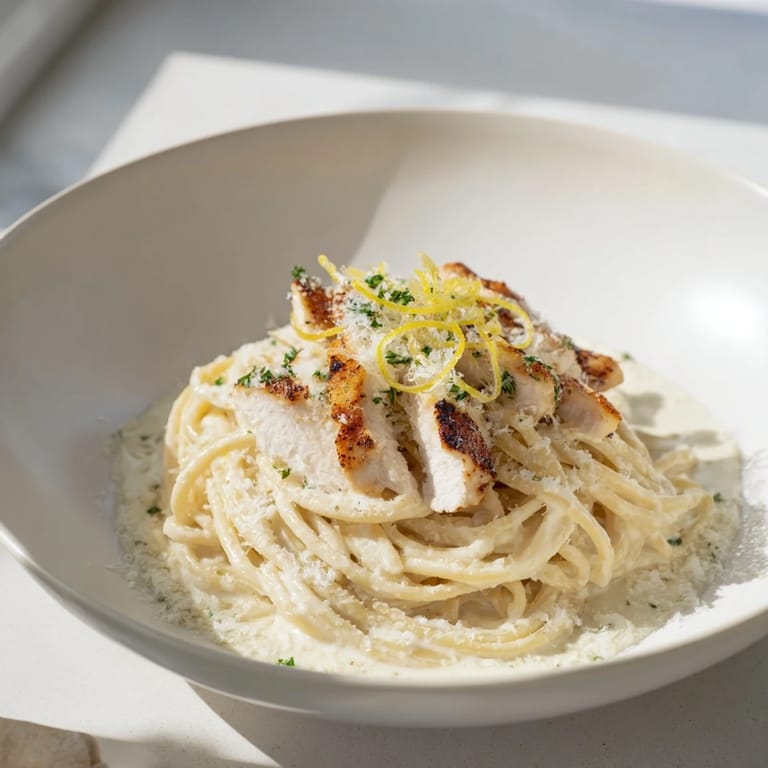
- Let the chicken rest for a few minutes so the juices redistribute, then slice thinly against the grain so each piece has that crispy sugar edge.
- Boil the pasta until al dente:
- Bring a large pot of salted water to a rolling boil and cook the linguine according to the package, but pull it out about a minute before you think it's done—it's going to finish in the sauce. Save a half cup of that starchy pasta water before you drain it.
- Build the sauce base:
- In a large skillet, melt butter with olive oil over medium heat, then add minced garlic and let it become fragrant, just about a minute. The kitchen will smell incredible at this moment.
- Add lemon and cream:
- Stir in lemon zest and juice, then pour in heavy cream and bring it to a gentle simmer, never a rolling boil or it might break. You'll see it thicken slightly and smell like a lemon grove.
- Finish with cheese:
- Add grated Parmigiano-Reggiano a handful at a time, stirring until each addition melts completely and the sauce becomes silky and smooth. Taste and adjust seasoning with salt and pepper.
- Bring it together:
- Add the drained pasta to the sauce and toss gently, adding pasta water a splash at a time until the sauce coats every strand with a glossy, creamy sheen.
- Plate and garnish:
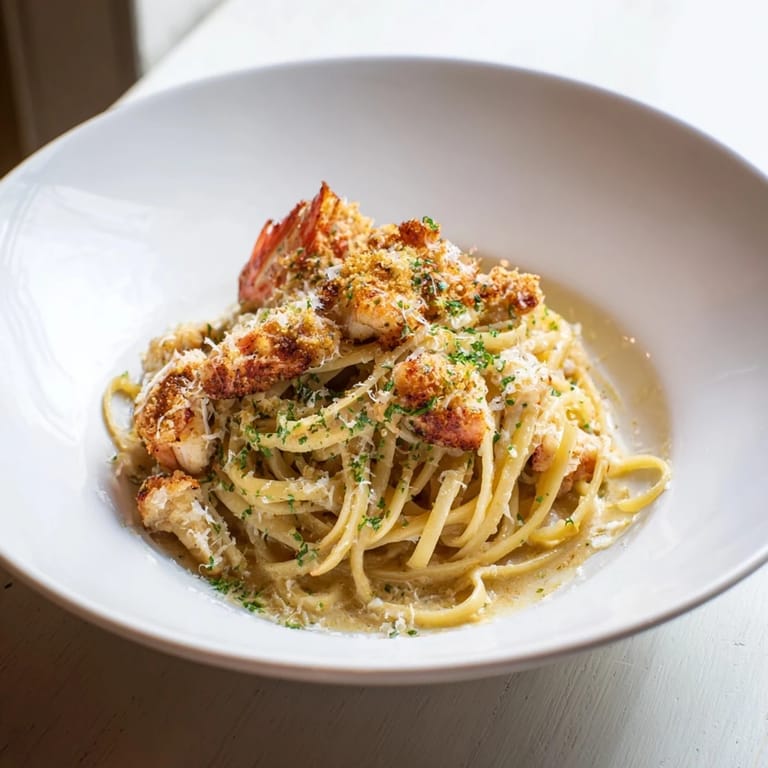
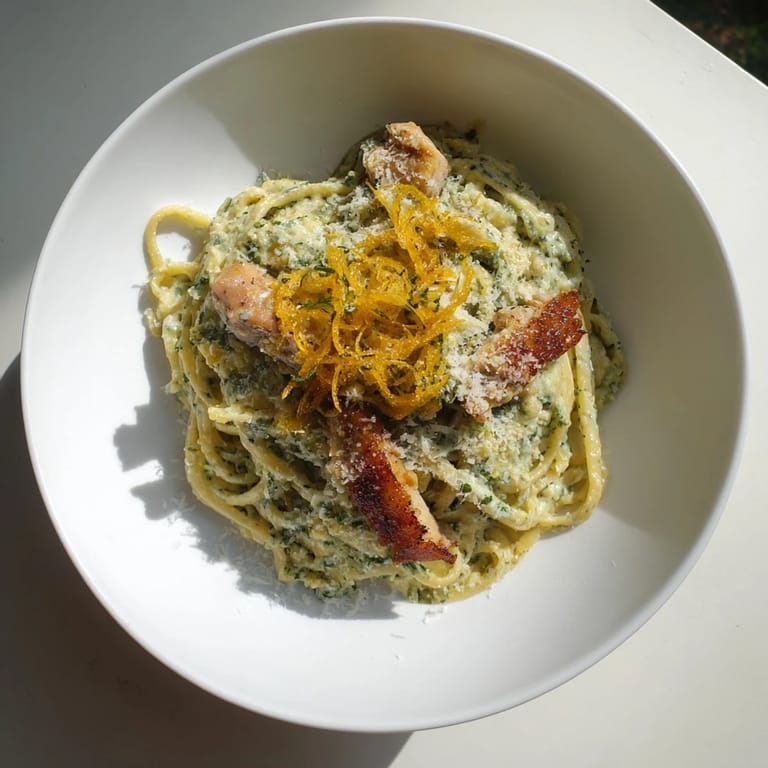
- Divide the pasta among bowls, top each with sliced brûléed chicken, then shower with extra lemon zest, more Parmigiano-Reggiano shavings, and fresh parsley leaves.
 Save to Pinterest
 There's something about the sound of a kitchen torch that makes everyone in the next room hold their breath. I've learned that moment of showmanship, that moment when someone watches their dinner being finished in front of them, changes how they experience the meal.
Why the Brûlée Crust Works
Lemon posset is a dessert that's essentially lemon and sugar made luxurious with cream. The brûlée element—that caramelized sugar shell—works because it creates contrast. The sweetness breaks against savory chicken, and somehow that conversation between flavors makes both of them taste more like themselves. It's not complicated chemistry, just smart seasoning.
Making This Easier or Harder
If you want it faster, buy pre-pounded chicken cutlets from the butcher counter. If you want more texture, toast some pine nuts or make crispy breadcrumbs with butter and garlic. If you want it tangier, swap half the cream for crème fraîche. The recipe holds up to tweaks because it's built on confident flavors, not a fragile balance.
What to Serve It With
This is rich and needs something bright alongside it. A simple green salad dressed with just lemon vinaigrette and flaky salt works beautifully, or roasted vegetables with a slight char to them. The whole meal should feel light despite the cream sauce, which is the whole trick of this dish.
- A crisp Sauvignon Blanc or Pinot Grigio cuts through the richness perfectly.
- Make a lemon vinaigrette with reserved pasta water if you want to use every drop.
- If someone wants meat-free, the sauce is absolutely delicious over pasta alone with a fried egg on top.
 Save to Pinterest
 This dish taught me that sometimes the most memorable meals come from combining two things that shouldn't work together and discovering they do. It's the kind of recipe that makes you feel like a better cook than you actually are.
Common Recipe Questions
- → How is the caramelized lemon crust achieved on the chicken?
After seasoning the chicken, sugar is sprinkled on top and caramelized using a kitchen torch or broiler until golden and crisp, creating a brûlée effect.
- → Can I substitute the heavy cream in the pasta sauce?
Yes, crème fraîche can be used to add a tangier flavor while maintaining the creamy texture of the sauce.
- → What type of pasta works best for this dish?
Long pasta such as linguine or spaghetti pairs well, as it holds the lemon cream sauce effectively and complements sliced chicken.
- → How can I add extra texture to this pasta?
Toasted pine nuts or breadcrumbs sprinkled on top add a pleasing crunch and enhance the dish's complexity.
- → What wine pairing complements this chicken and pasta combination?
A crisp Sauvignon Blanc or Pinot Grigio matches the bright lemon flavors while balancing the creaminess.