 Save to Pinterest
 The first time I made okonomiyaki, I was standing in a tiny Tokyo apartment kitchen at midnight, hungry and armed with nothing but a bag of cabbage and pure stubbornness. My host had left a bottle of okonomiyaki sauce on the counter with a note that basically said "you'll figure it out," and somehow, I did. Years later, I still chase that exact feeling—the sizzle of shredded cabbage hitting hot oil, the way the bonito flakes actually dance from the heat, and that moment when you realize this humble savory pancake is somehow everything comfort food should be.
I remember making these for a group of friends who had never tried okonomiyaki before, and watching their faces when those bonito flakes started moving from the residual heat—that quiet moment of delight before they dug in—made me understand why this dish matters. It's not just food; it's a conversation starter, a small act of sharing something that feels a little bit special.
Ingredients
- All-purpose flour: Use 1 cup as the structure of your pancake; it keeps things tender when you don't overwork the batter.
- Dashi stock: 2/3 cup brings that subtle umami that makes these pancakes taste authentically Japanese; water works if you're in a pinch, but dashi truly elevates it.
- Eggs: 2 large ones act as the binding agent and add richness without heaviness.
- Salt and baking powder: 1/2 teaspoon each—salt seasons everything, and baking powder gives you that light, slightly fluffy texture.
- Finely shredded green cabbage: 3 cups is your foundation; shredding it by hand or with a mandoline keeps the pieces consistent.
- Green onions: 1/2 cup thinly sliced brings a fresh bite that cuts through all the richness.
- Carrot: 1/2 cup julienned (optional) adds sweetness and a subtle textural contrast.
- Cooked shrimp or bacon: 1/2 cup chopped (optional) gives you protein and umami depth; shrimp keeps it lighter, bacon makes it more indulgent.
- Okonomiyaki sauce: 1/4 cup—this is the soul of the dish; find it at any Asian market or make your own by mixing Worcestershire, ketchup, and soy sauce.
- Japanese mayonnaise (Kewpie): 1/4 cup has a tangier, richer taste than American mayo and truly makes a difference.
- Bonito flakes (katsuobushi): 1/4 cup are those papery-thin, dancing flakes of smoked fish that look alive from the heat.
- Aonori (seaweed flakes): 2 tablespoons adds a subtle ocean flavor and bright green color.
- Pickled ginger (beni shoga): 2 tablespoons (optional) provides a sharp, tangy accent that cleanse your palate between bites.
- Neutral oil: 2 tablespoons for cooking—vegetable or canola works perfectly and won't compete with the other flavors.
Tired of Takeout? 🥡
Get 10 meals you can make faster than delivery arrives. Seriously.
One email. No spam. Unsubscribe anytime.
Instructions
- Mix your batter base:
- In a large bowl, whisk together flour, dashi stock, eggs, salt, and baking powder until you have a smooth batter with no lumps. Don't overthink it—you're looking for the texture of thick pancake batter, not cake batter.
- Fold in the vegetables and proteins:
- Gently fold in your shredded cabbage, green onions, carrot, and your choice of shrimp or bacon until everything is evenly distributed. The mixture will feel hefty and loaded with texture, which is exactly right.
- Heat your pan:
- Pour 1/2 tablespoon of oil into a nonstick skillet and set it over medium heat. Let it get hot enough that a tiny drop of batter sizzles immediately, but not so hot that it smokes.
- Cook the first side:
- Scoop about 1 cup of batter onto the skillet and use a spatula to gently shape it into a thick round pancake about 6 inches wide. Cook for 4–5 minutes, resisting the urge to poke it, until the bottom turns golden brown and crispy.
- Flip with confidence:
- Using one smooth motion, flip the pancake over and cook the other side for another 4–5 minutes until it's golden and cooked through. A gentle tap with your spatula will tell you if it's ready.
- Repeat the process:
- Make the remaining pancakes, adding another 1/2 tablespoon of oil to the pan for each batch. Keep finished pancakes warm on a plate while you cook the others.
- Top with sauce and toppings:
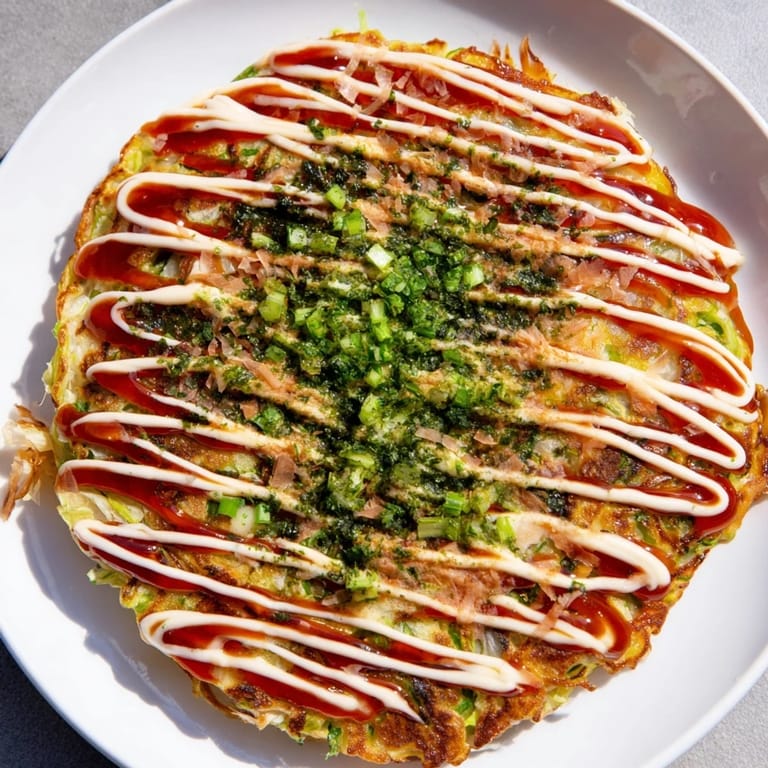
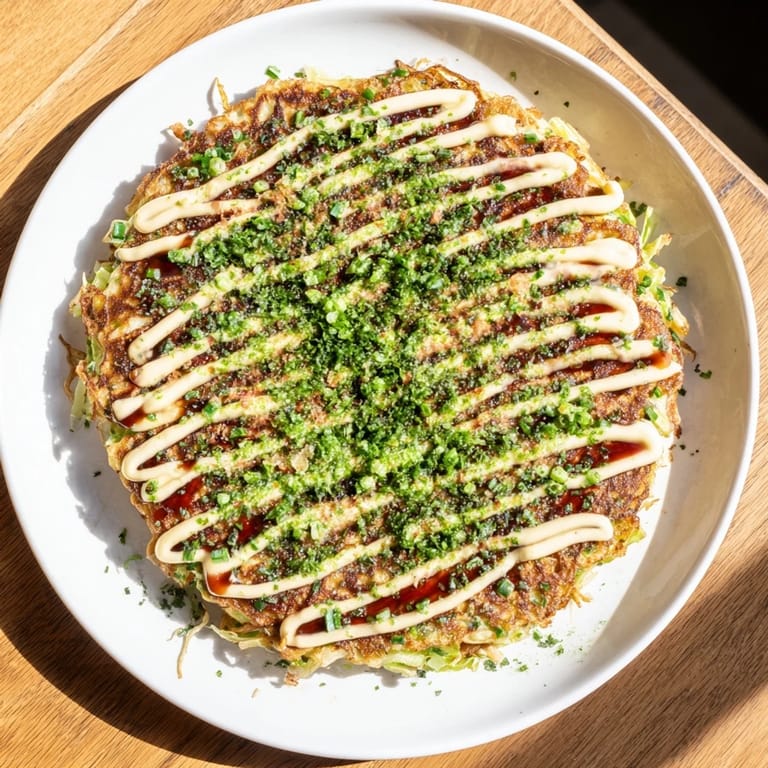
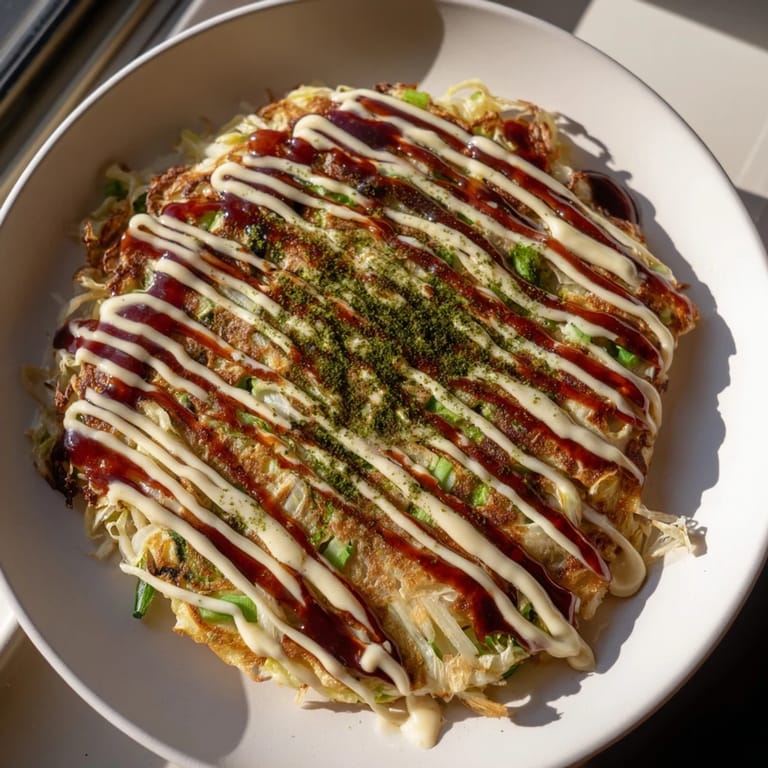
- Transfer each hot pancake to a serving plate and drizzle generously with okonomiyaki sauce and Japanese mayonnaise in a zigzag pattern—use a squeeze bottle if you have one, or just drizzle with the back of a spoon. Sprinkle with bonito flakes, aonori, and pickled ginger while the pancake is still steaming so the flakes dance from the heat.
- Serve immediately:
- Eat right away while everything is hot and the textures are at their best.
 Save to Pinterest
 There's something almost meditative about standing in front of a hot skillet, watching cabbage transform into something golden and crispy on the outside while staying tender within. Okonomiyaki taught me that simple ingredients, when treated with a little care, become something far greater than the sum of their parts.
The Sauce Strategy
The magic of okonomiyaki lives in its toppings, and the sauce is non-negotiable. If you can find a bottle of real okonomiyaki sauce at an Asian market, buy it—it has a sweetness and depth that homemade versions sometimes miss. But if you're improvising, mix equal parts Worcestershire sauce, ketchup, and soy sauce, then taste as you go; you're looking for something tangy, slightly sweet, and deeply savory.
Customization Without Apology
This recipe is your starting point, not your prison. If you prefer mushrooms over carrots, add them. If you're vegetarian, skip the shrimp and bacon entirely and boost the aonori and pickled ginger for extra umami. I've made these with leftover roasted chicken, crispy tofu, even kimchi. The cabbage-and-egg base is flexible enough to hold almost any flavor you want to throw at it, and that's exactly what makes okonomiyaki such a joy to cook.
Timing and Texture
Getting the pancake cooked through while keeping the bottom crispy requires medium heat and patience—turn it up too high and you'll burn the outside before the inside is done. I've learned to trust the visual cues: a golden-brown bottom with a slightly crispy edge, and you're ready to flip. The second side always cooks faster than the first, so watch it closely once you've made the flip.
- If your pancake feels fragile when you flip it, give it another 30 seconds on the first side and try again.
- Cooked okonomiyaki keeps warm on a plate for about 10 minutes, so you can finish cooking a whole batch before eating if you're cooking for a crowd.
- Leftovers taste surprisingly good cold the next day, though they're infinitely better eaten fresh and hot right off the skillet.
 Save to Pinterest
 This okonomiyaki recipe is my reminder that some of the best meals come from cultures and kitchens far from my own, and that cooking them with respect and curiosity only makes them taste better. Every time I make these, I'm back in that Tokyo kitchen at midnight, grateful and hungry, doing my best.
Common Recipe Questions
- → What ingredients give the pancakes their savory flavor?
The combination of dashi stock, shredded cabbage, okonomiyaki sauce, Japanese mayonnaise, and smoky bonito flakes creates the pancakes' distinctive savory profile.
- → How can I make a vegetarian version?
Omit shrimp or bacon and bonito flakes, and increase the amount of vegetables for a flavorful vegetarian option.
- → What is the best cooking method for even pancakes?
Use a nonstick skillet with medium heat, cooking each side until golden brown, usually 4–5 minutes per side.
- → Can I substitute the okonomiyaki sauce?
Yes, a mix of Worcestershire sauce, ketchup, and a touch of soy sauce works well as a substitute.
- → How should I serve the pancakes for best flavor?
Drizzle with sauce and mayonnaise, then sprinkle with bonito flakes, aonori, and pickled ginger. Let rest 1–2 minutes so toppings meld.