 Save to Pinterest
 My neighbor Maria taught me that minestrone isn't just soup—it's a conversation between what's in your garden and what's in your pantry. She'd make it on cool afternoons, humming while she chopped vegetables with this rhythmic, meditative patience that made the whole kitchen smell like home. The first time I watched her work, I realized she never followed a recipe; she just knew, somehow, that this combination of tomatoes, beans, and pasta could transform an ordinary Tuesday into something worth gathering around.
Years later, I made this soup on the day I moved into my first apartment. The boxes were still stacked in the living room, but my kitchen felt like the only real room in the place. Chopping vegetables at an unfamiliar counter, filling that first large pot I'd ever owned, watching the broth bubble and release its steam—it grounded me in a way nothing else could that day.
Ingredients
- Olive oil: Start with good quality; it's the foundation that carries all those vegetable flavors into the broth.
- Onion, celery, and carrots: This trio is non-negotiable—they're the aromatic backbone that builds flavor from the first sizzle.
- Garlic: Minced fine so it dissolves into the soup rather than leaving harsh chunks.
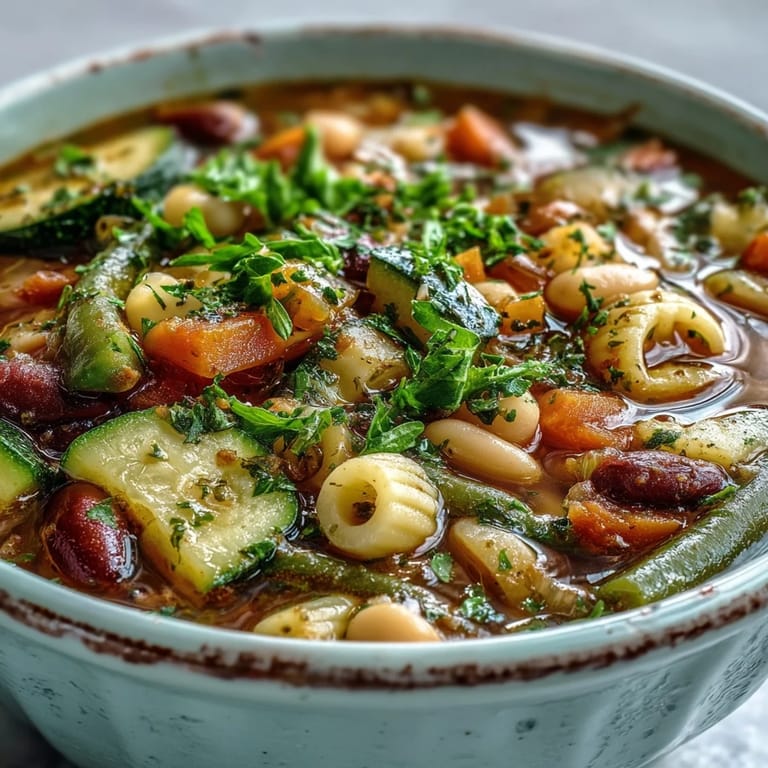
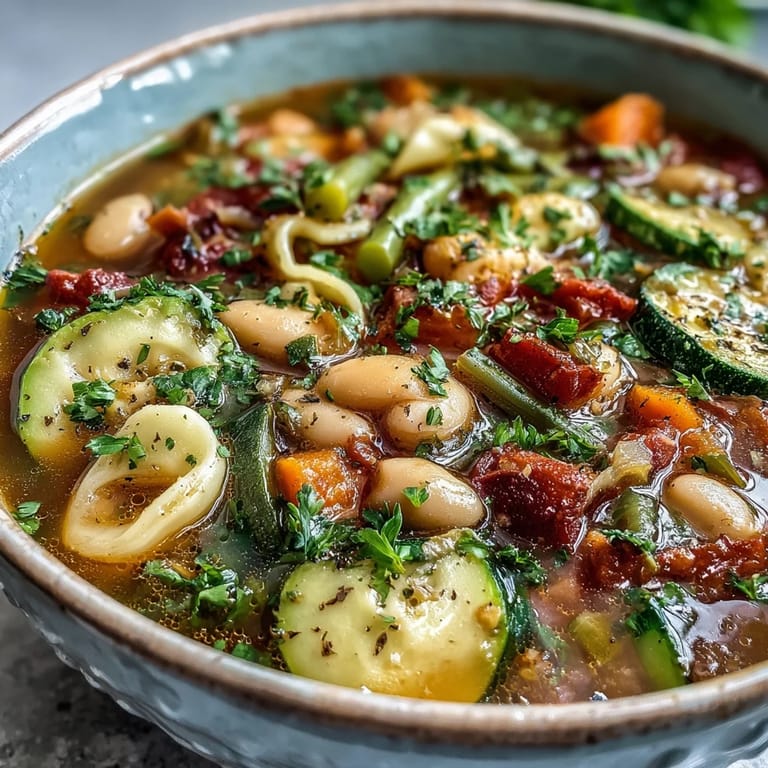
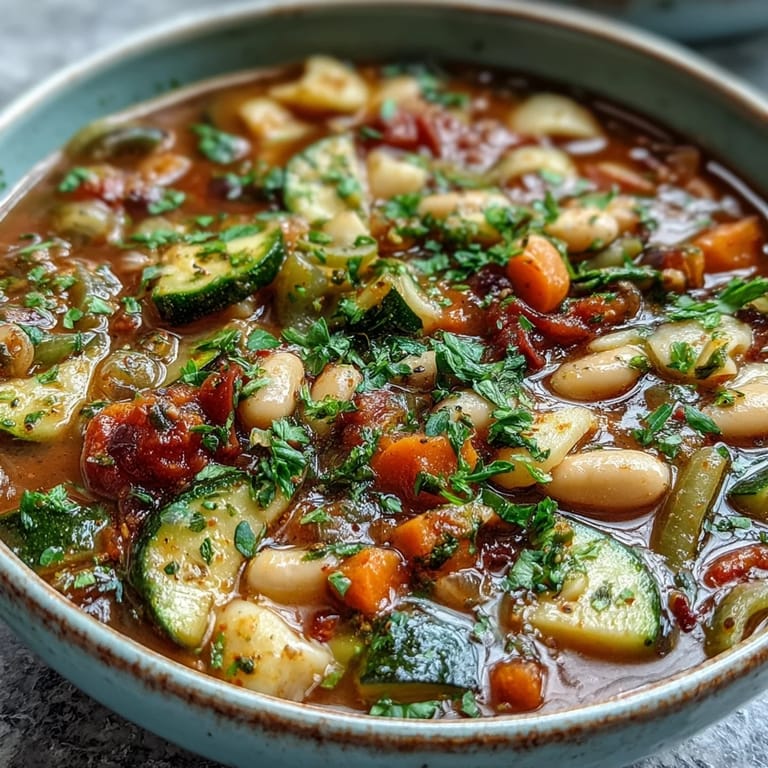
- Zucchini and green beans: Fresh vegetables that keep the soup light and add textural variety.
- Baby spinach or kale: Stir in at the very end so the greens stay vibrant and don't turn to mush.
- Diced tomatoes and tomato paste: The tomato paste concentrates flavor before the liquid goes in; it's a small move that deepens everything.
- Vegetable broth: Use the best broth you can find—it becomes the soul of the soup.
- Small pasta (ditalini or elbow): These shapes nestle into spoons and distribute evenly, making every bite satisfying.
- Cannellini or kidney beans: Drain and rinse them to remove excess starch so the broth stays clear and clean.
- Dried oregano, basil, and thyme: These three herbs work together in a way that feels almost Italian by instinct; don't skip the bay leaf.
- Fresh parsley: A handful stirred in at the end, plus more for garnish, adds brightness that dried herbs can't.
- Salt and black pepper: Season gradually as you cook—you'll taste the layers developing.
Tired of Takeout? 🥡
Get 10 meals you can make faster than delivery arrives. Seriously.
One email. No spam. Unsubscribe anytime.
Instructions
- Start with the foundation:
- Heat the olive oil in a large pot over medium heat and add your diced onion, celery, and carrots. Let them soften for about 5 minutes, stirring occasionally; you're looking for them to turn translucent and fragrant, which signals they're ready for what comes next.
- Build the flavor:
- Add the minced garlic, zucchini, and green beans, cooking for another 3 to 4 minutes until everything becomes tender and releases its smell into the oil. This is the moment when your kitchen starts to feel alive.
- Introduce the broth and herbs:
- Stir in the diced tomatoes, tomato paste, vegetable broth, and all your dried herbs—oregano, basil, thyme, and the bay leaf. Bring it to a boil, then lower the heat and let it simmer gently for 15 minutes so the flavors marry and mellow.
- Add the pasta and beans:
- Pour in the small pasta and the drained beans, cooking for about 10 minutes until the pasta is al dente—tender but still with a slight bite. Taste as you go; the pasta will continue absorbing broth and softening.
- Finish with the greens:
- Stir in the fresh parsley and spinach or kale, simmering for just 2 to 3 minutes until the greens wilt into the soup. This final step keeps the vegetables tasting fresh rather than cooked to death.
- Season and serve:
- Remove the bay leaf, then taste and adjust with salt and freshly ground black pepper. Ladle the soup into bowls, scatter fresh parsley on top, and serve while it's still steaming hot, ideally with crusty bread alongside.
 Save to Pinterest
 The real magic of minestrone happens when someone you love comes home cold and tired, and a bowl of this soup makes them feel seen and cared for. It's the kind of food that doesn't need to be fancy—it just needs to be true.
Why This Soup Stays on My Table
Minestrone works in every season. In summer, I lighten it with zucchini and fresh herbs; in winter, I add heartier vegetables like sweet potato or kale. The bones of the recipe stay the same, but the soup shifts with what's available and what the weather calls for. That flexibility is why it never feels repetitive, even when I make it twice a month.
Variations and Additions
I've stirred in roasted red peppers when they were on sale, added white beans instead of cannellini, swapped ditalini for orzo. Once, I added a splash of red wine when I opened a bottle and forgot it on the counter—that small decision became my favorite version. The soup welcomes your improvisation, your mood, your discoveries.
Serving and Pairing Ideas
Serve this soup with a thick slice of toasted bread for dipping, or alongside a simple green salad dressed with lemon and olive oil. A sprinkle of freshly grated Parmesan on top adds richness, though it's equally good without if you're keeping it vegan. Some nights I make this for dinner with nothing else; other times it's the opening course before something lighter.
- Top with grated Parmesan or nutritional yeast for a salty, umami note that makes each spoonful richer.
- Fresh crusty bread is essential—it's not a side; it's part of the experience of eating the soup.
- Leftovers thicken as the pasta continues absorbing broth, so add a splash of broth or water when reheating if you prefer it soupy.
 Save to Pinterest
 Make this soup on a day when you want the house to smell like comfort, or when someone needs feeding. Either way, you'll understand why it's survived centuries and counted itself among the world's most honest, beloved meals.
Common Recipe Questions
- → What vegetables go best in minestrone?
Traditional minestrone includes onions, celery, carrots, zucchini, and green beans. You can also add seasonal vegetables like squash, bell peppers, or potatoes based on preference and availability.
- → Can I make minestrone soup gluten-free?
Yes, simply substitute regular pasta with gluten-free pasta alternatives like rice pasta, corn pasta, or quinoa pasta. Also ensure your vegetable broth is certified gluten-free.
- → How long does minestrone soup last in the refrigerator?
Stored in an airtight container, minestrone keeps well for 4-5 days in the refrigerator. The flavors often improve overnight as the ingredients meld together.
- → Can I freeze minestrone soup?
Yes, minestrone freezes beautifully for up to 3 months. For best results, slightly undercook the pasta before freezing, as it will continue cooking when reheated.
- → What type of pasta works best for minestrone?
Small pasta shapes like ditalini, elbow macaroni, shells, or small tubes work perfectly. They hold up well in the broth and are easy to scoop with a spoon.
- → Is minestrone soup vegan?
This version is vegetarian and can easily be made vegan by omitting Parmesan cheese garnish. The soup itself relies on vegetable broth and contains no dairy or animal products.