 Save to Pinterest
 My neighbor knocked on the door one August evening with a grocery bag full of squash and zucchini, more than any reasonable person could eat in a week. I promised I'd use them and spent the next hour slicing vegetables while pasta water bubbled on the stove. The kitchen smelled like garlic and summer, and I realized I didn't need a complicated recipe to make something worth sharing. That dinner turned into this dish, one I now make whenever the farmers market leaves me with more produce than plan.
I made this for a small gathering once, and everyone stood around the kitchen island with their bowls, twirling pasta and talking about their own overgrown gardens. Someone added extra red pepper flakes, someone else squeezed lemon over the top, and it became one of those meals where the conversation mattered as much as the food. I've never written down a formal recipe until now because it always felt too simple, but that's exactly why it works.
Ingredients
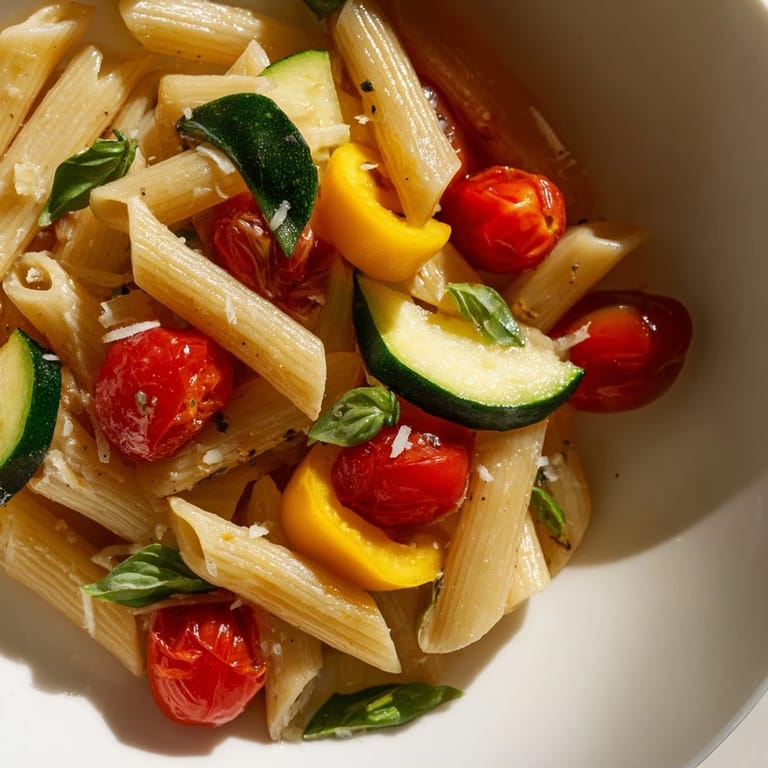
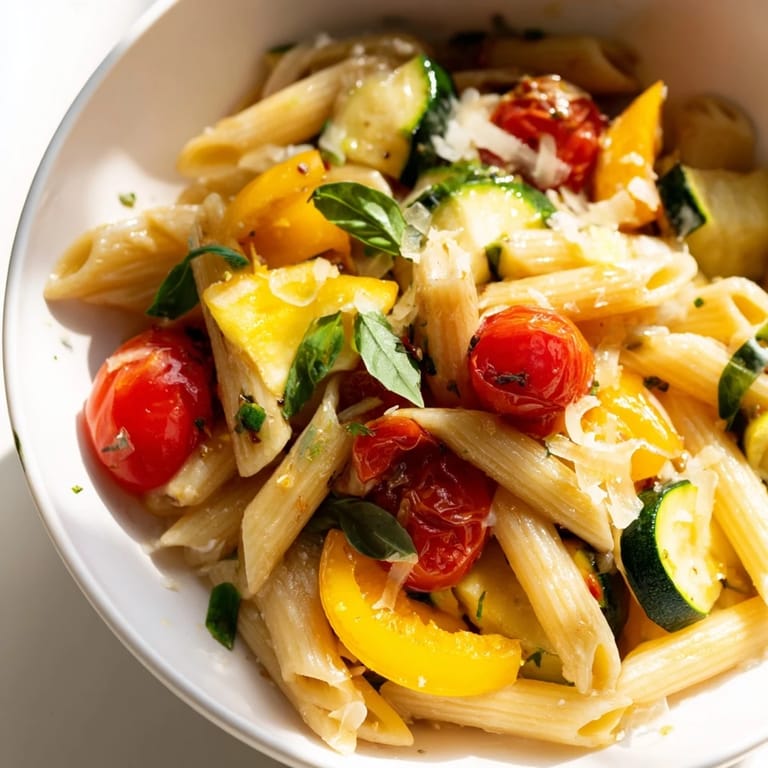
- Penne or fusilli pasta: Short shapes with ridges grab onto the olive oil and bits of vegetable, making every bite more interesting than smooth noodles would.
- Zucchini: Slice them into half-moons so they cook evenly and don't turn to mush, and try to keep the pieces about the same thickness.
- Yellow squash: This adds a slightly sweeter flavor than zucchini alone and makes the dish look more colorful and inviting.
- Cherry or grape tomatoes: Halved tomatoes release their juices as they cook, creating a light sauce that coats the pasta without needing cream or butter.
- Extra virgin olive oil: Use something you'd be happy to taste on its own, since it's the backbone of the flavor here.
- Garlic: Mince it finely and watch it closely so it gets fragrant but never brown, which would make it bitter.
- Kosher salt and black pepper: Season the pasta water generously and taste the vegetables as you go, adjusting until everything feels balanced.
- Fresh basil leaves: Slice them at the last minute so they stay green and aromatic instead of turning dark and bruised.
- Red pepper flakes: Just a pinch adds warmth without making the dish spicy, but you can skip it if you prefer things mild.
- Parmesan cheese: A little grated on top adds a salty, nutty finish, but the dish is just as good without it if you're keeping it vegan.
- Lemon zest: A small touch of brightness that makes the whole dish feel a little more special, especially if you're serving guests.
Tired of Takeout? 🥡
Get 10 meals you can make faster than delivery arrives. Seriously.
One email. No spam. Unsubscribe anytime.
Instructions
- Boil the pasta:
- Bring a large pot of salted water to a rolling boil and cook the pasta until it's al dente, with a slight bite in the center. Before you drain it, scoop out half a cup of the starchy pasta water to use later.
- Start the vegetables:
- Heat olive oil in a large skillet over medium heat and add the minced garlic, stirring for about a minute until the kitchen smells amazing but the garlic hasn't started to brown.
- Cook the squash:
- Toss in the zucchini and yellow squash, stirring occasionally so they soften and pick up a little color without falling apart. This takes about four or five minutes.
- Add the tomatoes:
- Stir in the halved tomatoes along with salt, pepper, and red pepper flakes if you're using them, and let everything cook until the tomatoes start to collapse and release their juices.
- Combine with pasta:
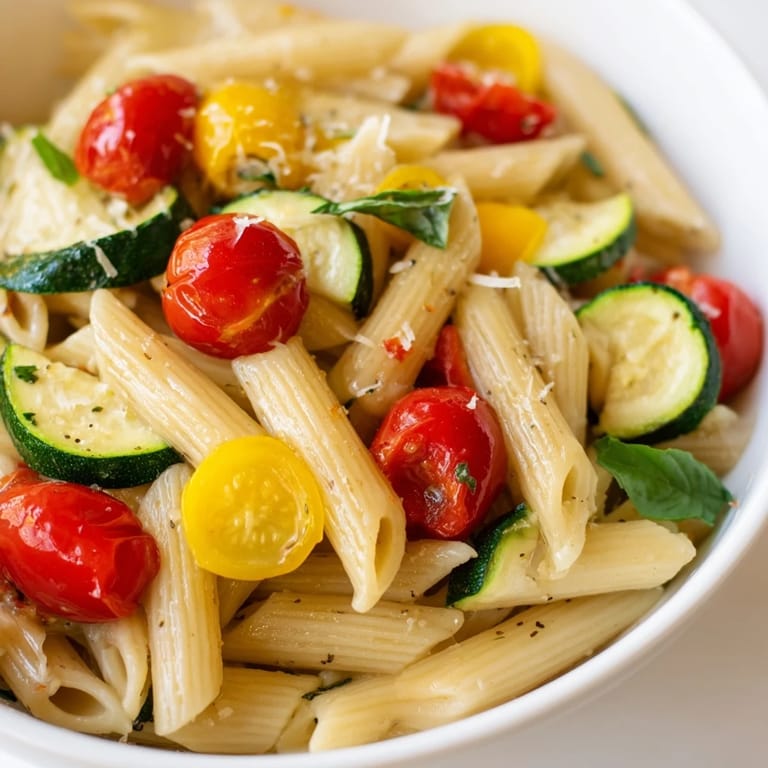
- Lower the heat and add the drained pasta to the skillet, tossing everything together and adding splashes of reserved pasta water until the sauce clings to the noodles in a silky way. Stir in the fresh basil and Parmesan, then taste and adjust the seasoning.
- Serve:
- Transfer to bowls and finish with extra basil and a little lemon zest if you want a brighter, fresher note on top.
 Save to Pinterest
 One night I made this after a long day and ate it straight from the skillet, standing by the stove with a fork and a glass of cold white wine. It tasted better than it had any right to, and I realized that some of the best meals are the ones you make without overthinking. There's something comforting about food that doesn't ask for much but gives you exactly what you need.
What to Do with Leftovers
This pasta is one of those rare dishes that tastes just as good cold the next day, maybe even better once the flavors have had time to settle in together. I like to eat it straight from the fridge for lunch, or you can warm it gently in a skillet with a splash of water or olive oil to loosen it up. If the pasta has absorbed too much moisture overnight, a squeeze of lemon or a handful of fresh arugula can bring it back to life.
Swapping in Other Vegetables
I've made this with whatever looked good at the market, bell peppers, eggplant, even a handful of spinach stirred in at the end. The key is to add harder vegetables like bell peppers early with the squash, and save delicate greens for the last minute so they wilt but don't turn to slime. If you use eggplant, salt it first and let it sit for ten minutes to draw out the bitterness, then rinse and pat it dry before cooking.
Making It Feel Like a Full Meal
Sometimes I'll toss in a can of drained white beans or chickpeas to make the dish more filling, and they soak up the garlic and tomato juices beautifully. A handful of toasted pine nuts or roughly chopped walnuts adds a little crunch and richness that makes it feel more special. If you want protein, grilled chicken or shrimp on the side works well, but honestly the pasta is satisfying enough on its own with a good piece of crusty bread.
- Taste the pasta a minute before the package says it's done, you want it firm enough to finish cooking in the skillet.
- If your tomatoes aren't very ripe, a small pinch of sugar will help balance their acidity.
- Use a big enough skillet so the vegetables have room to cook instead of steaming on top of each other.
 Save to Pinterest
 This is the kind of recipe I come back to when I want something simple but not boring, something that reminds me why I started cooking in the first place. I hope it does the same for you.
Common Recipe Questions
- → Can I prepare this dish ahead of time?
This pasta is best served fresh, but you can prep ingredients several hours in advance. Store cut vegetables in the refrigerator and cook the dish just before serving for optimal flavor and texture.
- → What pasta shapes work best?
Penne and fusilli are ideal choices as their ridges and spiral shapes catch the vegetable sauce beautifully. Short tube or spiral pastas work well; avoid long thin pastas like spaghetti which don't hold the sauce as effectively.
- → How do I make this vegan?
Simply omit the Parmesan cheese or substitute with a plant-based alternative. All other ingredients are naturally vegan. The dish remains delicious and flavorful without dairy.
- → What if my tomatoes aren't very flavorful?
If using out-of-season tomatoes, add a pinch of sugar while cooking to enhance sweetness. Sun-dried tomatoes or a splash of balsamic vinegar can also deepen the flavor profile.
- → Can I add protein to this dish?
Absolutely. Grilled chicken, white beans, crumbled feta, or pine nuts are excellent additions. Cook proteins separately and toss with the pasta and vegetables for a heartier meal.
- → Why should I reserve pasta water?
Starchy pasta water helps create a silky sauce that clings to the noodles. It emulsifies with the olive oil and coats each piece of pasta, making the dish more cohesive and flavorful than without it.