 Save to Pinterest
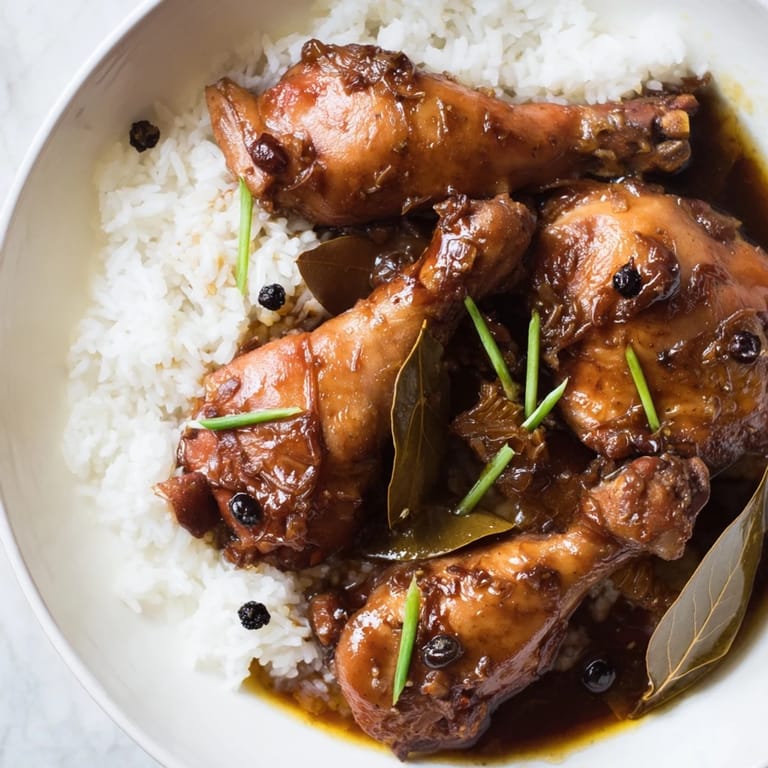
 My grandmother's kitchen smelled like vinegar and garlic every time we visited on a Sunday, and I'd watch her pour amber liquid over chicken without measuring anything, just knowing. Years later when I finally asked for the recipe, she laughed and said it was just adobo—the dish every Filipino household makes differently but somehow always the same. That first time I made it myself, something clicked: the way the vinegar cuts through the richness, how the garlic breaks down into the sauce, the chicken so tender it falls from the bone. Now it's the first thing I cook when I want to feel like home tastes on a plate.
I once made this for a friend who'd never had real adobo before, and watching her take that first bite—eyes closing, fork going back for more before she'd even finished chewing—that's when I realized this wasn't just my family's comfort food. It's the kind of dish that crosses tables and makes people feel something. Now whenever someone visits, they leave asking for the recipe.
Ingredients
- Bone-in, skin-on chicken thighs and drumsticks (1.5 lbs): Dark meat has enough fat and connective tissue to become silky after braising, unlike white meat which can turn stringy; the skin keeps everything moist and adds flavor to the sauce.
- Soy sauce (1/3 cup): This is your umami anchor, the savory backbone that makes adobo taste like adobo and not just vinegar-braised chicken.
- Cane vinegar or white vinegar (1/3 cup): The acid balance is everything here; cane vinegar tastes softer and more complex, but white vinegar works in a pinch if that's what you have.
- Garlic cloves (6), smashed: Smashing rather than mincing releases more of the pungent oils that will dissolve into the braising liquid and perfume everything.
- Bay leaves (2): These add a subtle herbal note that keeps the dish from tasting one-dimensional; don't skip them, and don't forget to fish them out before serving.
- Whole black peppercorns (1 teaspoon) or ground black pepper (1/2 tsp): Whole peppercorns infuse gently as the liquid simmers, giving you crackle and heat without the dull bite of pre-ground pepper.
- Brown sugar (1 tablespoon, optional): Just a pinch to balance the acid and add roundness; it shouldn't make the dish sweet, just less sharp.
- Water (1/2 cup): This extends the braising liquid so the chicken cooks gently and the sauce has room to reduce and concentrate.
- Cooking oil (2 tablespoons): Use something neutral like vegetable or canola oil that won't smoke or add flavor; you're just building a sear here.
- Steamed white rice: Jasmine or long-grain white rice soaks up the sauce like a sponge and is essential to the experience.
- Scallions for garnish: A fresh, sharp note at the end that cuts through the richness and adds color.
Tired of Takeout? 🥡
Get 10 meals you can make faster than delivery arrives. Seriously.
One email. No spam. Unsubscribe anytime.
Instructions
- Marinate the chicken:
- Combine the chicken with soy sauce, vinegar, smashed garlic, bay leaves, peppercorns, and brown sugar in a large bowl, making sure everything is coated. If you have time, let this sit in the fridge for a few hours or even overnight—the acid and salt will start softening the meat and deepening the flavor, though 30 minutes is the minimum.
- Prep and dry the chicken:
- Remove the chicken from the marinade and pat it completely dry with paper towels while you keep the liquid in the bowl. Wet chicken won't brown properly, so take a moment here; this step makes a real difference.
- Brown the chicken:
- Heat oil in a large skillet or Dutch oven over medium-high heat until it shimmers, then place chicken pieces skin-side down and let them sit undisturbed for 3–4 minutes until the skin turns golden and releases easily from the pan. Flip and brown the other side for another 3–4 minutes until you see some caramelization, then remove to a plate.
- Braise low and slow:
- Pour the reserved marinade and water into the pan, scraping up any browned bits from the bottom with a wooden spoon. Return the chicken to the pan skin-side up, bring the liquid to a boil, then immediately reduce the heat to low, cover, and let it bubble gently for 25 minutes. Halfway through, turn each piece of chicken so it cooks evenly and stays moist.
- Reduce and finish:
- Uncover the pan and let it simmer for another 10–15 minutes, allowing the sauce to thicken and concentrate. You'll see it go from thin and watery to glossy and clingy; this is when the real flavor develops. If there's a thick layer of fat floating on top, skim some of it off with a spoon, but leave a little—it tastes good.
- Taste and serve:
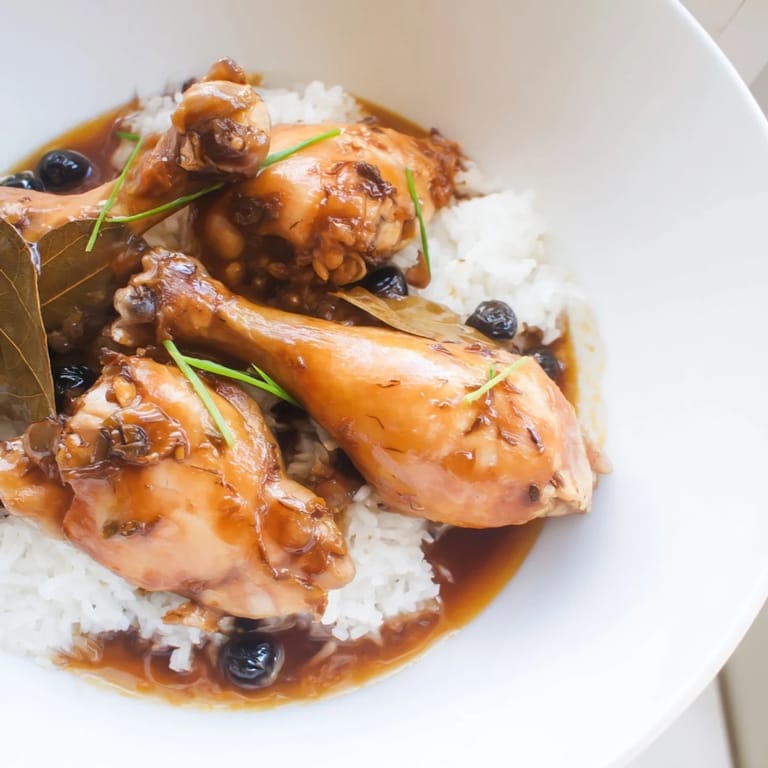
- Remove from heat, fish out the bay leaves, taste the sauce, and add a pinch more soy sauce or vinegar if it needs it. Serve the hot chicken over fluffy steamed rice with the sauce spooned over everything, scattered with fresh scallions if you want that last bit of brightness.
 Save to Pinterest
 There's a moment near the end of cooking when you lift the lid and the steam hits your face and you realize the house smells nothing like anywhere else, and that's when you know you've made something right. That's the moment I remember most—not the eating, but the cooking, and how something this simple can feel like magic.
Why Bone-In Chicken Matters Here
I learned this the hard way after trying to make adobo with boneless breasts one night. The meat was done in 15 minutes but tasted dry and bland, like I'd forgotten half the ingredients. The next time I went back to thighs and drumsticks, and everything changed—the gelatin from the bones turns the braising liquid silky, the meat stays juicy even if you leave it cooking a few minutes too long, and the skin crisps from the initial browning while staying tender underneath. Bone-in pieces also absorb the sauce more evenly because the meat is in contact with more liquid for longer. Now I won't make adobo any other way.
The Balance of Soy and Vinegar
The magic of adobo lives in the ratio of salty to sour, and I spent way too long experimenting with this before I understood it. Equal parts soy sauce and vinegar sounds odd until you taste it together and realize they don't compete—the vinegar keeps the soy from tasting flat and heavy, and the soy rounds out the vinegar's sharpness. If your version tastes too acidic, resist the urge to add more soy sauce; instead finish with a small pinch of sugar to tame the vinegar. If it tastes one-dimensional and salty, a splash more vinegar wakes it all up.
Serving and Storing
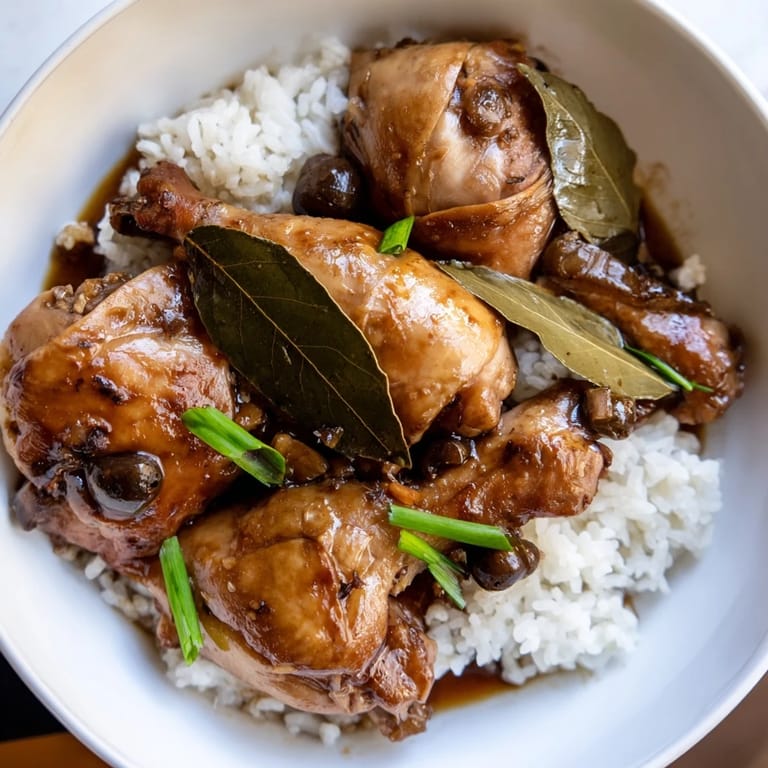
Adobo is one of those dishes that tastes better on day two after the sauce has had time to fully season the meat and the flavors have melded into one unified whole. Keep it covered in the fridge for up to four days, and reheat it gently on the stovetop so the chicken doesn't seize up. You can also freeze it for a month, thawing it overnight in the fridge before reheating. The first time I made a double batch just to have leftovers, I wondered why I hadn't been doing this the whole time.
- Cold adobo over rice the next morning tastes different and somehow even better, less like breakfast and more like a gift to yourself.
- If you're cooking for a crowd, this scales up easily—just keep the soy-to-vinegar-to-garlic ratio the same and add a few more minutes to the braise.
- Leftover sauce can go into fried rice, be used to braise other proteins like pork or eggs, or even be reduced into a glaze for roasted vegetables.
 Save to Pinterest
 This is the kind of dish that tastes like it took hours to make but only took one. Serve it with someone you want to cook for again.
Common Recipe Questions
- → Can I use other cuts of chicken?
Yes, bone-in, skin-on thighs and drumsticks are preferred for moisture and flavor, but breasts can be used with a shorter cooking time.
- → What type of vinegar is best?
Cane vinegar or white vinegar works well, providing the signature tang without overpowering the other ingredients.
- → Is browning the chicken necessary?
Browning helps develop deeper flavor and texture before simmering in the sauce, enhancing the overall dish.
- → How long should I marinate the chicken?
Marinating for at least 30 minutes allows flavors to penetrate, but up to 8 hours improves depth and tenderness.
- → Can I adjust the sweetness?
Yes, brown sugar is optional and can be added to balance acidity with a subtle sweetness.