 Save to Pinterest
 I remember the first time I arranged a cheese board for an intimate dinner party, and I realized that presentation could be just as important as the ingredients themselves. That evening, when my guests arrived and saw the golden Manchego, the creamy Brie, and the jewel-toned grapes all arranged in an elegant perimeter around the board's dramatic empty center, their faces lit up before they even tasted anything. That's when I understood: a beautiful board isn't just food, it's an invitation to slow down and savor the moment together.
Last summer, I made this board for my sister's engagement celebration in our garden, and watching three generations of family members gathered around it, trading pieces and stories, I realized this wasn't just appetizers—it was a moment where food became the backdrop for connection. My grandmother, who rarely ate much anymore, had three different cheeses and kept reaching for the honeycomb, and my niece discovered she loved blue cheese for the first time.
Ingredients
- Triple-cream Brie (120 g, cut into slim wedges): This is your luxury anchor—the way it melts on the tongue sets the tone for the whole board. I learned to cut it into thin, elegant wedges rather than chunks because they're easier to eat standing up, and they catch the light beautifully along the rim
- Aged Manchego (120 g, sliced): Spanish sheep's milk cheese with a subtle nuttiness that ages into something almost crystalline. The golden color is essential to the visual story you're telling with this board
- Blue cheese (100 g, crumbled or sliced): The bold statement piece—not everyone's favorite, but those who love it will seek it out first. Keep it separate from the milder cheeses so flavors don't compete
- Goat cheese (100 g, formed into small rounds): I shape these by hand and chill them slightly so they hold their form. They're tangy enough to cleanse the palate between bites of richer cheeses
- Prosciutto (100 g, folded into ribbons): The delicate, almost translucent folds catch light and add movement to the arrangement. Choose the thinnest slices you can find—they're more elegant and easier to eat
- Thinly sliced salami and coppa or bresaola (220 g total): These provide contrast in both color and texture. I love how salami's peppery notes balance the creaminess of the cheeses
- Red and green grapes (2 small bunches): They're your color story—jewel tones that make everything around them look more expensive and festive. Leave them in small clusters so guests can pluck individual grapes
- Pear and apple (1 each, thinly sliced): Fresh fruit adds brightness and prevents the board from feeling too heavy. Slice these close to serving time and have a small bowl of lemon water nearby to keep them from browning if needed
- Dried apricots (1 small handful): The chewiness offers texture variety and a subtle sweetness that echoes the jammier elements you'll add
- Marcona almonds (1/4 cup): Roasted in their skins with a touch of salt, these Spanish almonds are buttery and refined—not the everyday kind, which is the whole point of this board
- Salted pistachios (1/4 cup): Their vibrant green is irreplaceable visually, and their saltiness is the perfect counterpoint to sweet elements
- Castelvetrano olives (1/4 cup): These buttery, green Sicilian olives are mild enough not to overpower. They're worth seeking out—they're the olive equivalent of luxury
- Cornichons (1/4 cup): These tiny pickles refresh the palate and add a glistening jewel-like quality to the arrangement
- Fig jam or quince paste (1/4 cup): This is where sweetness meets sophistication. Quince paste especially pairs beautifully with the aged cheeses
- Honeycomb or honey drizzle: If you can find actual honeycomb, it's worth it—the appearance is almost as important as the taste. If not, a good raw honey drizzled at the last moment does beautiful work
- Baguette (1, thinly sliced and lightly toasted) and assorted crackers (1 box): Toast the baguette slices yourself—they stay crisp longer than pre-toasted, and the aroma adds to the experience. Mix in your favorite crackers for variety in texture and flavor
Tired of Takeout? 🥡
Get 10 meals you can make faster than delivery arrives. Seriously.
One email. No spam. Unsubscribe anytime.
Instructions
- Choose your stage:
- Start with a large wooden or marble board that has a beautiful rim—this rim is your canvas. The board itself becomes part of the presentation, so take a moment to admire its shape before you begin. If you're feeling inspired, wipe it with a soft cloth so it gleams
- Arrange the cheeses first:
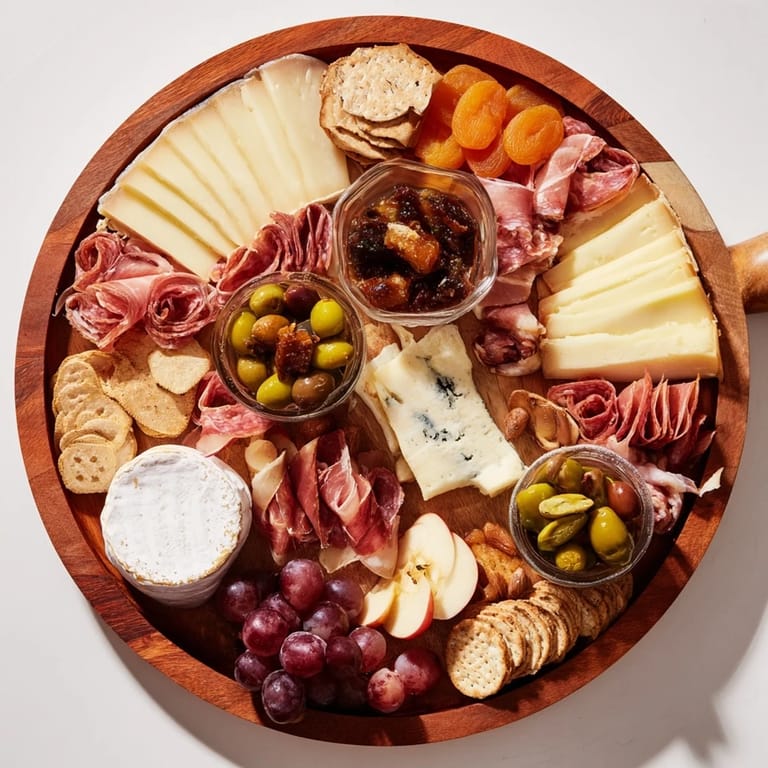
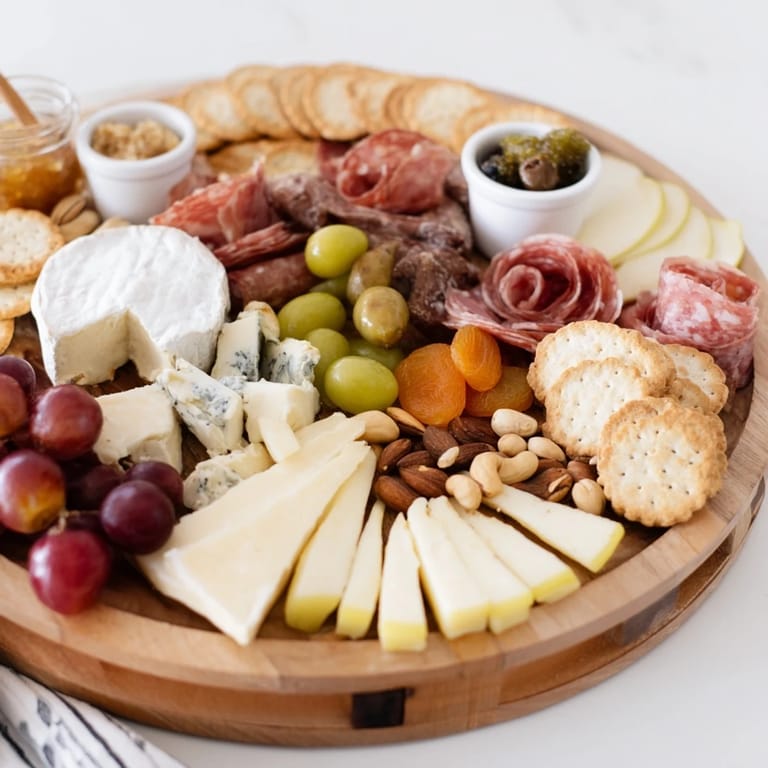
- Beginning at one point on the rim and working your way around, position your cheeses in a thoughtful sequence. I like to alternate the creamy (Brie), the sharp (blue), and the tangy (goat cheese) so no two strong flavors sit directly next to each other. The Manchego's golden hue should be distributed evenly around the circle, like little suns marking the way
- Layer in the charcuterie:
- Fold the prosciutto into loose ribbons and nestle them between the cheeses. The salami and coppa should be arranged in slightly overlapping layers, like rose petals. This creates depth and makes the rim feel abundant without being cluttered
- Tuck in the fresh fruit:
- Position your grape clusters so they anchor sections of the arrangement. Slip the pear and apple slices between other elements at the last possible moment so they stay crisp and pristine. The dried apricots fill small gaps and add warmth
- Scatter the nuts and pickles:
- The almonds and pistachios should be distributed around the perimeter—not clumped, but sprinkled with intention. The olives and cornichons can be nestled into any remaining small spaces, their glistening surfaces catching the light
- Add your sweet finishing touches:
- Place a small ramekin or shallow bowl for the fig jam and another for the honey (or honeycomb) along the rim. They become part of the arrangement, not afterthoughts. If adding edible gold leaf for extra festivity, apply it at the very last moment before guests arrive
- Arrange crackers and bread:
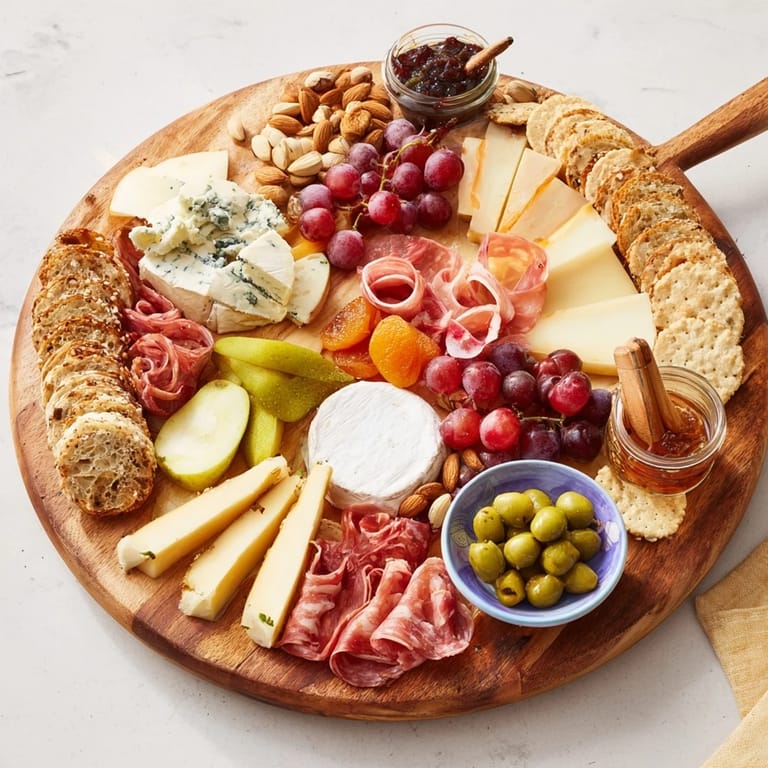
- Fan your toasted baguette slices along part of the rim, and scatter the assorted crackers in a way that looks generous but not overwhelming. Leave space for guests to see the board's beautiful surface peeking through
- Step back and admire:
- Before serving, take a moment to look at what you've created. Rotate the board slowly—does every angle feel balanced? Is the center dramatically empty, highlighting the board's shape? This pause is part of the recipe too
- Serve with intention:
- Set out cheese knives and small tongs so guests feel invited to take their time composing perfect bites. Serve immediately at room temperature, when every element is at its most flavorful and inviting
 Save to Pinterest
 I'll never forget watching my usually quiet uncle reach across the table for a third piece of the goat cheese, this time paired with fig jam, and say it was the best thing he'd tasted all year. That's when I realized that a beautiful board does something special—it gives people permission to linger, to try new combinations, to discover unexpected favorites. It transforms eating from refueling into something closer to art.
The Art of the Empty Center
The first time I arranged this board, I was tempted to fill every inch of space, to make it seem more abundant and generous. But then I realized that the empty center is actually a form of confidence—it says you have enough, you don't need to prove anything, and the beauty of the board's shape matters more than cramming in more food. That restraint is what catches people's eyes and keeps them looking. It also gives you somewhere to place additional ramekins of condiments as the evening progresses, keeping everything fresh and organized.
Timing and Temperature Matters
One crucial lesson I learned the hard way: this board is best assembled no more than 30 minutes before serving. The fresh fruit will begin to oxidize, the cheeses will warm unevenly, and the crackers may soften slightly from exposure to moisture in the air. But that means you can prep everything ahead—slice your ingredients, chill your bowls, polish your board—and then assemble with grace in those final moments before guests arrive. It feels like you're cooking together with them, just with timing rather than fire.
Wine Pairings and Serving Style
This board sings when paired with crisp Champagne or a dry Sauvignon Blanc—the acidity cuts through the richness of the cheeses and refreshes your palate between flavors. I've learned that serving this at a garden party or intimate gathering creates a different energy than setting it on a dining room table. It becomes an excuse for people to stand together, to try things they might not normally choose, to build their own perfect bite. That communal aspect is almost as important as the ingredients themselves.
- Pour the wine into the glasses just before guests arrive so the bubbles are at their most lively and the temperature is perfect
- Don't be afraid to prep components the morning of—your cheeses and charcuterie can be sliced and arranged on a covered platter in the refrigerator, then transferred to the board at the last moment
- If you're serving this outdoors, keep a small damp towel nearby to gently refresh any ingredients that have dried out or lost their sheen
 Save to Pinterest
 A beautiful board is really just love arranged around the edge of something. When you take the time to choose good ingredients and arrange them with intention, you're saying to the people you're feeding: you matter to me, and I wanted something beautiful for you.
Common Recipe Questions
- → What types of cheeses work best for this arrangement?
Soft triple-cream Brie, aged Manchego, blue cheese, and goat cheese rounds offer a balance of creamy, sharp, and tangy flavors ideal for the board.
- → How should the ingredients be arranged?
Place all items exclusively along the board's outer edge, alternating colors and textures to create visual appeal, while leaving the center empty for impact.
- → Can this arrangement accommodate vegetarian preferences?
Yes, omit the charcuterie and add marinated artichoke hearts, roasted peppers, or extra cheeses to maintain variety and flavor.
- → What accompaniments complement the cheeses and charcuterie?
Include Marcona almonds, salted pistachios, Castelvetrano olives, cornichons, fig jam, quince paste, and a drizzle of honey or honeycomb.
- → How should this board be served for best taste?
Serve at room temperature to allow the flavors and textures of cheeses and accompaniments to fully develop and shine.
- → What beverage pairs well with this board?
Champagne, sparkling wine, or a crisp Sauvignon Blanc complement the flavors and elevate the festive experience.