 Save to Pinterest
 I discovered this chickpea salad sandwich by accident one Tuesday when I was frantically searching my fridge for lunch inspiration. There was half a can of chickpeas sitting there, some vegetables I needed to use, and a vague memory of a coworker raving about their plant-based lunch. Twenty minutes later, I had something so satisfying and flavorful that I made it four times the following week. It became my go-to when I wanted something hearty without the fuss, and now it's the sandwich I make whenever I need to feel like I've got my life together.
I remember making a batch of these for my friend's surprise picnic on a sunny Saturday, and watching people go back for seconds without realizing there was no chicken or cheese involved. Someone asked if I could make it for her work lunches every week, which became a regular thing until she learned to make them herself. That moment felt like the highest compliment a simple sandwich could receive.
Ingredients
- Chickpeas (1 can, drained and rinsed): These are your protein backbone, and rinsing them really does matter because it removes the starchy liquid that can make everything mushy and bland.
- Vegan mayonnaise (2 tablespoons): The creamy binding agent that makes this feel indulgent; cashew-based versions taste richer than soy-based ones if you have the choice.
- Dijon mustard (1 tablespoon): A small amount adds sophistication and tang without being pushy, and it keeps the filling from tasting flat.
- Lemon juice (1 tablespoon): Brightens everything up and prevents the mix from oxidizing to an unappealing brown color.
- Celery stalk, finely diced (1): The crunch factor that keeps every bite interesting and prevents the sandwich from feeling like spread on bread.
- Carrot, grated (1 small): Adds natural sweetness and moisture while contributing subtle earthy notes and gorgeous color.
- Red onion, finely diced (2 tablespoons): Raw onion brings sharpness and that fresh bite that makes you notice you're eating something alive and intentional.
- Fresh parsley, chopped (2 tablespoons): More than just garnish, it adds herbal brightness and makes the filling taste homemade rather than assembled.
- Garlic powder (1/4 teaspoon): A whisper of garlic flavor that deepens the savory profile without the raw bite of fresh garlic.
- Salt and black pepper (to taste): These aren't optional; they're what make every other ingredient taste like the best version of itself.
- Whole grain bread (8 slices): Choose bread that won't turn into mush when the filling sits against it, and toasting it lightly the day of changes everything.
- Lettuce leaves (1 cup): Acts as a moisture barrier between bread and wet filling, keeping everything from getting soggy.
- Tomato, sliced (1 medium): Fresh tomato adds juiciness and brightness, but choose one that actually tastes like tomato, not something that travelled across the country.
- Cucumber, thinly sliced (1/2): The cooling, hydrating element that makes the sandwich feel fresh rather than heavy.
Tired of Takeout? 🥡
Get 10 meals you can make faster than delivery arrives. Seriously.
One email. No spam. Unsubscribe anytime.
Instructions
- Mash the chickpeas:
- Pour your drained chickpeas into a mixing bowl and use a fork or potato masher to break them down until they're mostly crushed but still have some chunky texture. You're going for a chunky tuna salad consistency, not a smooth purée, because those little pieces give you substance and interest in every bite.
- Mix the dressing and vegetables:
- Add the vegan mayo, Dijon mustard, and lemon juice to the chickpeas, then fold in the celery, carrot, red onion, parsley, and garlic powder along with salt and pepper. Mix gently until everything is coated and distributed evenly, tasting as you go and adjusting the seasonings until it feels bright and savory on your tongue.
- Taste and adjust:
- This is the moment to decide if it needs more lemon punch, another pinch of salt, or a dash of black pepper. The filling should taste bold on its own because it's about to be toned down slightly by the bread and vegetables.
- Build your sandwiches:
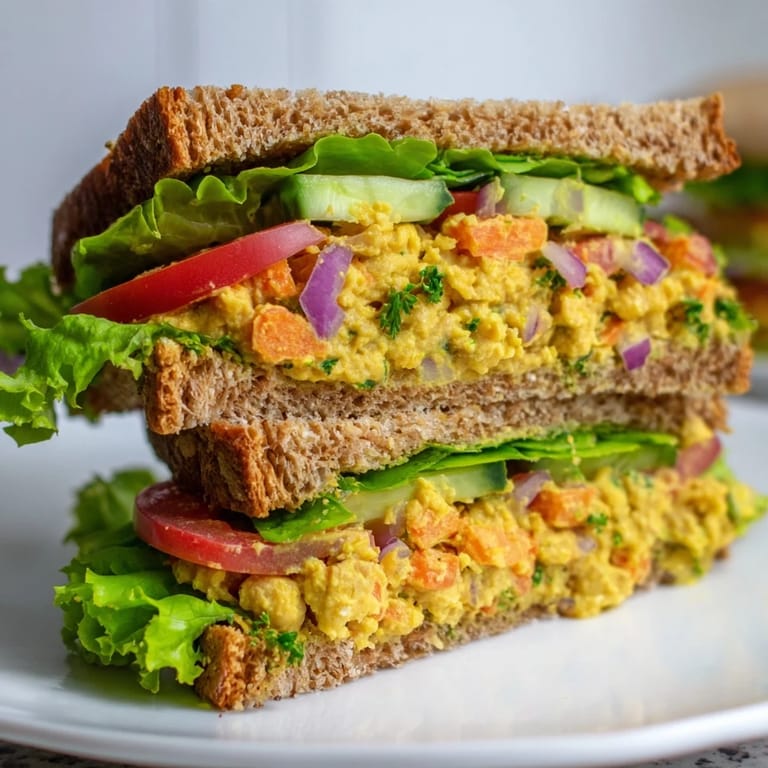
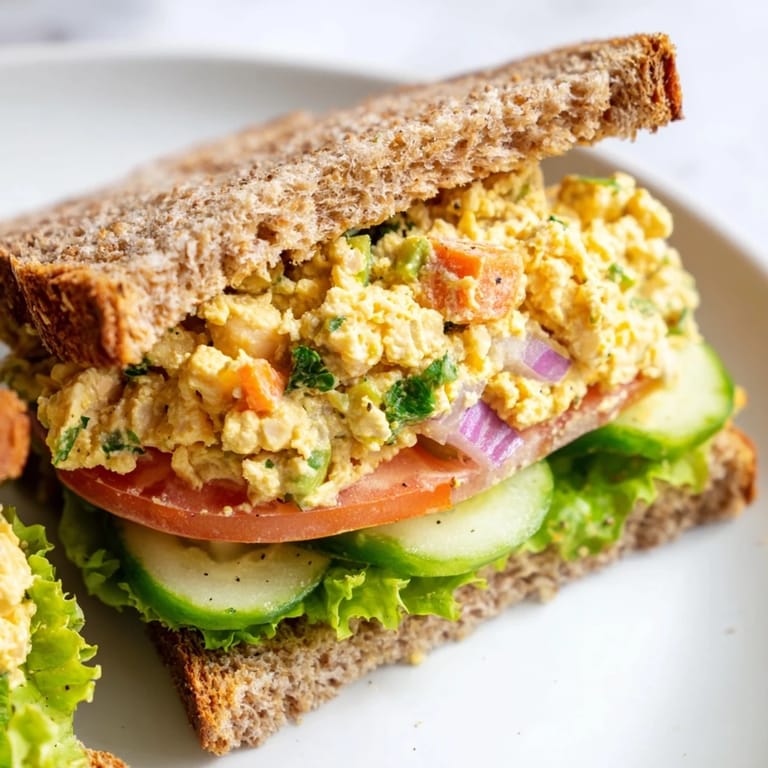
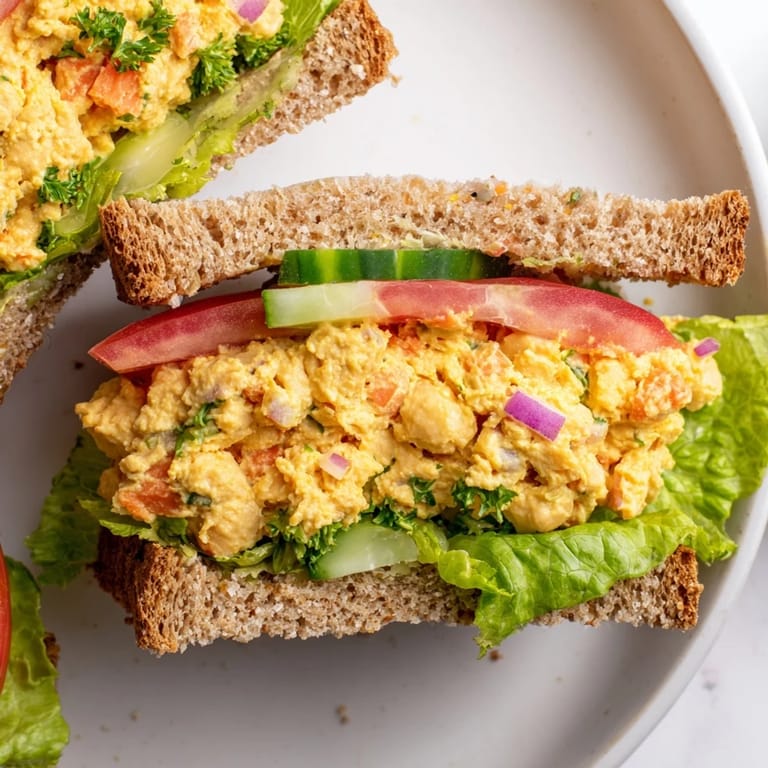
- Lay out all your bread slices and layer lettuce leaves on four of them, creating a moisture barrier that protects the bread from sogginess. Top each lettuce layer with a generous scoop of chickpea salad, then add tomato and cucumber slices in an even layer.
- Stack and serve:
- Place the remaining bread slices on top and press down gently so everything holds together nicely. Cut the sandwiches diagonally if you want them to feel special, or just slice them however makes sense, and serve immediately or wrap them tightly for later.
 Save to Pinterest
 My favorite version of this sandwich happened the day I realized the chickpea filling actually tastes better after sitting in the fridge for a few hours because the flavors meld and the texture becomes more cohesive. I started making it the night before for the next day's lunch, and something about eating something I'd prepared with intention the day before felt like a small act of self-care.
Variations and Flavor Swaps
Once you've made this sandwich a few times, the base becomes a canvas for whatever you have on hand or whatever you're craving. I've added roasted red peppers for sweetness and depth, mixed in chopped pickles for a briny kick that makes it taste almost tangy and deli-like, and even tossed in some smoked paprika when I wanted something with more smoky complexity. The beauty of this filling is that it's forgiving and welcomes additions without losing its identity.
Bread and Wrapping Alternatives
Whole grain bread is my default because it's hearty enough to hold up to a wet filling and has enough flavor to stand up beside the chickpeas, but I've used sourdough when I wanted something tangier, pita pockets when I was eating with my hands, and lettuce wraps when I wanted something lighter and raw. Each choice changes the experience slightly, so it's worth experimenting depending on your mood or the season.
Making It Yours
This sandwich taught me that sometimes the simplest recipes are the ones that deserve the most attention to detail, because every ingredient matters when there aren't many of them to hide behind. Pay attention to how fresh your lemon juice is, whether your vegetables actually taste good, and if your bread has personality.
- Toast your bread lightly the morning of eating if you know it's going to sit in the fridge overnight, since this helps it stay firm and prevents sogginess.
- Make the chickpea filling up to three days ahead so the flavors can get to know each other, but wait to assemble until you're ready to eat.
- Double the filling recipe and keep it in a jar in the fridge for emergency lunches throughout the week, knowing it stays fresh and tasty for at least four days.
 Save to Pinterest
 Every time I make this sandwich, I'm reminded that the most satisfying meals are often the ones that don't demand much from you but somehow feel generous and nourishing anyway. This is the kind of food that quietly becomes part of your routine because it works so well.
Common Recipe Questions
- → Can I use gluten-free bread?
Yes, substituting gluten-free bread preserves flavor and suits gluten sensitivities without compromising texture.
- → How should I mash the chickpeas?
Use a fork or potato masher to break them down until mostly chunky, ensuring a hearty texture.
- → Are there flavor variations recommended?
Adding smoked paprika or chopped pickles enhances the tangy and smoky notes of the filling.
- → Can this sandwich be prepared ahead?
Yes, prepare the filling and assemble just before serving for optimal freshness, or wrap for quick meals later.
- → What makes this sandwich protein-rich?
The chickpeas provide a substantial amount of plant-based protein, contributing to a balanced meal.