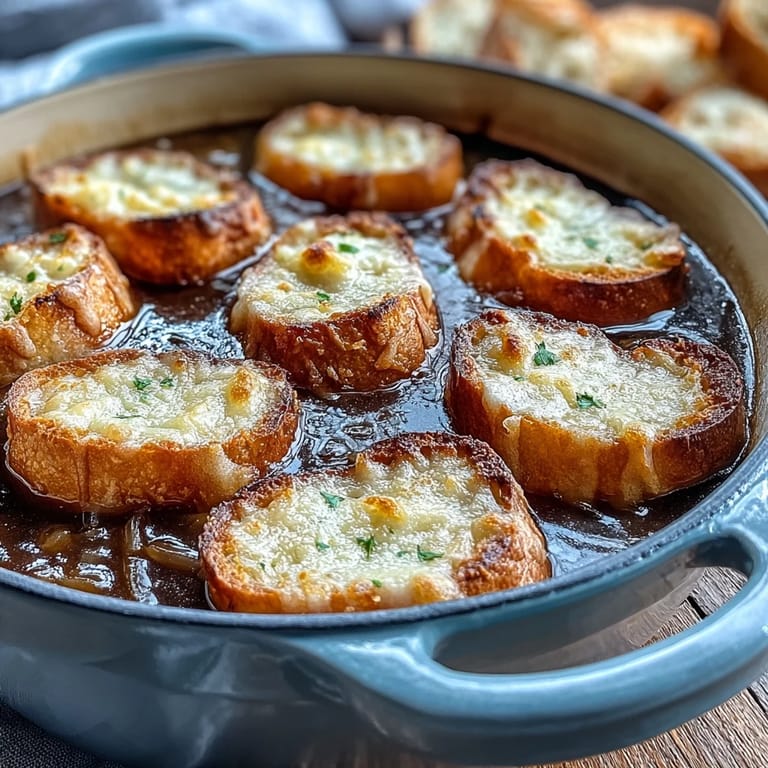
 Save to Pinterest
 There's a particular Tuesday evening I won't forget—my kitchen filled with the smell of onions turning golden, a friend standing at my counter asking what smelled so impossibly good. That's when I learned that French onion soup isn't complicated, just patient. This Dutch oven version transformed my weeknight cooking because it takes the intimidation out of caramelization and delivers that deeply savory, restaurant-quality result that makes people think you've been cooking all day. The crispy baguette and melted Gruyère on top seal the deal.
I made this soup for my sister during a cold snap, and she sat at my kitchen table with a spoon, not talking, just eating. When she finally looked up, she said it tasted like warmth, like home. That's the moment I realized this recipe does something beyond feeding people—it wraps around you.
Ingredients
- 5 large yellow onions, thinly sliced: Yellow onions have natural sweetness that caramelizes beautifully; don't rush this step or use a food processor since slicing by hand gives you better control over thickness.
- 3 tablespoons unsalted butter: Butter is non-negotiable here—it's what carries the flavor and helps the onions develop that golden, nutty color.
- 2 tablespoons olive oil: This prevents the butter from burning and keeps the temperature stable during that long caramelization.
- 2 garlic cloves, minced: Fresh garlic adds a gentle bite that plays against the sweet onions, but mince it fine so it cooks evenly.
- 1 teaspoon sugar: A small amount of sugar accelerates caramelization and deepens the onions' natural sweetness without making the soup taste sugary.
- 8 cups beef broth: Quality matters here since broth is your foundation; use vegetable broth if you're keeping this vegetarian and want the same depth.
- 1/2 cup dry white wine: The wine cuts through richness and adds brightness; don't use anything you wouldn't drink yourself.
- 2 teaspoons fresh thyme leaves (or 1 teaspoon dried): Fresh thyme is preferable because it stays brighter, but dried works if that's what you have on hand.
- 2 bay leaves: These add subtle earthiness and complexity; remember to fish them out before serving.
- 1 tablespoon Worcestershire sauce: This umami-rich ingredient deepens the savory notes and makes people ask what your secret is.
- Salt and freshly ground black pepper: Taste as you go because the broth's saltiness varies by brand.
- 1 baguette, sliced into 1/2-inch thick rounds: Day-old bread works beautifully here because it toasts crisper and won't fall apart under the hot cheese.
- 2 cups Gruyère cheese, grated: Gruyère melts smoothly and has a nutty flavor that echoes the caramelized onions; grating it fresh makes all the difference.
- 1/2 cup Parmesan cheese, grated (optional): This adds a sharper note and helps the cheese brown faster if you choose to use it.
Tired of Takeout? 🥡
Get 10 meals you can make faster than delivery arrives. Seriously.
One email. No spam. Unsubscribe anytime.
Instructions
- Gather and prep your ingredients:
- Slice your onions, mince the garlic, and measure out your broth and wine so everything's within arm's reach when you start cooking. This keeps you from getting distracted once the onions hit the pan.
- Begin the caramelization:
- Melt butter with olive oil in your Dutch oven over medium heat, then add the sliced onions and sugar. Stir everything together, coating the onions evenly—you'll see them release their moisture almost immediately.
- Stay patient during the long caramelize:
- This takes 40–45 minutes, and you'll stir frequently, watching the onions transform from glossy and raw to soft and deeply golden brown. Around the 30-minute mark, they'll smell absolutely incredible, but keep going—that's when the real magic happens.
- Add your aromatics:
- When the onions are caramelized, add the minced garlic and cook for just 1 minute until fragrant, stirring so it doesn't stick to the bottom.
- Deglaze with wine:
- Pour in the white wine, and use a wooden spoon to scrape up all those browned, flavorful bits stuck to the bottom of the Dutch oven. Let it simmer for 2–3 minutes until slightly reduced.
- Build your broth base:
- Add the broth, thyme, bay leaves, and Worcestershire sauce, then bring everything to a simmer. Reduce heat and cook uncovered for 20–30 minutes so the flavors meld and deepen.
- Season and taste:
- After simmering, taste and adjust salt and pepper to your preference, then remove the bay leaves carefully.
- Toast your baguette while soup finishes:
- Preheat your broiler and arrange baguette slices on a baking sheet, toasting them under the heat for about 1–2 minutes per side until they're golden and crispy.
- Assemble the bowls:
- Ladle soup into oven-safe bowls, top each with a toasted baguette slice, then pile on a generous handful of Gruyère cheese, and add a bit of Parmesan if you're using it.
- Broil until bubbly:
- Place the bowls on a baking sheet and slide them under the broiler for 2–4 minutes until the cheese is melted, bubbling, and golden at the edges.
- Serve with care:
- The bowls and soup are extremely hot, so warn anyone eating this, let it cool for a minute, and optionally garnish with fresh thyme.
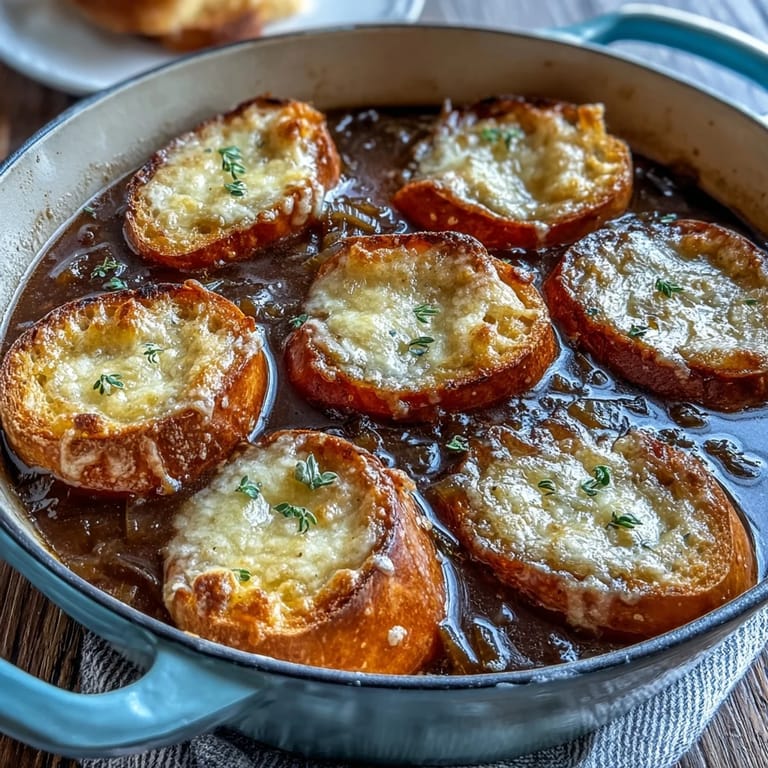 Save to Pinterest
 My neighbor brought me soup in return after I made her a batch, and it sparked a whole winter of trading recipes back and forth. That's the thing about this dish—it doesn't just fill your stomach, it builds connections.
The Secret Behind Perfect Caramelization
Caramelizing onions isn't magic, but it feels like it when you understand what's actually happening. The onions are releasing their natural sugars and then browning them slowly through heat and time. This is why medium heat matters—too high and they burn, too low and they just stew. I learned this the hard way after scorching an entire batch because I got impatient and cranked the heat up. Now I set a timer and trust the process, stirring every few minutes so they brown evenly and nothing catches.
Why Wine and Worcestershire Make the Difference
The wine does two jobs: it adds brightness and cuts through the heaviness of the caramelized onions and cheese. Worcestershire sauce, meanwhile, is doing something quieter but more powerful—it's adding umami, that savory depth that makes people taste something incredible but can't quite name what it is. A chef friend told me that Worcestershire is basically fermented anchovy, soy, and spices, and once you know that, you understand why it transforms this soup from good to unforgettable. You're not tasting fish; you're tasting profound savory complexity.
Making It Vegetarian and Other Variations
This soup adapts beautifully if you want to keep it vegetarian or if your guests have different preferences. Swap the beef broth for vegetable broth—you'll lose a little depth, but adding an extra splash of white wine or even a teaspoon of miso paste can bring back that savory richness. Skip the Worcestershire sauce or use a vegetarian version made without anchovies. I've also seen people add a splash of sherry instead of white wine for a different kind of elegance, or experiment with Emmental or Swiss cheese if Gruyère isn't available. The foundation is strong enough that it tolerates creativity.
- Vegetarian swaps: Use vegetable broth and omit Worcestershire, or find a vegetarian version of it.
- Cheese alternatives: Emmental, Swiss, or even a combination of sharp Cheddar and Gruyère all work beautifully.
- Wine variations: Try sherry or even a splash of brandy for a different flavor profile.
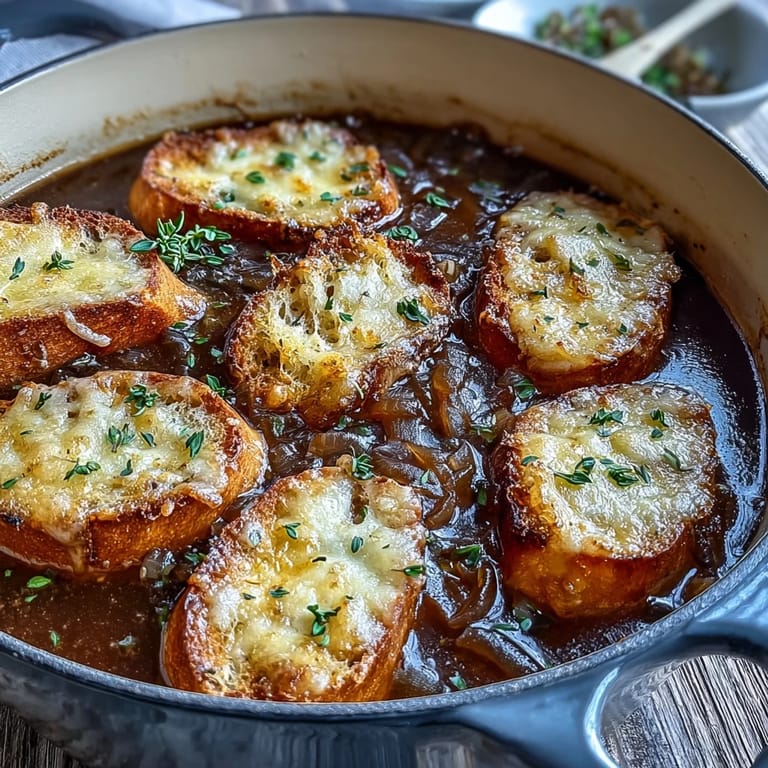 Save to Pinterest
 This soup has a way of becoming a ritual—something you make when you need comfort or want to impress someone. Make it for yourself first so you understand the rhythm, then invite someone to eat it with you.
Common Recipe Questions
- → Why does caramelizing onions take so long?
Caramelization is a chemical transformation that requires patience. Onions contain natural sugars that need time and gentle heat to break down and turn golden-brown. This process develops the deep, sweet flavor profile that defines French onion soup. Rushing this step results in cooked onions without that characteristic sweetness and rich color.
- → Can I make this vegetarian?
Absolutely. Substitute vegetable broth for the beef broth and either omit the Worcestershire sauce or use a vegetarian version (traditional Worcestershire contains anchovies). The result remains deliciously savory, with the caramelized onions providing plenty of depth.
- → What type of onions work best?
Yellow onions are ideal for French onion soup. They have the perfect balance of sweetness and pungency, and they caramelize beautifully. Red onions can be used but may result in a slightly different color. Sweet onions like Vidalia work but caramelize faster due to higher sugar content.
- → Can I prepare this in advance?
The soup actually improves when made ahead. Prepare through step 4, omitting the final seasoning. Refrigerate for up to 3 days or freeze for up to 3 months. When ready to serve, reheat gently, adjust seasoning, and proceed with the bread and cheese topping. The flavors meld beautifully overnight.
- → What cheese alternatives work well?
Gruyère is traditional for its nutty flavor and excellent melting properties. Swiss or Emmental make good substitutes with similar characteristics. For a different twist, try Comté or a blend of Gruyère with Parmesan for extra savory depth. Avoid pre-shredded cheese which doesn't melt as smoothly.
- → Why use a Dutch oven?
A Dutch oven's heavy construction provides even heat distribution, preventing hot spots that could burn the onions during the long caramelization process. The tight-fitting lid is useful when you need to simmer the broth, and the oven-safe design means you can use the same vessel from stovetop to oven if desired.