 Save to Pinterest
 The first time I tasted real mapo tofu was in a small restaurant in Chengdu, where the heat of the chili oil made my lips tingle in that distinctive numbing way that kept me reaching for another spoonful of rice. Years later, I found myself in my own kitchen trying to recreate that exact sensation—that delicate balance of silky tofu swimming in a sauce so bold it demanded respect. What surprised me most was how quickly it came together, how the magic happened in just fifteen minutes of simmering. Now whenever I make it, I'm transported back to that humid afternoon, the sound of a wok clattering in a busy kitchen, the smell of fermented bean paste hitting hot oil.
I remember cooking this for my partner on a cold evening when we were both too tired for takeout, and watching their eyes widen when that first spoonful hit their tongue was worth every minute of prep work. The kitchen filled with this incredible aroma that had nothing to do with expensive ingredients—just the alchemy of bean paste and peppercorns doing their thing in hot oil. That night, mapo tofu stopped being something we ordered and became something we made at home.
Ingredients
- Silken or soft tofu (400 g): The delicate texture melts into the sauce, but if your market only has firm tofu, it'll hold up beautifully too—just give it an extra minute to absorb the flavors.
- Ground pork or beef (150 g, optional): The meat adds richness and texture, but this dish is equally stunning as pure vegetarian if you skip it entirely.
- Sichuan doubanjiang (2 tbsp): This fermented chili bean paste is non-negotiable—it's the soul of the dish, so hunt it down in an Asian market or order it online rather than substituting.
- Soy sauce (1 tbsp): Use low-sodium if you can; the sauce concentrates as it simmers and you want to control the salt.
- Shaoxing wine (1 tbsp): Dry sherry works in a pinch, but the subtle sweetness of Shaoxing wine is what rounds out the heat.
- Sugar (1 tsp): Just a whisper to balance the spice and salt—don't skip it, even if you think you don't like sweet in savory dishes.
- Chicken or vegetable broth (1/2 cup): Keep it low-sodium so you can season to taste as you go.
- Cornstarch slurry (1 tbsp cornstarch mixed with 2 tbsp water): This thickens the sauce so it clings to every cube of tofu instead of pooling at the bottom of the pan.
- Sichuan peppercorns (1 tbsp): Toast them yourself and grind them fresh—this is where the magic numbing sensation comes from, and pre-ground loses its potency quickly.
- Vegetable oil (3 tbsp): Use something neutral that can handle high heat without smoking.
- Garlic (3 cloves, minced) and ginger (2 tsp, minced): These are your flavor foundation, so mince them fine so they distribute evenly through the sauce.
- Scallions (2, white and green parts separated): The whites go into the sauce for depth, the greens are your fresh, bright finish.
- Dried red chilies (1–2, chopped): These add color and a secondary heat that builds as you eat; adjust to your tolerance.
Tired of Takeout? 🥡
Get 10 meals you can make faster than delivery arrives. Seriously.
One email. No spam. Unsubscribe anytime.
Instructions
- Gather and prepare everything:
- Drain your tofu and cut it into cubes about the size of a large grape—smaller than you think you need. Mix the cornstarch with water in a small bowl and set it nearby; your hands will be full once you start cooking.
- Toast the peppercorns:
- Heat your wok or large skillet over medium heat and add the Sichuan peppercorns, stirring constantly until they become fragrant and slightly darken, about two minutes. Grind them in a mortar and pestle into a coarse powder—you want some texture, not fine dust.
- Build your base:
- Pour the oil into the hot pan and let it shimmer for a few seconds. Add the white parts of your scallions along with the garlic and ginger, stirring constantly for about one minute until the kitchen smells like a Sichuan restaurant.
- Brown the meat (if using):
- If you're using ground pork or beef, add it now and cook, breaking it into small pieces with your spatula, until it's no longer pink and has taken on some color. This takes about three to four minutes.
- Awaken the bean paste:
- Add the doubanjiang and any chopped dried chilies, stirring constantly for one to two minutes—you'll see the oil turn a deep red-orange and smell a fermented, spicy intensity that means you're on the right track. Don't let it burn; keep the heat at medium.
- Create your braising liquid:
- Pour in the Shaoxing wine, soy sauce, sugar, and broth, stirring until everything is combined. Bring the whole pan to a gentle simmer and let it bubble softly for a minute.
- Introduce the tofu gently:
- Using a spoon or spatula, carefully slide your tofu cubes into the simmering sauce, moving them around gently with the back of your spoon so they don't break apart. Let everything simmer together for five minutes, occasionally spooning the hot sauce over the tofu.
- Thicken the sauce:
- Give your cornstarch slurry a quick stir—it settles quickly—then slowly drizzle it into the pan while stirring very gently with a wooden spoon. The sauce should go from loose and soup-like to glossy and clinging, about one to two minutes.
- Finish with aromatics and heat:
- Remove the pan from heat, sprinkle the ground Sichuan peppercorns over everything, and scatter half of your reserved scallion greens on top. Give it one last gentle fold.
- Serve immediately:
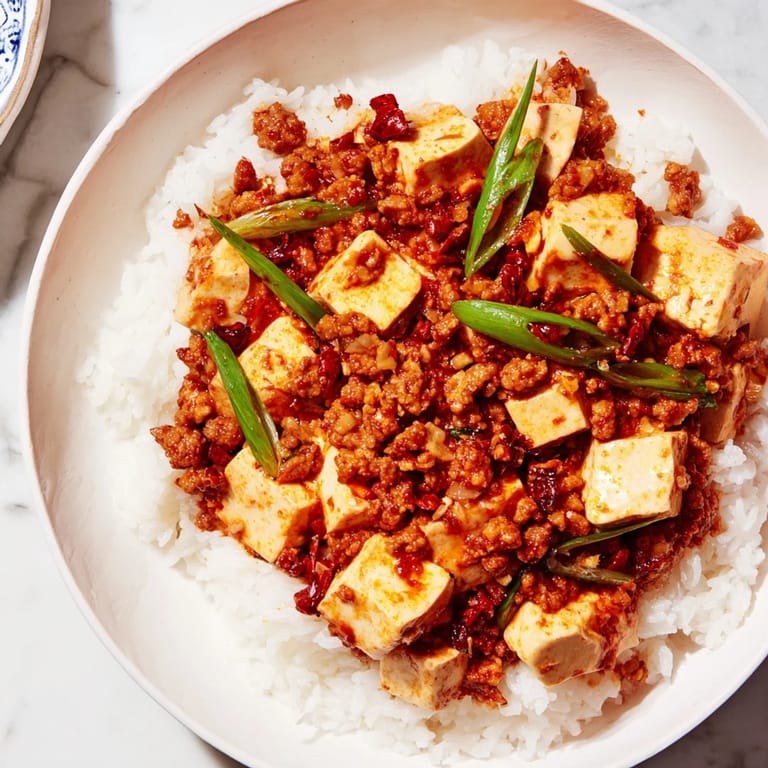
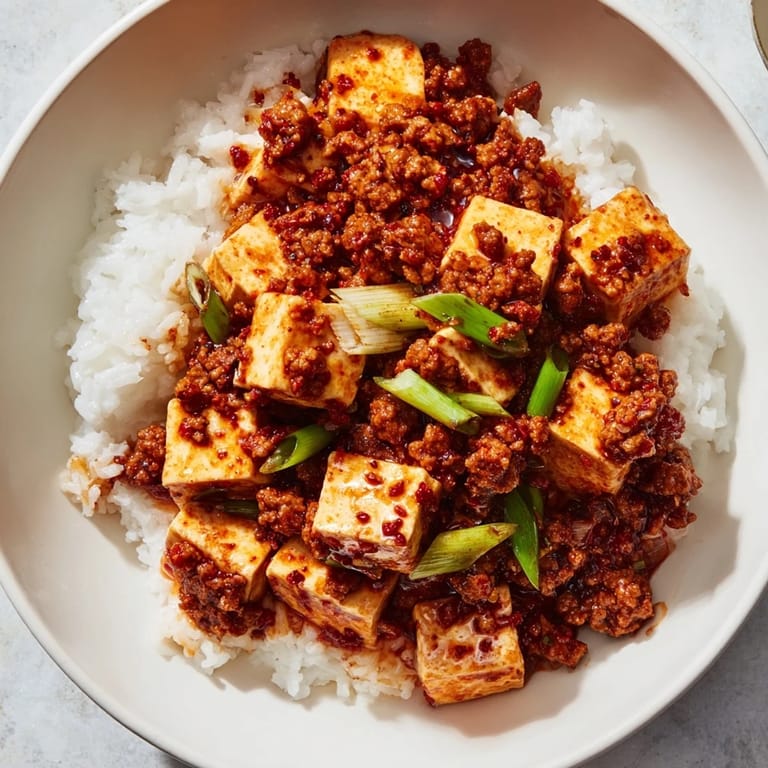
- Transfer to bowls over steaming jasmine rice, drizzle with chili oil if you like extra heat, and garnish with the remaining scallion greens.
 Save to Pinterest
 There's a moment right before you add the tofu when you pause and look at that deep red sauce in your pan, and you know something delicious is about to happen. That's when I understood why this dish has been made in Sichuan kitchens for generations—it transforms simple ingredients into something that feels like a celebration, one spoonful at a time.
The Truth About Silken Tofu
I've learned through plenty of mistakes that silken tofu is a different creature entirely from firm tofu, and it demands a gentler hand. It's fragile in a way that's actually beautiful—it absorbs sauce like a sponge, soaking up every note of fermented bean paste and spice without becoming dense or heavy. The trade-off is that you can't be careless with your spoon; this is where the difference between a perfect mapo tofu and a sad bowl of tofu chunks lives. If your market only has firm tofu, don't despair—it'll work, but understand that your texture will be more substantial and less silky. Many restaurants actually prefer firm tofu because it photographs better and doesn't need as much coddling. The choice is yours, but commit to it and cook accordingly.
Adjusting the Heat to Your Taste
Mapo tofu is supposed to be spicy, but there's a difference between a controlled fire and something that overwhelms your entire meal. I've served this to people with very different spice tolerances, and the trick is knowing that the heat comes from three separate sources: the doubanjiang itself, the dried chilies, and the cooking time. If you like mild food, reduce the doubanjiang to one tablespoon and skip the dried chilies entirely—the sauce will still taste rich and complex without knocking you over. For moderate heat, follow the recipe as written. For serious heat seekers, add an extra dried chili and drizzle generous amounts of chili oil at the end. The beauty of cooking at home is that you can taste as you go and adjust before the final plate.
Building Flavor Layers
What I love about this dish is how it teaches you about flavor building in just thirty minutes. You're not dumping all your ingredients in at once; you're creating layers that bloom at different moments. The aromatics toast first, waking up their oils. The bean paste gets a moment in the hot oil to deepen and ferment further. The braising liquid comes in last, carrying all that accumulated flavor into the tofu. It's a lesson in patience and intention, the kind of cooking that makes you feel like a chef in your own kitchen. Understanding this process means you can tweak things confidently, knowing exactly what each step contributes to the final bowl.
- Toast your peppercorns fresh every time—they taste exponentially better than pre-ground, and it takes two minutes.
- Taste your sauce before the tofu goes in and adjust the soy sauce or sugar if it needs balancing.
- Use a wooden spoon for all stirring so your delicate tofu makes it to the table intact.
 Save to Pinterest
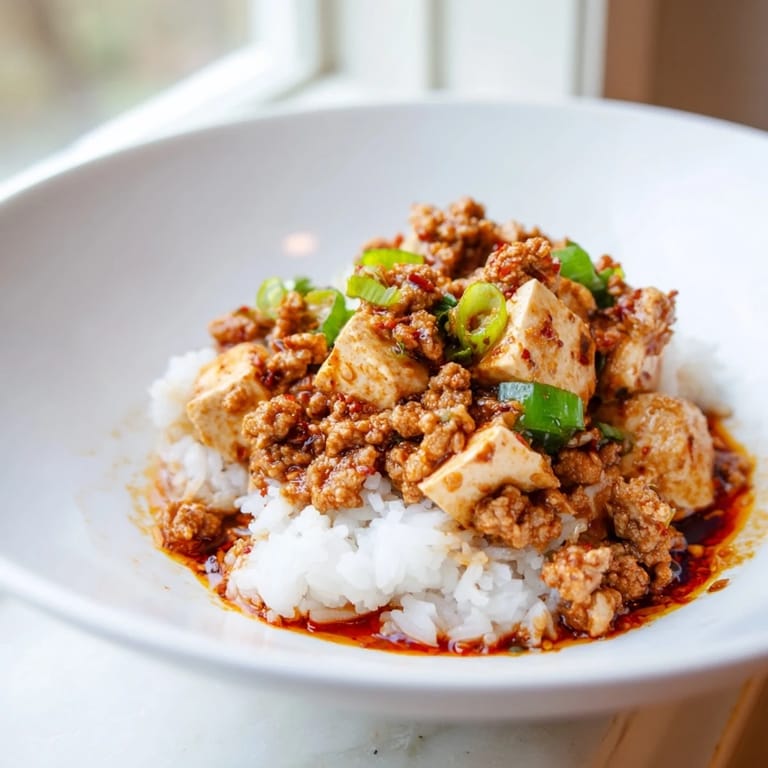
 Mapo tofu is one of those dishes that tastes like generosity, like someone took the time to balance fire with silk and created something memorable. Make it once, and you'll understand why it's been cherished for so long.
Common Recipe Questions
- → What type of tofu works best?
Silken or soft tofu provides a silky texture, while firm tofu holds shape better during simmering.
- → Can this be made vegetarian?
Yes, omit meat and use vegetarian chili bean paste and vegetable broth for a meat-free version.
- → How to achieve the signature numbing spice?
Toasted Sichuan peppercorns impart a distinctive numbing sensation vital to the dish’s flavor profile.
- → What is the purpose of cornstarch slurry?
It thickens the sauce, helping it coat the tofu evenly without breaking it apart.
- → What can be served alongside?
Steamed jasmine rice is traditional, balancing the spicy, bold sauce perfectly.