 Save to Pinterest
 There's something about the smell of sesame oil hitting a hot pan that transports me straight to a tiny noodle shop in Bangkok where I watched a chef toss together a cold salad on a sweltering afternoon. I came home determined to recreate that moment, and this chilled chicken noodle salad became my answer to those days when the kitchen feels too warm to turn on the oven. The first time I made it, my daughter asked for seconds before I'd even finished plating, which told me everything I needed to know.
I'll never forget bringing this salad to a summer potluck where I was convinced it would sit untouched while everyone gravitated toward heavier casseroles. Instead, it was gone within twenty minutes, and three people asked for the recipe before dessert was even served. That's when I realized how hungry people are for something that feels light but actually satisfies.
Ingredients
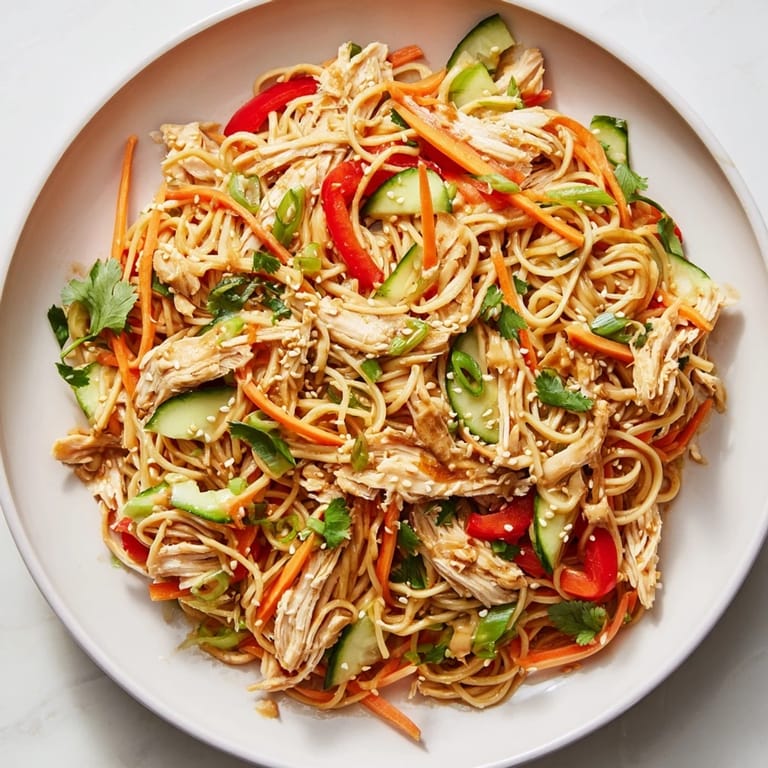
- Thin egg noodles or rice noodles (250 g): Rice noodles stay more delicate when chilled, but egg noodles hold the dressing better—choose based on your texture preference.
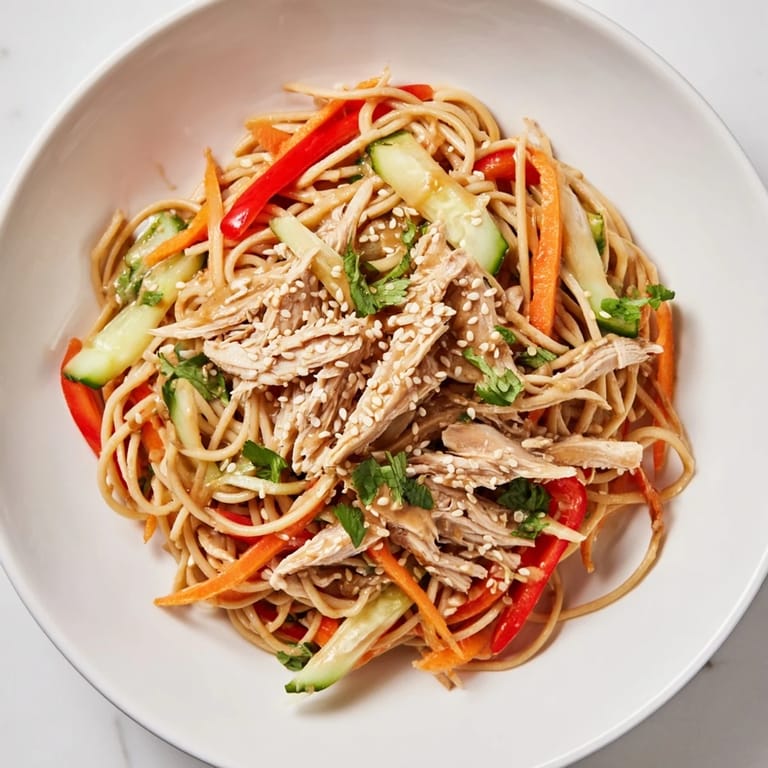
- Cooked chicken breasts, shredded (about 300 g): Rotisserie chicken saves time and honestly often tastes better than what we cook ourselves, no shame in that shortcut.
- Carrot, julienned: A vegetable peeler makes quick work of this, and the thin strips soften just enough when tossed with the warm noodles.
- Red bell pepper, thinly sliced: The sweetness balances the savory dressing and the color makes the whole bowl feel intentional.
- Cucumber, deseeded and julienned: Removing the seeds prevents the salad from becoming watery as it sits, a detail that changed everything for me.
- Spring onions, sliced: The raw bite keeps the salad from feeling one-note, especially important when everything else is soft.
- Fresh cilantro, chopped (2 tbsp): If you're one of those people who thinks cilantro tastes like soap, mint or basil work just as well without judgment.
- Toasted sesame oil (3 tbsp): Buy the good stuff—it's the backbone of the whole dressing and a little goes a long way.
- Soy sauce (2 tbsp): Use tamari if you need gluten-free, and don't skip the salty depth it brings.
- Rice vinegar (2 tbsp): The gentle acidity keeps everything bright without overshadowing the sesame.
- Honey or maple syrup (1 tbsp): Just enough sweetness to round out the savory and salty notes.
- Smooth peanut butter or tahini (1 tbsp): This creates the silky texture of the dressing; tahini makes it nuttier and more complex.
- Fresh ginger, grated (1 tsp): There's no substitute for the sharp warmth fresh ginger brings, bottled versions go flat.
- Garlic clove, minced: One small clove is usually enough unless you're a garlic devotee like I am.
- Chili flakes (1 tsp, optional): A whisper of heat makes the other flavors sing, but leave it out if spicy isn't your lane.
- Toasted sesame seeds (2 tbsp) for garnish: These add the final crunch and a visual nod to where this salad's heart really comes from.
Tired of Takeout? 🥡
Get 10 meals you can make faster than delivery arrives. Seriously.
One email. No spam. Unsubscribe anytime.
Instructions
- Cook the noodles until just tender:
- Follow the package timing but aim for a minute shy of what it says—overcooked noodles fall apart once everything gets tossed together. Drain them in a colander and rinse under cold running water until they're completely cool, which stops the cooking and keeps them from turning to mush.
- Build your salad base:
- While the noodles cool, toss the chicken, vegetables, and cilantro into a large bowl so they're all waiting when you're ready. This way nothing gets muddy or overmixed before the dressing even arrives.
- Whisk the dressing together:
- In a small bowl, combine the sesame oil, soy sauce, rice vinegar, honey, peanut butter, ginger, garlic, and chili flakes. Whisk until the peanut butter dissolves completely and the whole mixture turns silky—this takes about a minute of actual work.
- Bring it all together:
- Add the cooled noodles to the bowl with everything else, then pour the dressing over the top. Toss gently but thoroughly until every strand gets coated, which takes longer than you'd think but rewards patience.
- Finish and serve:
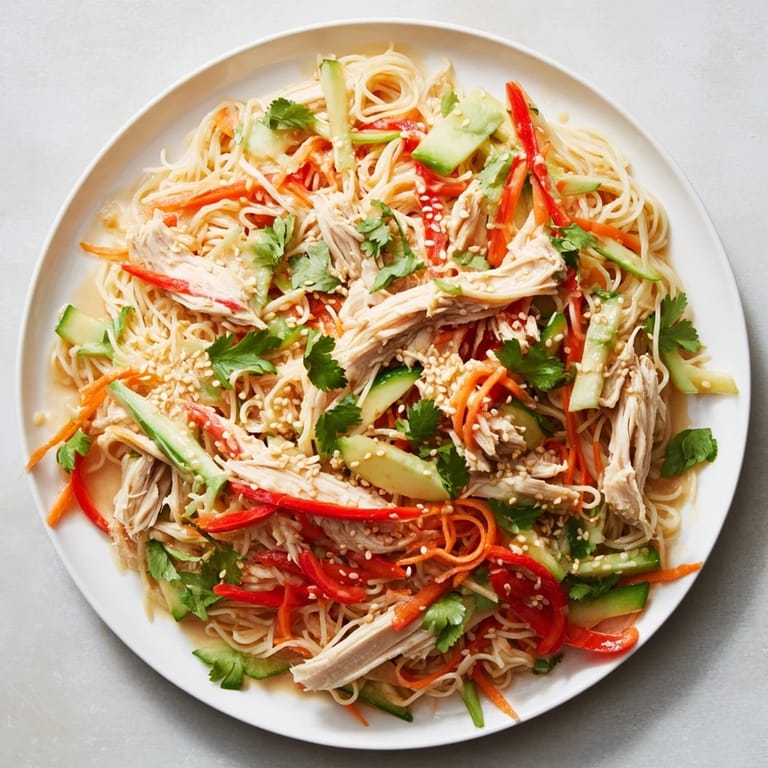
- Transfer to a serving platter or divide among bowls, then scatter the toasted sesame seeds across the top like confetti. Serve right away while everything still has some texture, or cover and refrigerate for up to two hours if you're thinking ahead.
 Save to Pinterest
 There was an evening when my neighbor stopped by just as I was plating this salad, and I handed her a bowl without thinking twice. She came back the next week asking if I'd teach her how to make it, and we spent an afternoon in the kitchen talking about how food brings people closer than almost anything else. That's when I understood this recipe was never really about the noodles.
The Magic of Sesame Oil
Sesame oil is the unsung hero in this kitchen, and once you understand how it works, you'll find yourself reaching for it in unexpected places. The toasted variety has a deep, nutty flavor that doesn't need much backup to make an entire dish sing—three tablespoons might sound stingy, but it's actually exactly right. I spent months using too much and wondering why my dressing tasted bitter until a friend gently pointed out that sesame oil is meant to be a whisper, not a shout.
Make It Your Own
The beauty of this salad is that it asks very little and accepts almost everything. I've made it with shredded tofu for vegetarian friends, swapped lime juice for the rice vinegar when I forgot to buy it, added edamame because I had it open, and scattered it with everything from toasted almonds to crushed peanuts depending on the mood. The framework stays the same, but the story changes every time you make it, which feels important somehow.
Timing and Flexibility
This salad respects your schedule in ways that other dishes don't, which is exactly why it's become my go-to when I'm not sure what dinner should be. Everything can be prepped hours ahead, then assembled in two minutes flat, or made completely from scratch when unexpected guests arrive. The dressing actually gets more cohesive as it sits, so if you make this the morning of, you're not cutting corners—you're actually improving it.
- Cook the noodles and chop vegetables up to eight hours ahead, keeping them in separate containers so nothing gets soggy.
- The dressing is even better made a day early and stored in a jar, which means you're essentially meal-prepping without the pressure of it.
- If you forget to chill the components, don't panic—serve it at room temperature and call it a warm-weather interpretation of the original.
 Save to Pinterest
 Every time I make this salad, I'm reminded that the best meals are the ones that fit into real life, not the other way around. It's taught me that restaurant-quality eating doesn't require fancy techniques, just a little intention and ingredients you actually care about.
Common Recipe Questions
- → What type of noodles work best?
Thin egg noodles or rice noodles are ideal as they absorb the dressing well and provide a light texture.
- → Can I substitute the chicken?
Shredded tofu can be used as a vegetarian alternative, or rotisserie chicken for convenience.
- → How should I prepare the dressing?
Whisk toasted sesame oil, soy sauce, rice vinegar, honey, peanut butter, fresh ginger, garlic, and chili flakes until smooth for a balanced, savory dressing.
- → Is there a gluten-free option?
Use rice noodles and gluten-free soy sauce (tamari) to keep the dish gluten-free.
- → How long can this salad be stored?
It can be chilled for up to 2 hours before serving to enhance flavor and maintain freshness.