 Save to Pinterest
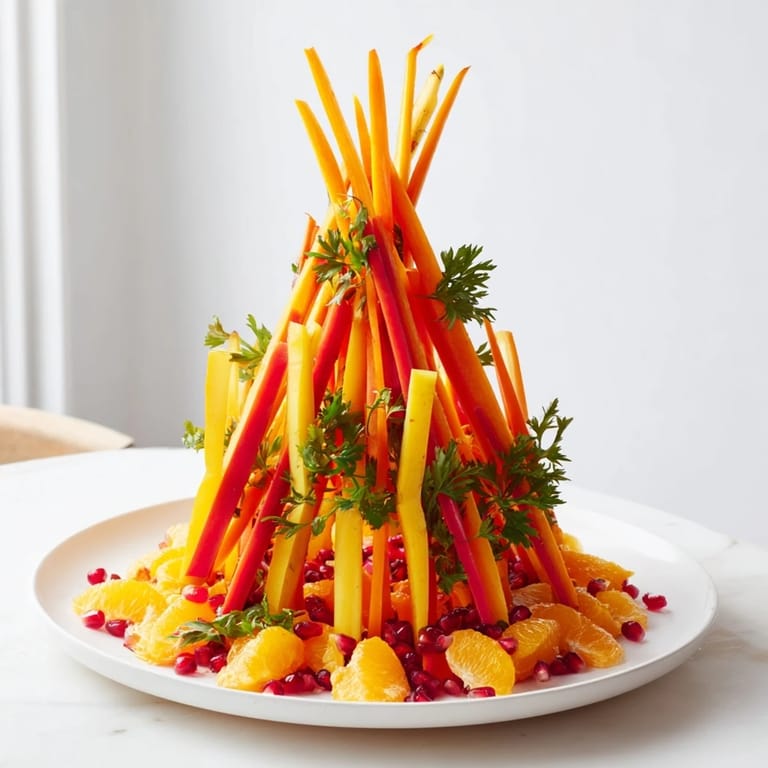
 I'll never forget the first time I created this centerpiece at a dinner party. My friend Sarah had mentioned how much she loved the drama of a well-styled table, and I found myself standing in the kitchen at dusk, suddenly inspired by the way the last rays of sunlight were hitting my produce bowl. The carrots glowed golden-orange, the peppers seemed to shimmer red and yellow, and right then I realized I could build something that captured that exact warmth—a bonfire right there on the dining table.
The real magic happened at that dinner party when my youngest nephew approached the table with wide eyes, convinced the centerpiece was some kind of art installation. When I told him he could pick off a carrot stick and eat it, his face completely changed—that moment when food becomes playful instead of just functional. That's when I knew this wasn't just a pretty plate of vegetables.
Ingredients
- 2 large carrots, peeled and cut into long thin sticks: These form the heart of your bonfire, so choose carrots that are straight and uniform—they'll stand taller and look more dramatic. I learned to cut them lengthwise rather than crosswise because the longer pieces really sell the flame effect.
- 1 yellow bell pepper, seeded and sliced into strips: Yellow is your inner flame, the hottest part of the fire. Slice them thickly enough that they hold their shape but thin enough to look delicate when layered.
- 1 red bell pepper, seeded and sliced into strips: The outer flames, the drama, the visual punch. A truly vibrant red pepper makes all the difference here.
- 3 mandarins, peeled and segmented: These add that crucial orange glow and a touch of natural sweetness. I prefer mandarins over oranges because they're easier to segment and have a prettier shape.
- Fresh parsley or mint sprigs: These become your ash and embers around the base. Mint adds a surprise cooling note if someone wants to eat them.
- 1 small handful pomegranate seeds, optional: These are your sparks, your occasional flash of brightness. They're completely optional but they transform the whole thing from pretty to magical.
- 1/2 cup hummus or yogurt-based dip: I always lean toward hummus because it stays neutral and lets the bright vegetables shine. It's there to help guests feel confident eating from the arrangement.
Tired of Takeout? 🥡
Get 10 meals you can make faster than delivery arrives. Seriously.
One email. No spam. Unsubscribe anytime.
Instructions
- Prepare your canvas:
- Gather all your vegetables in one place so you can see your color palette together. This is the moment where you decide if your peppers are vibrant enough or if you need to make a substitution. Peel and cut everything just before assembly—fresh cut vegetables have a crispness that matters both visually and when someone takes a bite.
- Build your bonfire base:
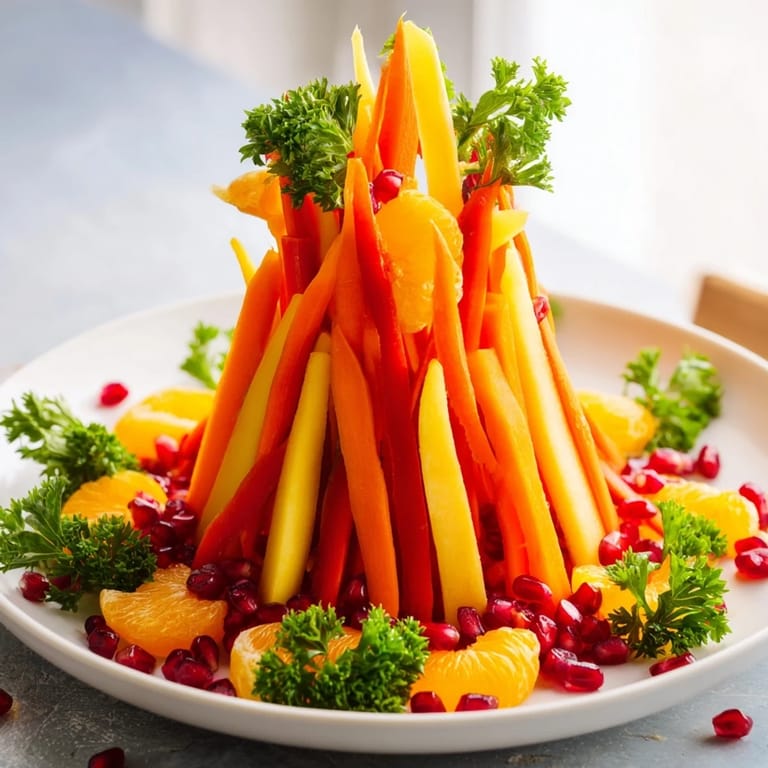
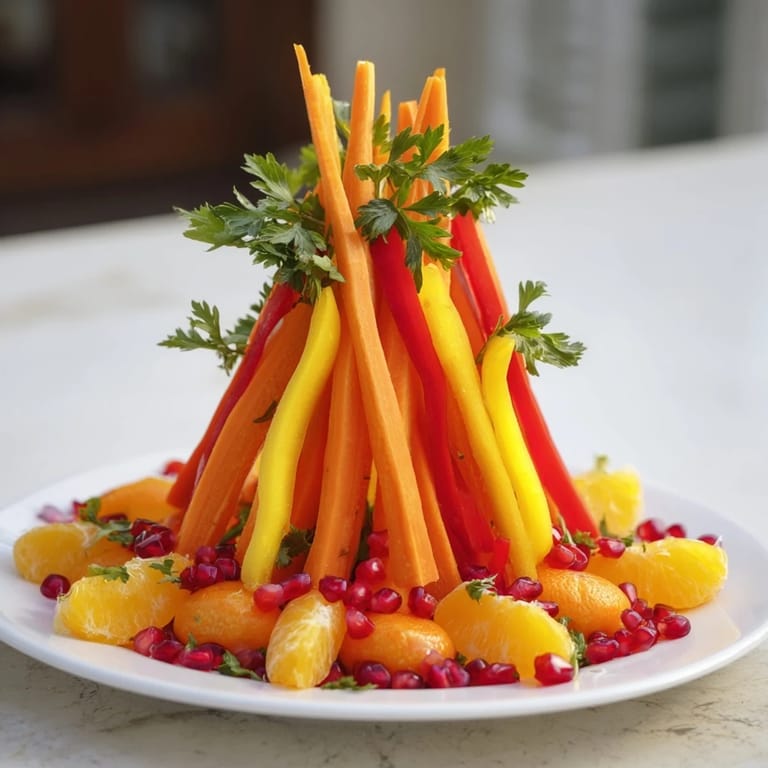
- Take those carrot sticks and lean them together in the center of your serving plate, teepee-style. They should touch at the top but fan out at the base. This takes a tiny bit of patience but it's worth it because the structure is what makes this feel intentional rather than accidental.
- Layer your flames:
- Now comes the fun part. Take your yellow pepper strips and tuck them among the carrots, creating little pockets of bright yellow. Follow with the red peppers, mixing them in so that you see both colors at every level. Step back and squint—you're looking for that visual effect of flickering, of movement, of actual fire.
- Add the glow:
- Tuck mandarin segments around and between the vegetables at various heights. They're not just color—they add dimension and show that this is a real food arrangement. I like to let some sit right at the base and let others peek out from between the peppers higher up.
- Frame with greenery:
- Scatter your parsley or mint sprigs around the outer base. These become the ash, the cooling ring around your flames. They soften the whole composition and add that final touch of authenticity.
- Add sparkle:
- If you're using pomegranate seeds, sprinkle them over the top and around the base. There's no wrong way to do this—scattered chaos actually looks more natural than perfect placement.
- Serve with intention:
- Place your dip bowl nearby, slightly off to the side. The arrangement should be the star, and the dip is just there as a gracious invitation to dig in.
 Save to Pinterest
 What I didn't expect was how this centerpiece changed the entire dinner. People lingered longer around the table, they talked about the food before even eating anything, and somehow the meal felt more celebratory. There's something about making food that's beautiful to look at before it's beautiful to eat—it shifts the whole energy of gathering.
The Art of Color Balance
When I started making this centerpiece, I thought the colors were the whole story. But I quickly realized that it's actually about the proportion of colors and how they sit in relation to each other. If you use too much red without enough yellow, it reads as sunset instead of bonfire. If you oversaturate with orange mandarins, the whole thing leans too warm and loses that dangerous, flickering quality. The magic is in making sure that from any angle, someone's eyes see movement and variation. I've started to think of it less as arranging vegetables and more as painting with produce—you're using color theory without having to think about color theory.
Making It Your Own
The original recipe I developed was pretty straightforward, but I've learned that the best version is the one where you trust your instincts. Some seasons I add thin slices of golden beet for an extra burnished quality. Other times, if I have access to yellow carrots or rainbow carrots, I'll use those instead of regular orange ones. I've even experimented with thin strips of sweet potato that have been gently warmed to make them more pliable. The bones of the arrangement stay the same, but you're always tweaking it based on what looks beautiful in your kitchen on that particular day.
Beyond the Table
This centerpiece has become my go-to for moments when I want to bring something that feels thoughtful but isn't complicated. I've made it for book clubs where everyone was skeptical about vegetable-based entertaining, for outdoor gatherings where people were surprised that something so striking required zero cooking, and even for family meals where someone was pregnant and craving vegetables but feeling overwhelmed by food textures. The beautiful thing is that it adapts gracefully to almost any setting.
- If you're serving it outside, make sure your plate has a slight lip or is on a stable surface—wind will mess with the arrangement faster than you'd expect
- Make the dip as fancy or simple as you want—a white bean dip, a beet hummus, or even seasoned ricotta would all be stunning here
- This keeps beautifully for a few hours in the refrigerator, so you can assemble it an hour before guests arrive and just bring it out when people arrive
 Save to Pinterest
 This centerpiece reminds me that some of the best entertaining moments come from being willing to see ordinary things differently. It's bonfire warmth captured in vegetables, a conversation starter that happens to be delicious.
Common Recipe Questions
- → How do I arrange the vegetables to mimic a bonfire?
Cut carrots, yellow and red bell peppers into long thin sticks and arrange them vertically in a teepee shape, layering colors to create a flickering flame effect.
- → Can I substitute any ingredients?
Yes, you can add golden beets or yellow carrots for extra color, and use different herbs like mint or parsley for garnish.
- → Is this suitable for guests with allergies?
It is naturally free of major allergens, but check any dips served on the side for sesame or dairy if allergies are a concern.
- → What dips pair well with this centerpiece?
Hummus or yogurt-based dips complement the fresh vegetables and fruit perfectly, offering a smooth contrast to the crisp textures.
- → How long does preparation take?
Preparation takes around 20 minutes with no cooking required, making it a quick yet impressive addition to your table.
- → How can I add sparkle to the arrangement?
Sprinkle pomegranate seeds over the centerpiece to add a touch of sparkle and visual interest resembling glowing embers.