 Save to Pinterest
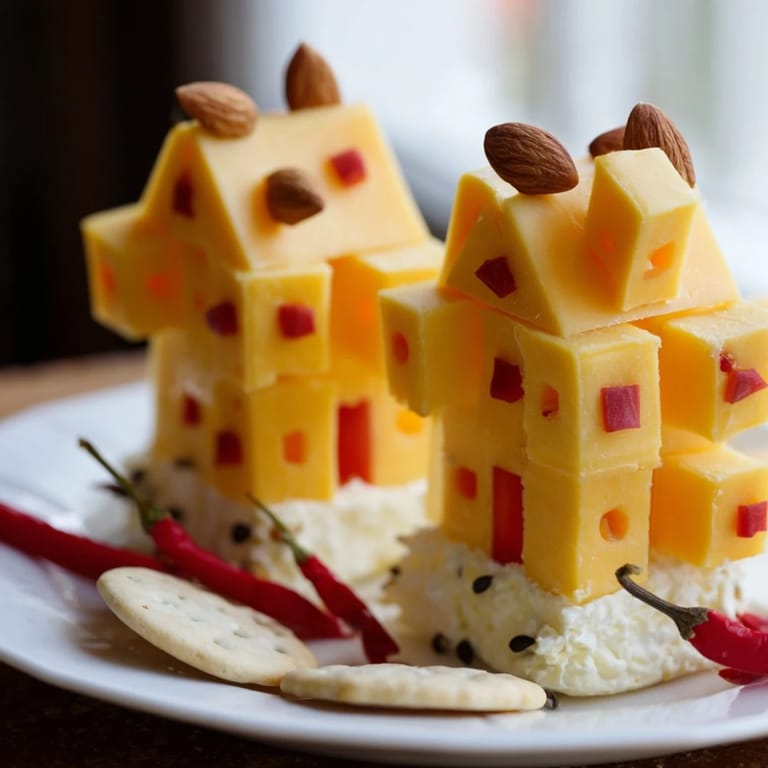
 My daughter pulled a cracker from the platter and studied it like she was examining a real building. The cheese cube sat perfectly centered, two almond slices angled like a tiny Alpine roof, chives standing in as evergreen trees. She looked up and asked if we could build a whole village together. Twenty minutes later, we had sixteen edible houses arranged across a snowy cream cheese landscape, and I realized the best recipes are the ones that turn your kitchen into a place where someone young feels like an architect.
The real magic happened when we served them at my sister's holiday gathering. A guest I'd never met before picked one up, examined the construction, smiled, and said it was too pretty to eat—then ate three more. That's when I understood: this isn't just a snack, it's an excuse to make something that brings people pause before they devour it, and that moment matters.
Ingredients
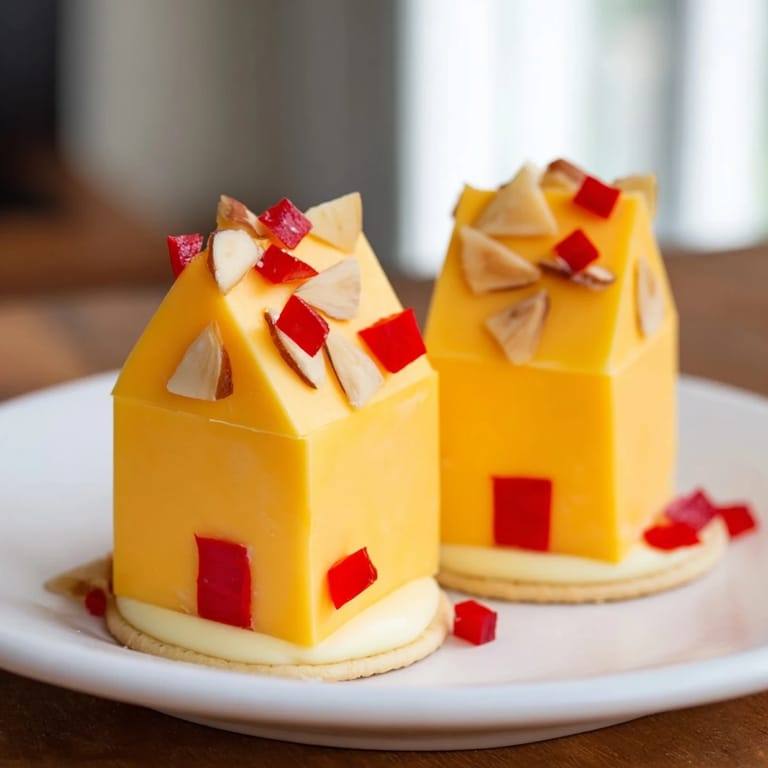
- Firm cheese (cheddar, gouda, or swiss), 200 g, cut into 2 cm cubes: The cube shape is load-bearing architecture—this is where structure meets flavor, and firmer cheeses hold their shape better than soft varieties when pressed onto crackers.
- Sliced almonds, 32 pieces: These form the pitched roof and need to overlap slightly to look intentional rather than accidental; buy pre-sliced almonds to save time.
- Round or square crackers, 16 pieces: Pale or white crackers (water crackers, rice crackers) look like snow-covered ground and provide a sturdy base that won't crumble under gentle pressure.
- Cream cheese, softened, 2 tablespoons: This is your adhesive and your snow; softening it first makes spreading effortless and helps everything stick together without forcing.
- Fresh chives, 1 small bunch, cut into 1 cm pieces: These become miniature trees or bushes, and their green color creates the landscape contrast that makes the village readable.
- Red bell pepper, 1 small, diced: Tiny red squares become doors, windows, or detail work—they're optional but transform a snack into a scene.
- Poppy seeds or sesame seeds (optional): A light sprinkle adds texture and makes the village feel inhabited without overwhelming the simple design.
Tired of Takeout? 🥡
Get 10 meals you can make faster than delivery arrives. Seriously.
One email. No spam. Unsubscribe anytime.
Instructions
- Spread the snowy foundation:
- Take your softened cream cheese and spread a thin, even layer across each cracker using a small spatula or butter knife. This isn't about thick coverage—you want just enough to create that snowy appearance and provide adhesive for the cheese cube.
- Position the houses:
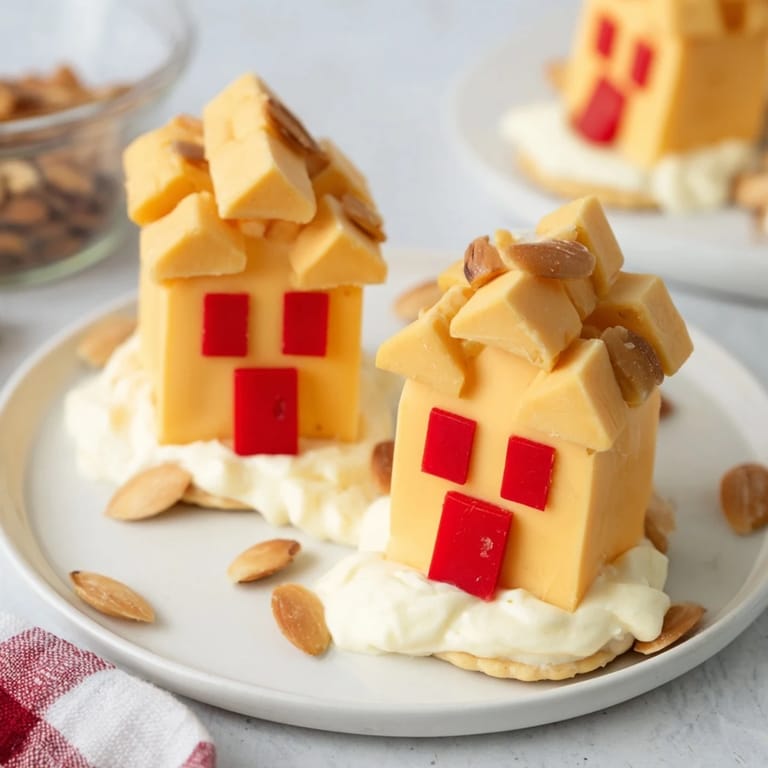
- Press each cheese cube gently onto the cream cheese so it sits upright and stable. A light touch works better than forcing; the cream cheese will give slightly and hold the cube in place.
- Roof the village:
- Take two almond slices and angle them so they meet at a peak on top of each cheese cube, overlapping slightly at the base. Step back and look—the geometry should suggest a real roof, not two random slices.
- Decorate with intention:
- Add chive pieces as trees, diced red pepper as doors or windows, poppy seeds as details. Less is often more here; the composition should look like a tiny village, not cluttered.
- Arrange and serve:
- Transfer your Alpine Village to a serving platter, spacing the houses so each one is clearly visible. Serve right away while the crackers are still crisp and the whole creation holds its magic.
 Save to Pinterest
 I watched my nephew carefully move each house to a new spot on the platter, rearranging the village like he was urban planning for imaginary people. He never ate a single one, just kept moving them around, narrating stories about which house had the best view. Food can be decoration, can be play, can be more than fuel—this recipe proves it.
Building Your Own Village
The beauty of this recipe is that you're not following orders so much as learning a simple structure you can remix. Use sharp cheddar for orange houses, creamy gouda for golden ones, pale Swiss for a monochrome village. The only constraint is that the cheese needs to be firm enough to stack; everything else is creative freedom. Once you've made one village, you'll stop thinking of this as a recipe and start thinking of it as a formula for edible architecture.
Variations That Work
For nut-free versions, thin cucumber or carrot slices stand in for almond roofs and work beautifully—they're crisper and look like modern slate roofing. For gluten-free tables, swap regular crackers for gluten-free varieties and the whole thing still holds. Some people use hummus or herbed cream cheese instead of plain, which shifts the flavor and changes the color palette entirely. Each version is still recognizable as an Alpine Village, but becomes its own thing.
Make-Ahead Strategy
The only real timing issue is cracker softness, so here's what actually works: assemble the village no more than forty-five minutes before serving, or prep all your components separately and build it in front of your guests. There's something fun about watching someone construct their own house at the party. You can cut and prep cheese cubes, slice almonds, and dice peppers hours in advance—only the assembly needs to happen fresh.
- Cut all cheese cubes and store them in an airtight container so they stay firm and ready.
- Pre-portion your cracker spread on each base right before assembly, not hours ahead.
- Have all decorations prepped in small bowls so assembly becomes a fast, satisfying process.
 Save to Pinterest
 This little recipe taught me that appetizers don't need to be complicated to be memorable, and that feeding people something playful and small-scale somehow opens more conversation than a big platter ever could. Make these when you want to remind yourself that cooking can be silly and beautiful at the same time.